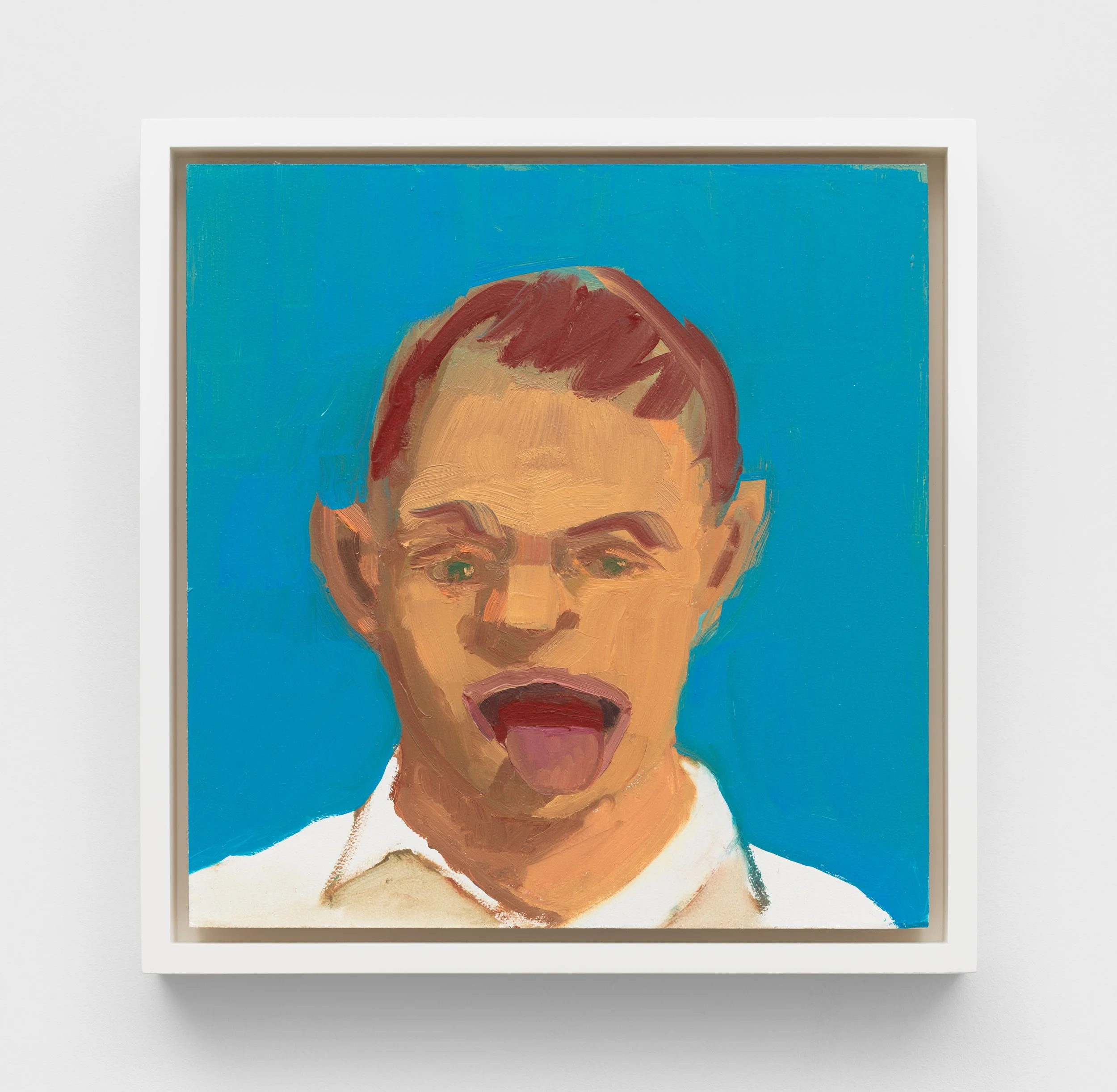
Steve Locke: No Magic Only Justice
waiting for my man at LaMontagne Gallery is Steve Locke’s first solo show in Boston since the artist moved to New York in 2019. It was a painful departure, following the withdrawal of his proposed Auction Block Memorial at Faneuil Hall after divisive opposition from the Boston NAACP. This exhibition signals a meaningful return to the city where the artist’s career took off. Last month, Massachusetts College of Art and Design, where Locke taught for over a decade, welcomed him back for a live conversation with MASS MoCA’s Evan Garza, who curated Steve Locke: the fire next time (MASS MoCA Aug. 2024 – Nov. 2025). The house was packed, the energy was high. Steve Locke was back and the community celebrated.
waiting for my man is a smaller show than the fire next time (almost every show is smaller than a show at MASS MoCA), but its careful selections offer an impressive immersion into Locke’s primary themes. Included are two large paintings from his celebrated series Homage to the Auction Block; five paintings from his most recent series, cruisers; a selection of “tongue paintings”; and one large freestanding work called Passage from the MASS MoCA show.
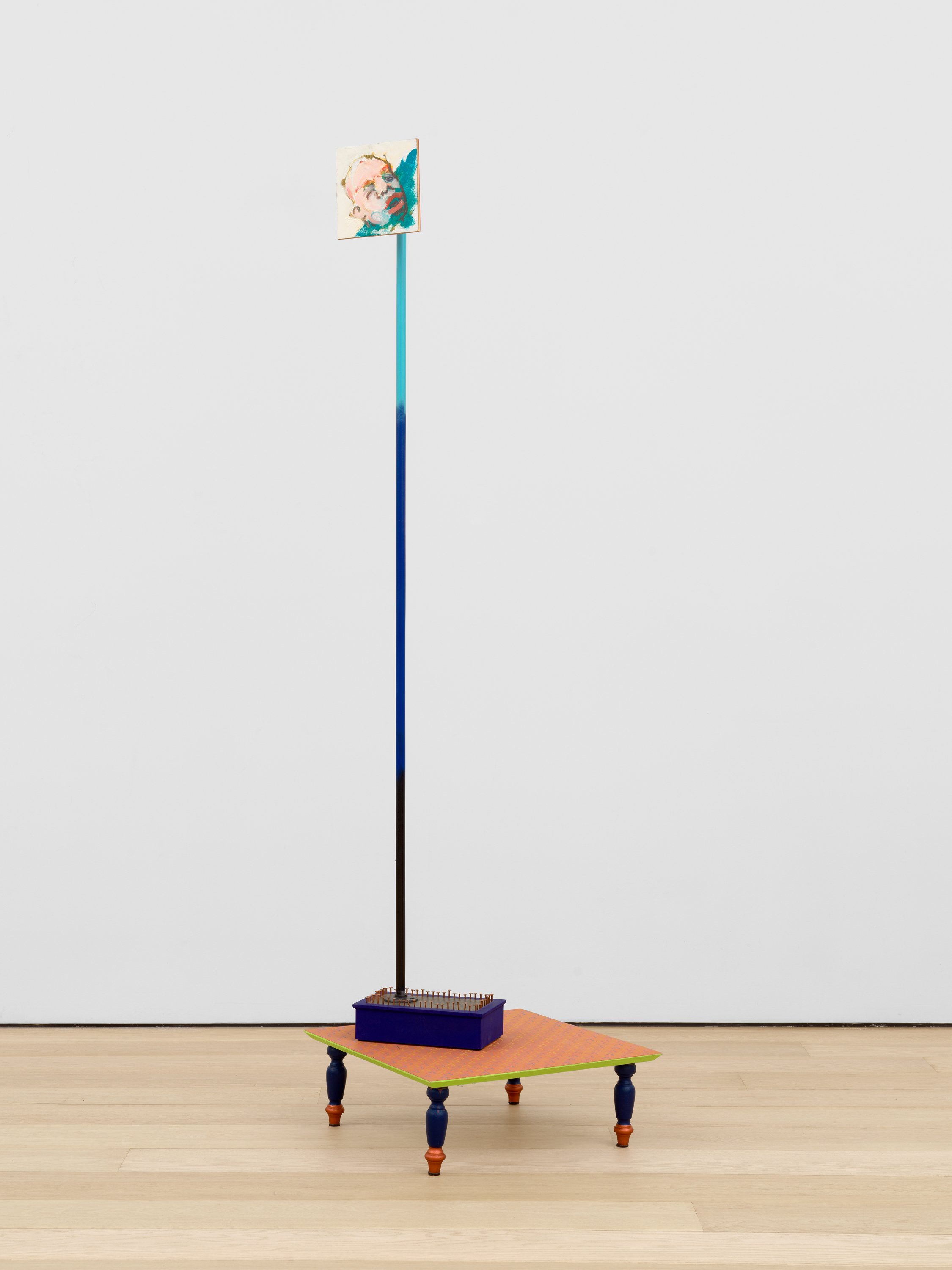
Steve Locke, passage, 2008-2014. Mixed media, 85 1/4 x 23 x 23 in (216.5 x 58.4 x 58.4 cm). Courtesy of the artist and Alexander Gray Associates.
Steve Locke pushes us to perceive the things we don’t want to see: the racial ideology underlying modernist claims to purity and truth, the erasure of queer desire in commercial and artistic representation, the hypocrisy of European and American history that omits its historical reliance on slavery. The brilliance of his approach is working from within the canon. His technical mastery draws the viewer in with a sense of the familiar, so that the deeper content—America’s history of racial violence and spectacle—dawns slowly, indelibly.
Locke is an articulate and generous thinker about his own practice. I had the honor of talking with him about his relationship to Josef Albers and Homage to the Square, the difficulty of drawing killers, public reception to his work, and his feelings about Boston. This interview has been edited for length.
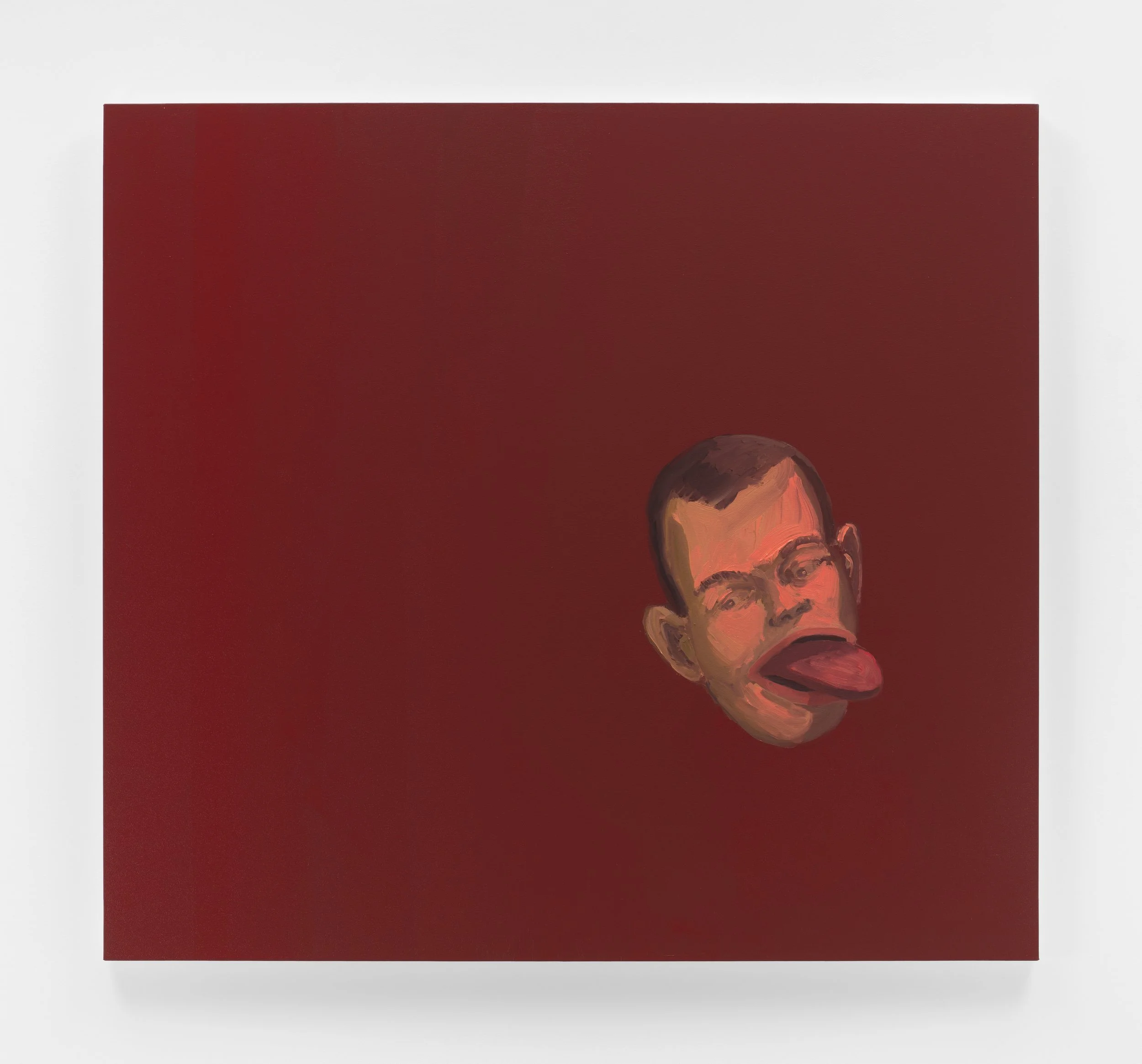
Steve Locke, the hedonist, 2022. Oil on canvas. 56.25 x 61.25 in (142.88 x 155.58 cm). Image courtesy of the artist and Alexander Gray Associates.
Misstropolis: Congratulations on your new show waiting for my man and your return to Boston. Tell me about how it all came together.
Steve Locke: I wanted people in Boston to know what I’ve been up to in the studio. LaMontagne Gallery [Boston] and Alexander Gray [New York] put together a show that chronologically goes from the time I left Boston up to now, and it ends with this really beautiful freestanding piece called Passage that was in my MA MOCA show. The large auction block paintings have never been shown before. And the rest are figurative paintings from a series called cruisers about the tensions in between people
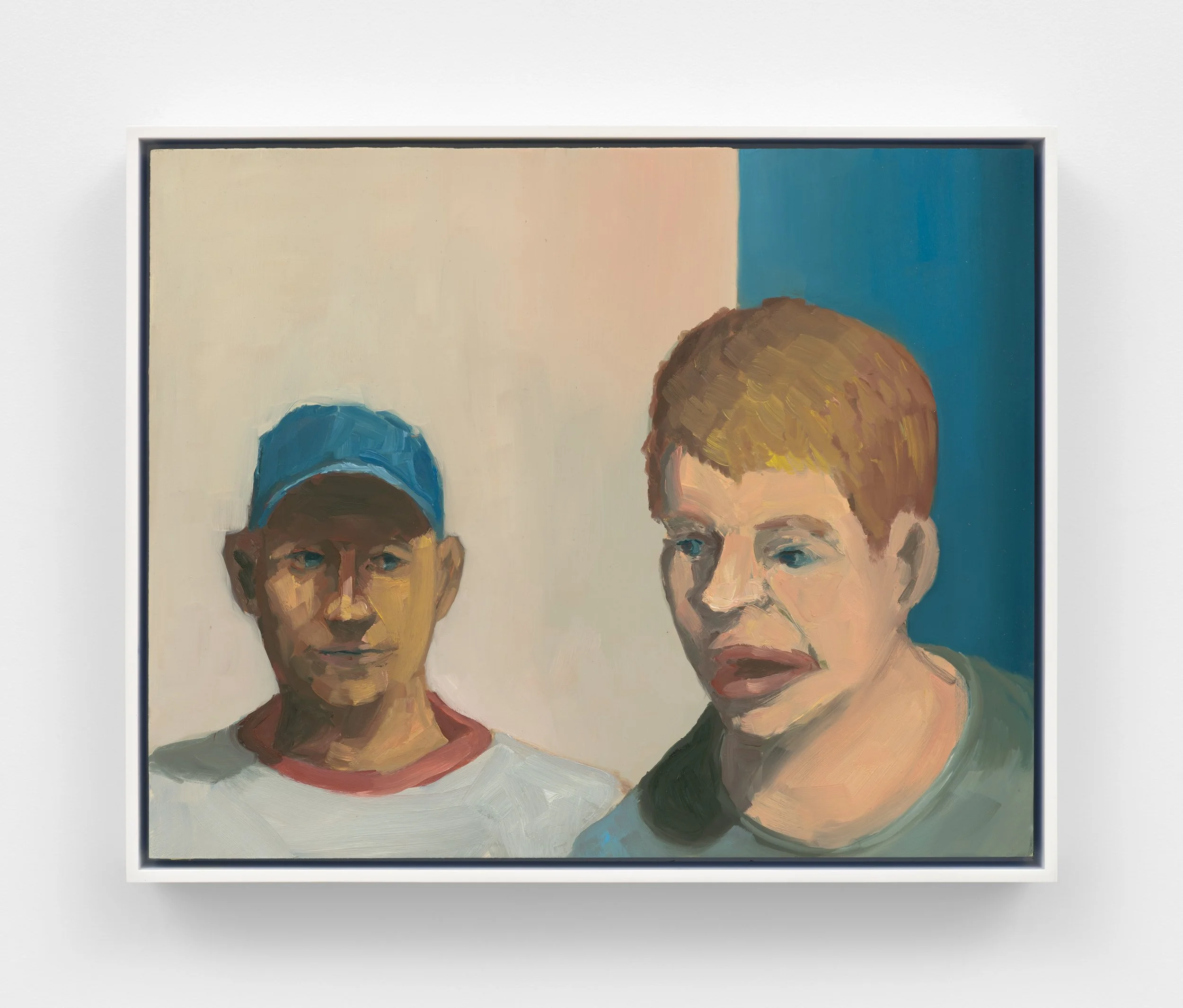
Steve Locke, cruisers (fans), 2024. Oil on canvas. 16 × 20 inch x 1.25 in (40.64 × 50.8 cm). Image courtesy of the artist and Alexander Gray Associates.
Misstropolis: The cruisers paintings are emphatically unique and new, but they get at something very universal, about intimacy, connection and tension.
Steve Locke: I’ve been working on that motif for a long time. The failure of the public project led me in another direction [from the auction block paintings]. But at its core it was always about a figure and ground relationship. It was always about absence, so the work feels related to me, even though it doesn't look related.
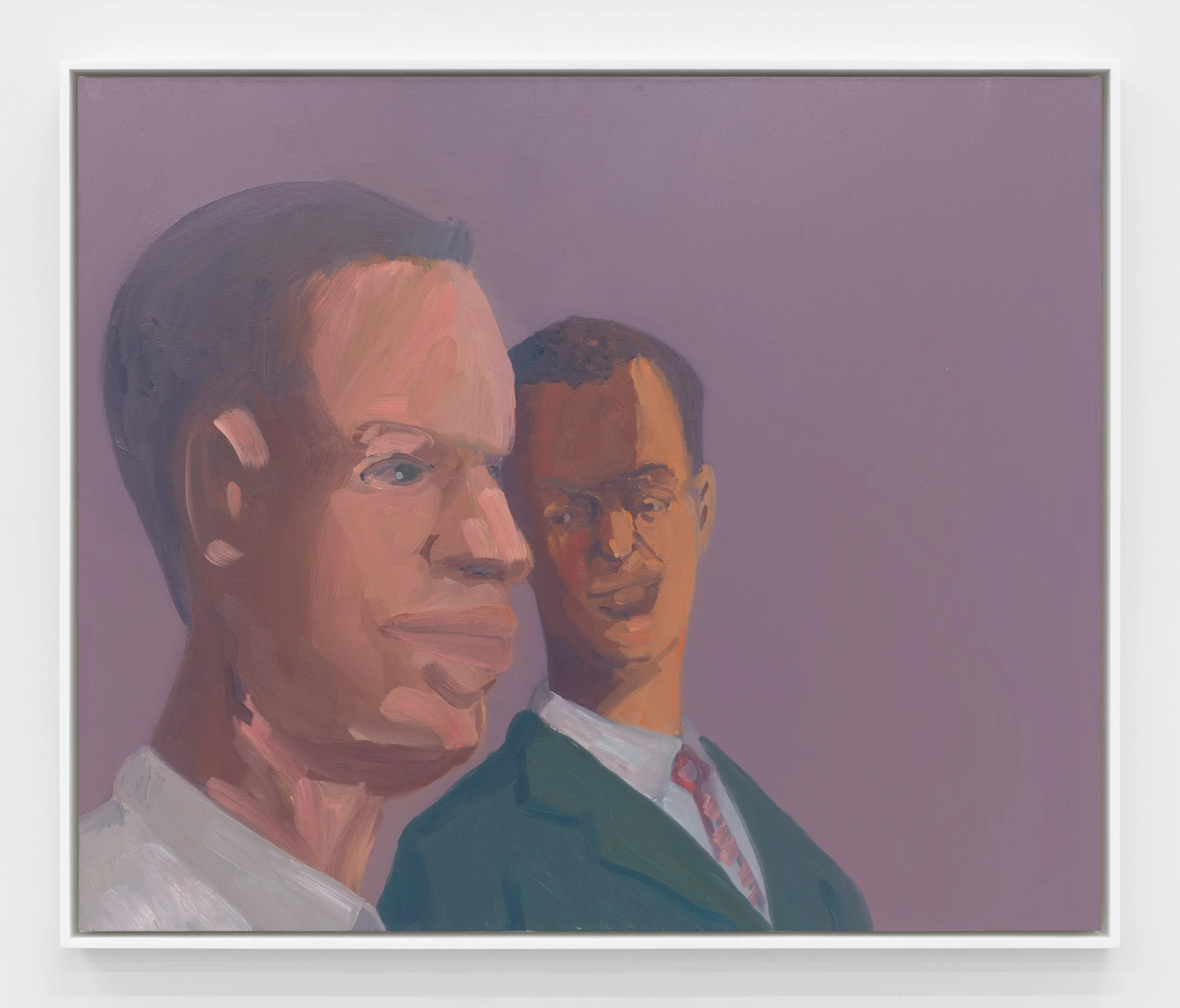
Steve Locke, cruisers (cinema), 2022. Oil on canvas. 30 x 36 x 1.25 in (76.2 x 91.44 x 3.18 cm). Courtesy of the artist and Alexander Gray Associates.
Misstropolis: waiting for my man includes two paintings from the Homage to the Auction Block series which you have been working on since 2019. It’s a true homage in that it simultaneously inherits and critiques modernist principles. While Albers was trying to simplify his paintings down to what he considered the most basic form—the square—you reveal flaws in that argument, you have said the most basic form is the auction block. Can you tell me about your relationship with Josef Albers and his work?
Steve Locke: Doing all those auction block paintings just made me a better colorist. I got so into color as an expressive mode, not just a way to create space.
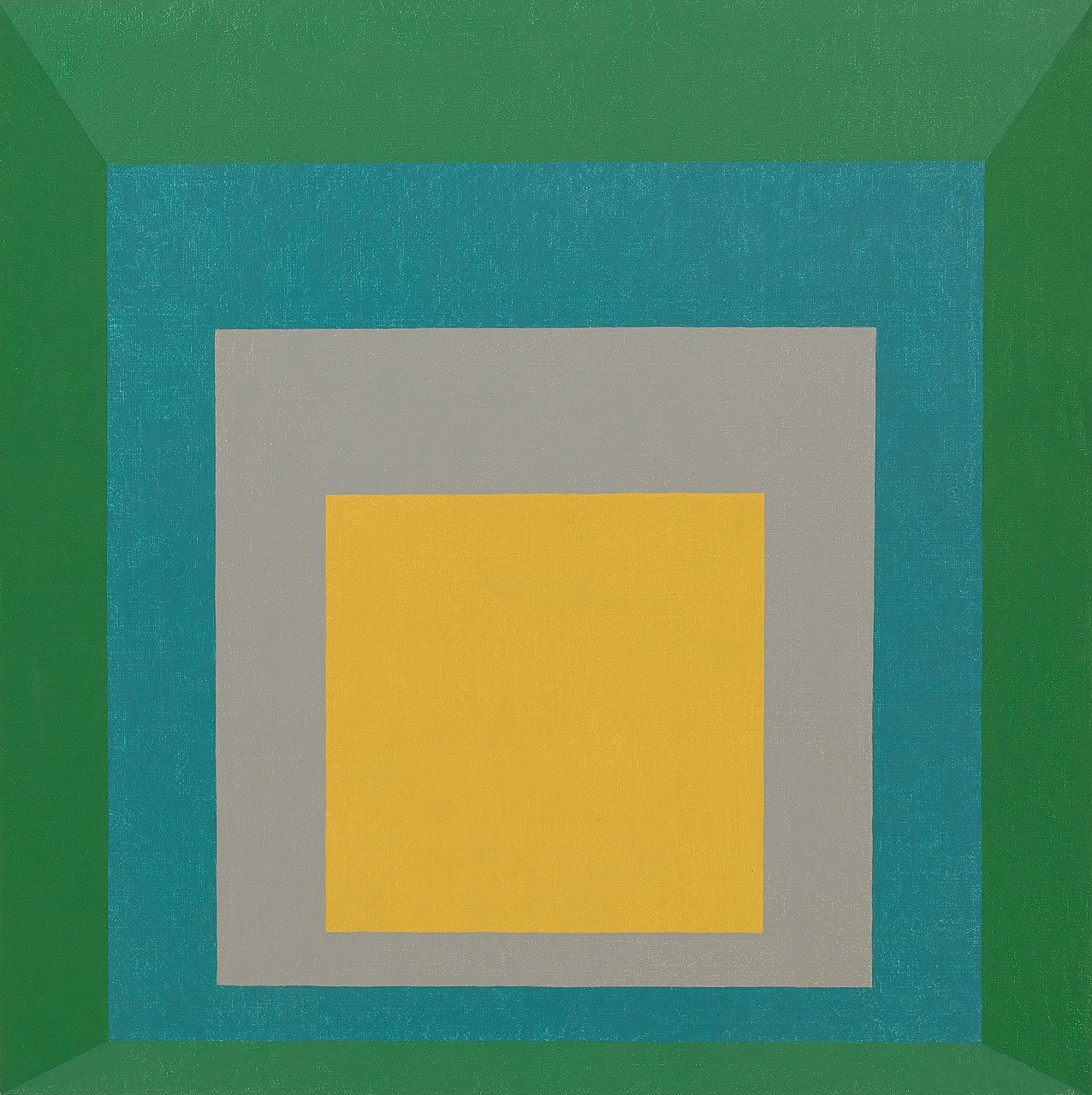
Josef Albers, Homage to the Square: Apparition, 1959. Oil on masonite. Solomon R. Guggenheim Museum, New York. The Joseph and Anni Albers Foundation / Artist Rights Society (ARS) New York.
When Albers was painting there wasn't acrylic paint to the extent that we have it now. If you’re working in acrylic paint, you don't have to mix color, you can pretty much buy the color you want. Albers didn't mix color, he took oil paint as it came, (he mixed a few blues that's where he cheated), but he was using oil paint, making it lay flat, using a palette knife, and he was working on a very textured surface which I was not. In the end it wasn't about my hand, it wasn't about mark-making, it was about color and trying to get the color to lay flat and be as direct as possible.
With portraiture, we think about flesh, sinew, transparency, and the surface of things in relationship to other things. But in the auction block paintings it's color next to color, and sometimes the colors are so close together they disappear. [Sometimes] it creates this weird leap in space, almost like you're looking down a hallway or something, and I found that endlessly fascinating.
I did a couple where I set fire to the supports. Just to see what would happen. I don't like to use the word experimentation, because that belongs to the scientific method, and experiments are replicable. I'm just exploring what happens. I’ve never been the kind of artist who's been able to imagine what something would look like. I have to make it.
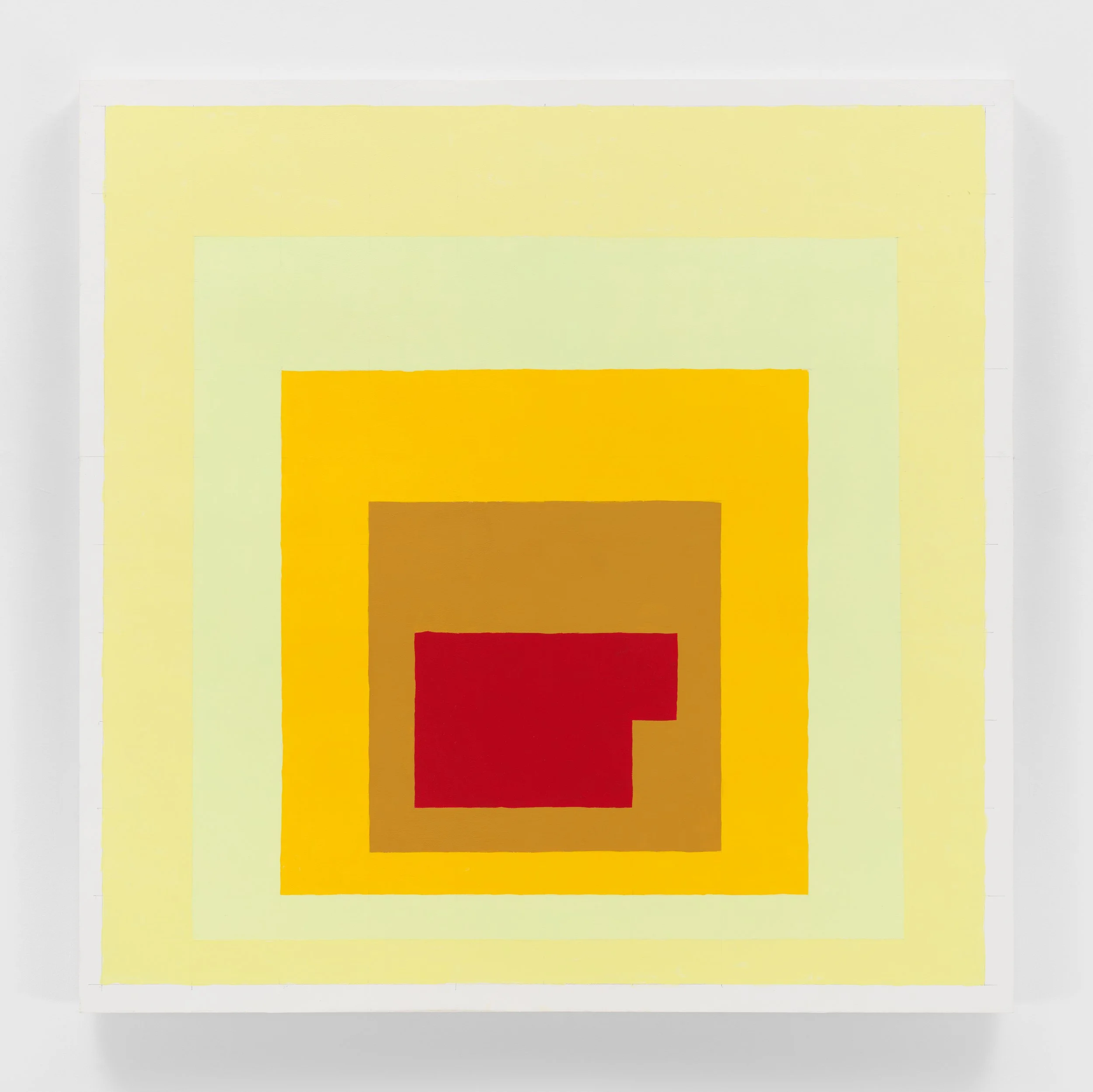
Steve Locke, Homage to the Auction Block (invite), 2022. Acrylic, gouache on panel. 48 x 48 in (121.92 x 121.92 cm). Image courtesy of the artist and Alexander Gray Associates.
You can't really name some of the colors in the auction block paintings. People talk about them in terms of food: mustard or wheat. I don't think of color that way because I'm a painter. I think about: warm, cool, light, dark, high chroma, low chroma. It's a little bit different when you take the color as color. Not that I’m taking meaning out of it, in the auction block paintings, the meaning develops by the colors in resonance with each other. You put all these colors together and you think, ‘oh it looks like a garden, or it looks like a sunset, because we're human. We have to narrate things. It's a human impulse to try to make sense of things.
I sort of painted myself into an end game with that work. If I don't need Albers's structure, what do the paintings become? That’s where I’m at with that work right now. I haven't stopped making them—it always amazes me when artists say that they're finished with an idea. I don't think I’ve finished with anything. I keep coming back to it in different ways, so I might come back to the auction block in a more direct figure-ground relationship.
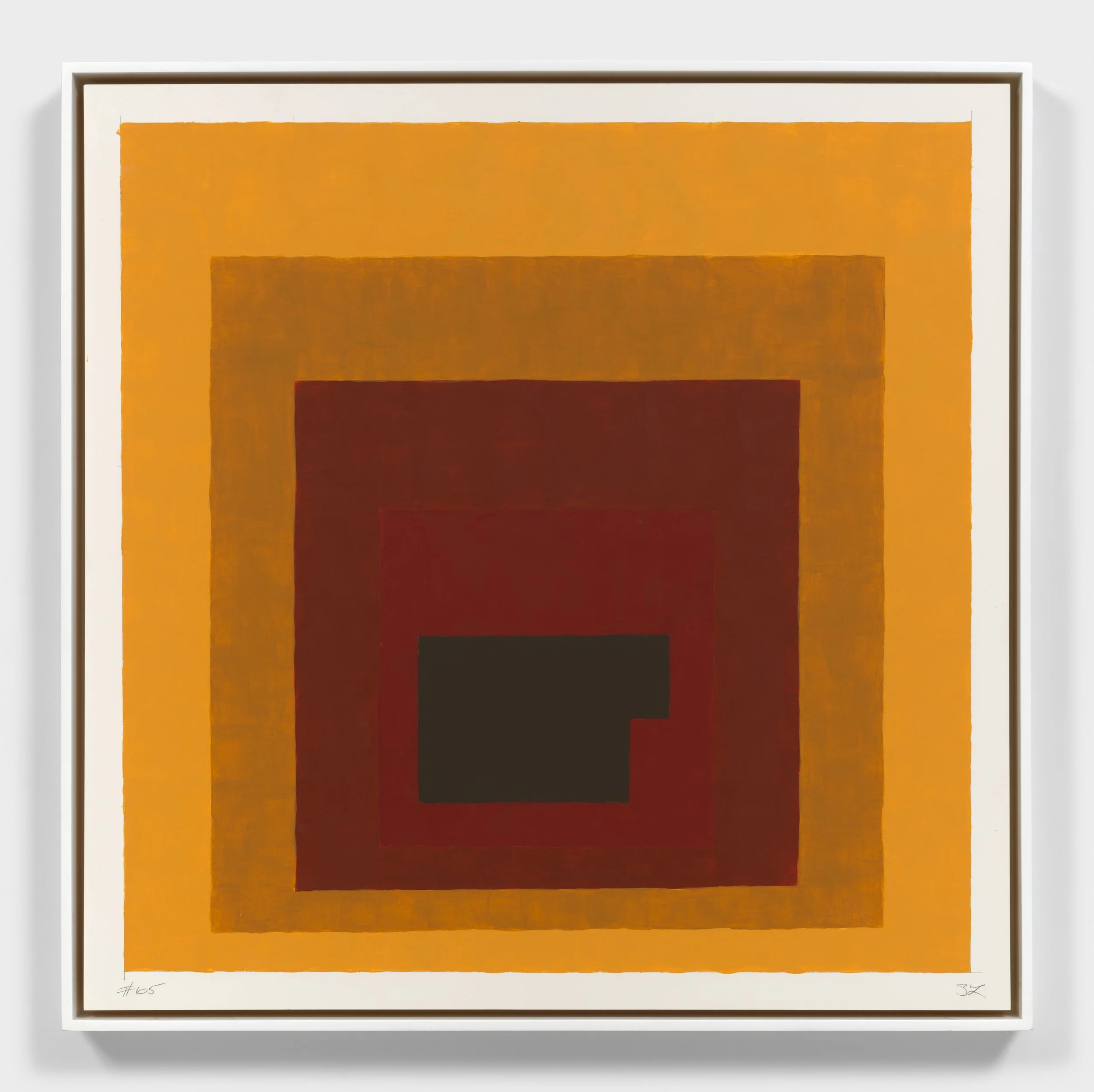
Steve Locke, Homage to the Auction Block #105b-ardent, 2021Acrylic on claybord. 24 x 24 in (60.96 x 60.96 cm). Image courtesy of the artist and Alexander Gray Associates.
Misstropolis: How does this work with color and figure/ground relationship in the auction block paintings inform your portraiture?
Steve Locke: I’ve tried not to work from photographs - even though in #killers I could only work from photographs—I didn't have access to those people and I’m glad I don’t. But the great thing about working from observation in portraiture is that you have to deal with the available light. That training has enabled me to think about color in the figure in a broad way. If I’m painting someone at six o'clock in the morning or painting someone under electric light, I understand that the light situation is going to be different.
“I know my work is weird, I don’t make pretty pictures—although I think they’re beautiful. The subject matter can be difficult for people. But the cruiser paintings, because they’re so much about intimacy and connection, they’re a little bit more open than the other work. ”
In the cruisers series, some of them look like they're indoors, some of them look like they're outdoors, it's capturing the ambient light around the flesh of the figure. In the Albers paintings (I don't want to keep calling them ‘the auction block paintings’) I use so many colors that had nothing to do with what we understand as figuration—blues and violets and purples. It’s hard to think about those colors in the figure unless we're thinking about African American flesh or shadow colors.
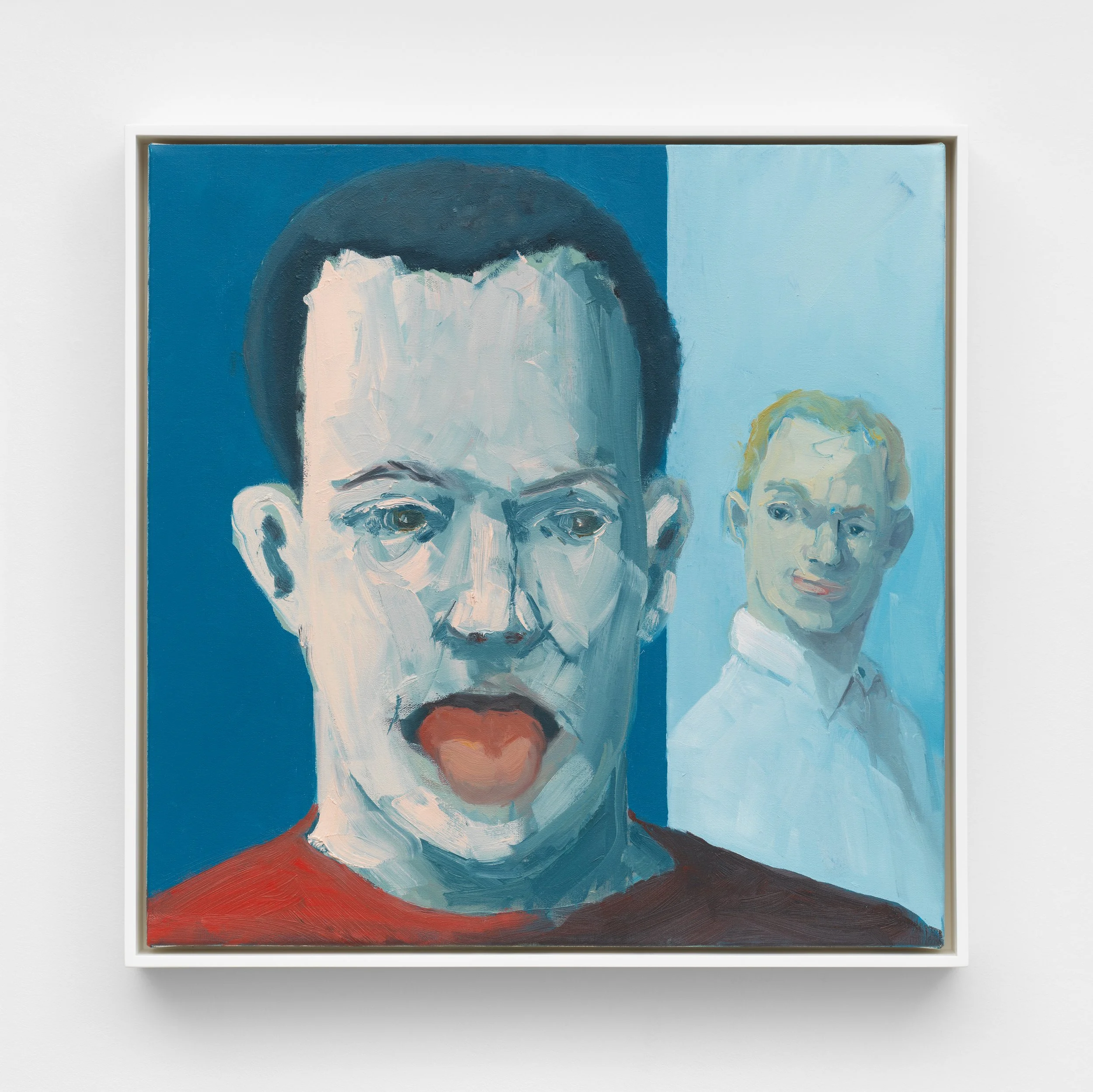
Steve Locke, cruisers (hotel), 2022, Oil on canvas 20 x 20 in (50.8 x 50.8 cm). Courtesy of the artist and Alexander Gray Associates.
Misstropolis: When you talk about color, are you also talking about content – your thinking about race and America’s history of racial violence?
Steve Locke: When I did Three Deliberate Grays for Freddie (A Memorial for Freddie Gray) (2018-2019) for the [Isabella Stewart] Gardner, there's signage outside on the glass, but if you're driving by or walking by, you don't know what it is, it's just three colors. It looked like ice cream, and how lovely to remember someone's life and think about ice cream? I think the goal is to satisfy people visually, to excite them and engage them visually, and colors are a very simple way to do that. Then once you have them you can reveal the content.
With the auction block paintings, people say, ‘oh that's such a beautiful arrangement of colors,’ and then they're like ‘oh it's Albers,’ and then ‘oh…’ and the rest of the content comes along. Hopefully it makes them reconsider how they feel about modernist structures. That's what Freddie Gray was about—thinking about anti-Black violence in the context of that beautiful Renzo Piano façade.
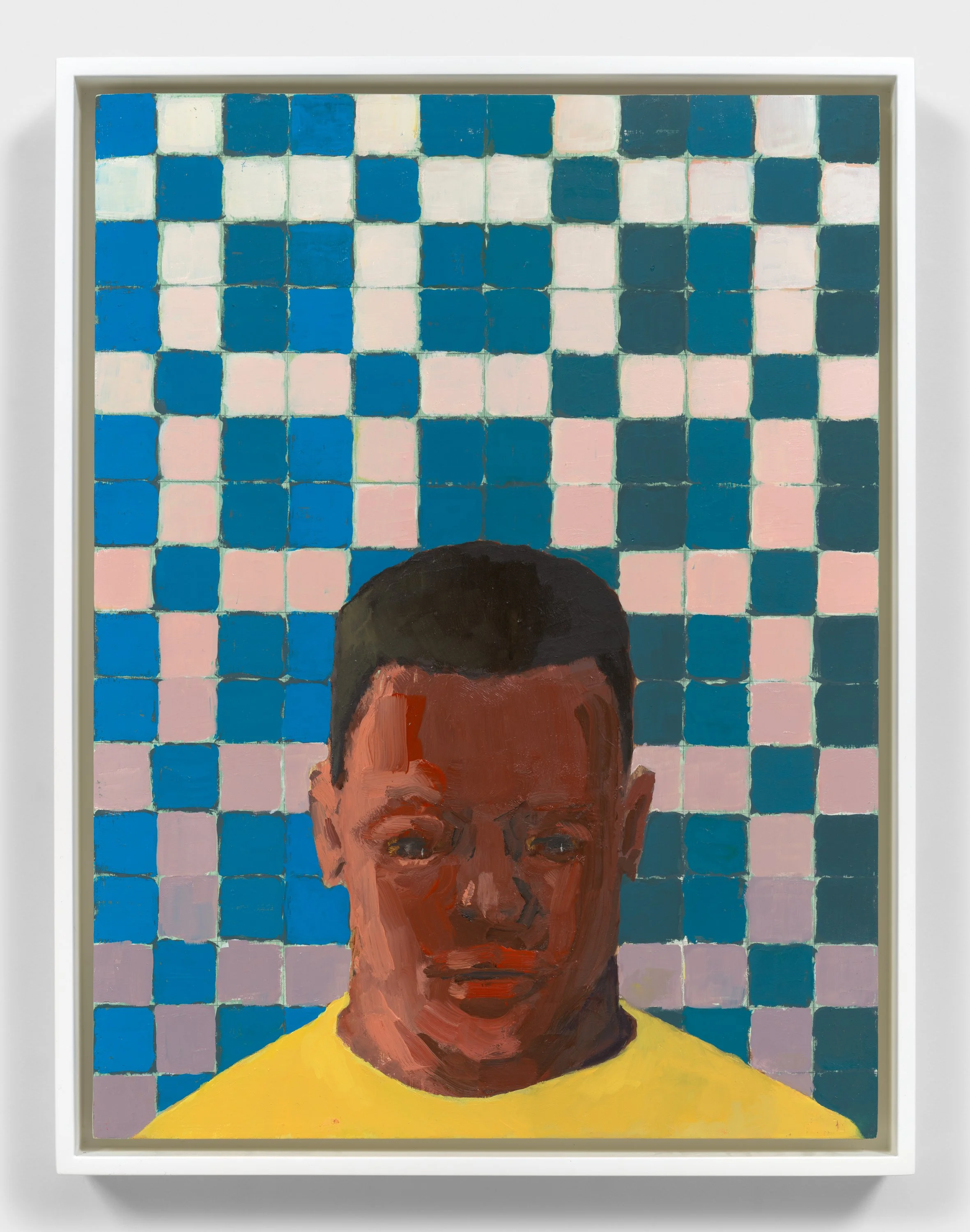
Steve Locke, Anxiety of Influence #5, 2020. Oil on birch panel. 16 x 12 in (40.64 x 30.48 cm). Courtesy of the artist and Alexander Gray Associates.
Misstropolis: Violence and provocation are important in your work, how does sustained interaction with such violent subject matter affect you emotionally?
Steve Locke: I'm not an expressionist, so my work isn't about how I feel. I try very hard not make myself the subject of the work. I don't want people looking at the work and thinking, ‘Steve Locke had a bad day,’ or ‘Steve Locke thinks this guy is attractive.’ I want people to look at my work and think about themselves.
I really thought that I was going to make 100 of the #killers drawings. I drew the adoptive moms of Devonte Hart, the little boy in California. They killed him and all of his siblings, drove a car off a cliff. Those are the last two people I drew. I drew those two women, and I felt like I couldn't continue. I don’t like to say no to anything, that's why it’s ongoing, but I don't know if I’m going to be able to go back to it. I never look at those #killers drawings once I finish them. I feel like the thing to do would be to draw everybody in the Epstein files. That could be an interesting next project.
Misstropolis: You’re a student of art history. We’ve talked about a number of artists you respect, including Rachel Perry, who is one of my favorite artists. Who else do you look to when you want to push yourself or stretch your idea of painting?
Steve Locke: I’m looking at a lot of non-objective abstract painting since I'm focused on portraiture and the tongue paintings and the cruisers. I’m falling in love with the material of oil paint again, so I’ve been looking at Dona Nelson, Suzanne McClelland, Carrie Moyer—interesting, almost all women abstract painters—Joan Snyder looking at her a lot.
Misstropolis: How do you think about your work’s relationship with politics?
Steve Locke: Anyone saying their work isn’t political is coming from a place of extraordinary privilege, and a sort of cisgender male positionality.
Like Doris Salcedo says, ‘every work of art is political, because every work of art is breaking new ground.’
My work deals with history—American history specifically—and the history of violence against queer and Black people. And to even make work in that vein you have to embrace a certain political stance about the worth of Black people and the worth of queer people. They’re worthy of being imaged and memorialized. Because we are told constantly that they’re not. The political part of it is overtly interested in justice more so than politics, that's really the crux of my project.
Misstropolis: Tell me about your saying, “there’s no magic, there’s only justice.”
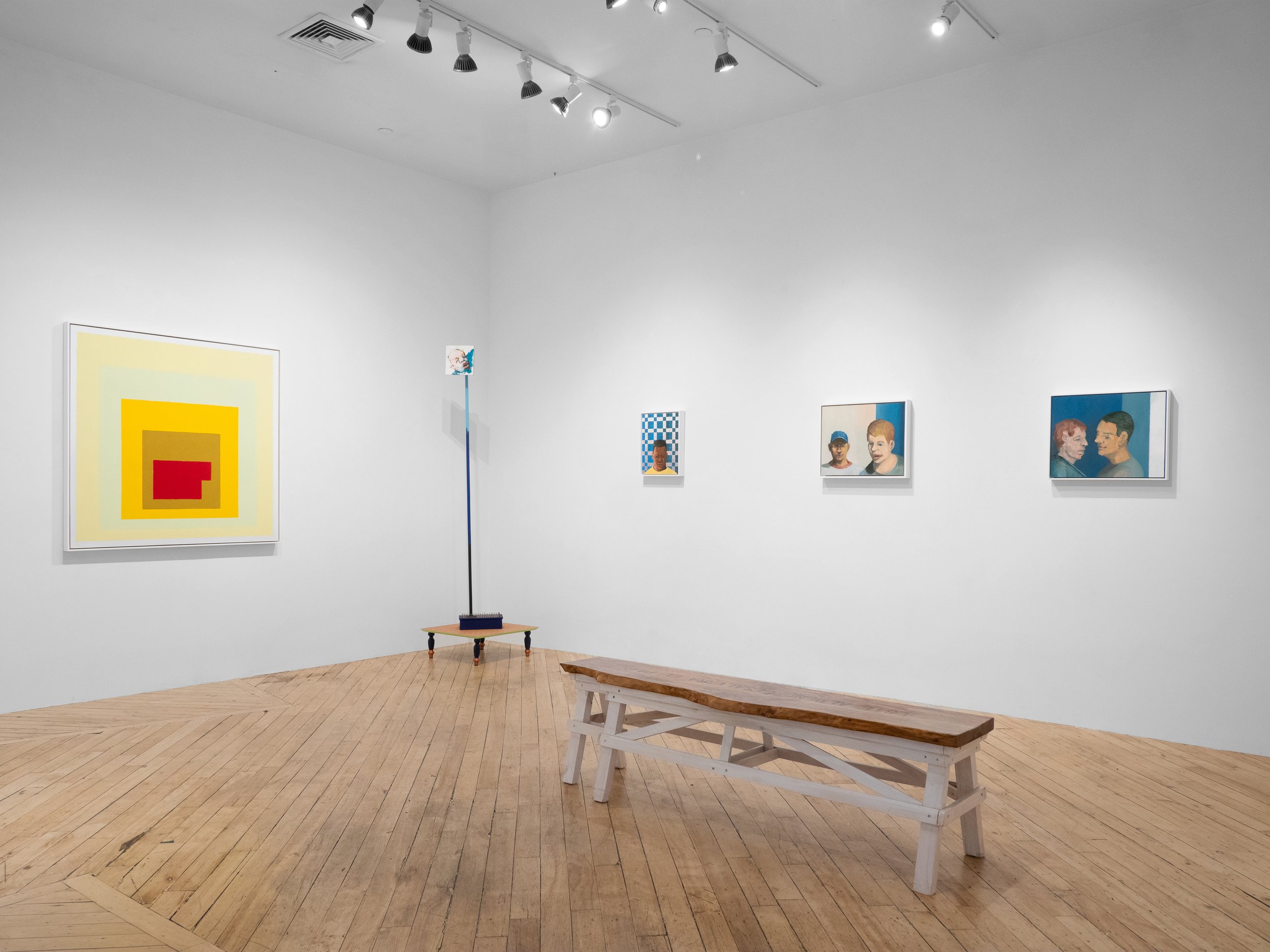
Steve Locke, waiting for my man. Installation view, LaMontagne Gallery.
Steve Locke: My mother used to say, ‘hope is a thief.’ People sitting around hoping things get better… go do something! Teach a child to read, go to a food bank, put on a vest and walk a woman into a clinic. This idea that you can’t do anything, or the problems are so insurmountable… No, do something and be honest about what you're doing. Political action is collective.
It’s deeply political to make something beautiful for someone to look at. To give somebody a respite. During like the Civil Rights Movement and the Movement for Gay Liberation, the discos were packed. You would go out, march, do a die-in in front of the Centers for Disease Control, and then go home take a disco nap before going to the club. We have to come together to sustain each other.
Misstropolis: A disco nap is a really great idea. What do you hope people take away from the show?
Steve Locke: This show is a great way for me to show people here what’s been going on, because I’m not part of the community anymore. I started my career in Boston, and I wish I had left under different circumstances. But Russell [LaMontagne] has been kind enough to give me this opportunity to come back and reconnect with the community that helped me become the artist I am. I hope it’s an opportunity for the Boston art world to come together.
Cover image: Steve Locke, the regular, 2022. Oil on panel. 12.5 x 7.75 in (31.75 x 19.69 cm).
waiting for my man is on view at LaMontagne Gallery in Boston’s SoWA neighborhood through April 25, 2026.
LaMontagne Gallery, 450 Harrison Avenue #1, Boston, MA 02118
You can buy Locke’s monograph Steve Locke: I Said What I Said from DelMonico Books. Edited with text by Evan Garza. Foreword by Hilton Als. Text by Craig Drennen, Karen Kurczynski, Kymberly Pinder, Robert Storr. Interview by Helen Molesworth