FLOAT: A Summer Art Exhibition at FPAC Art Space
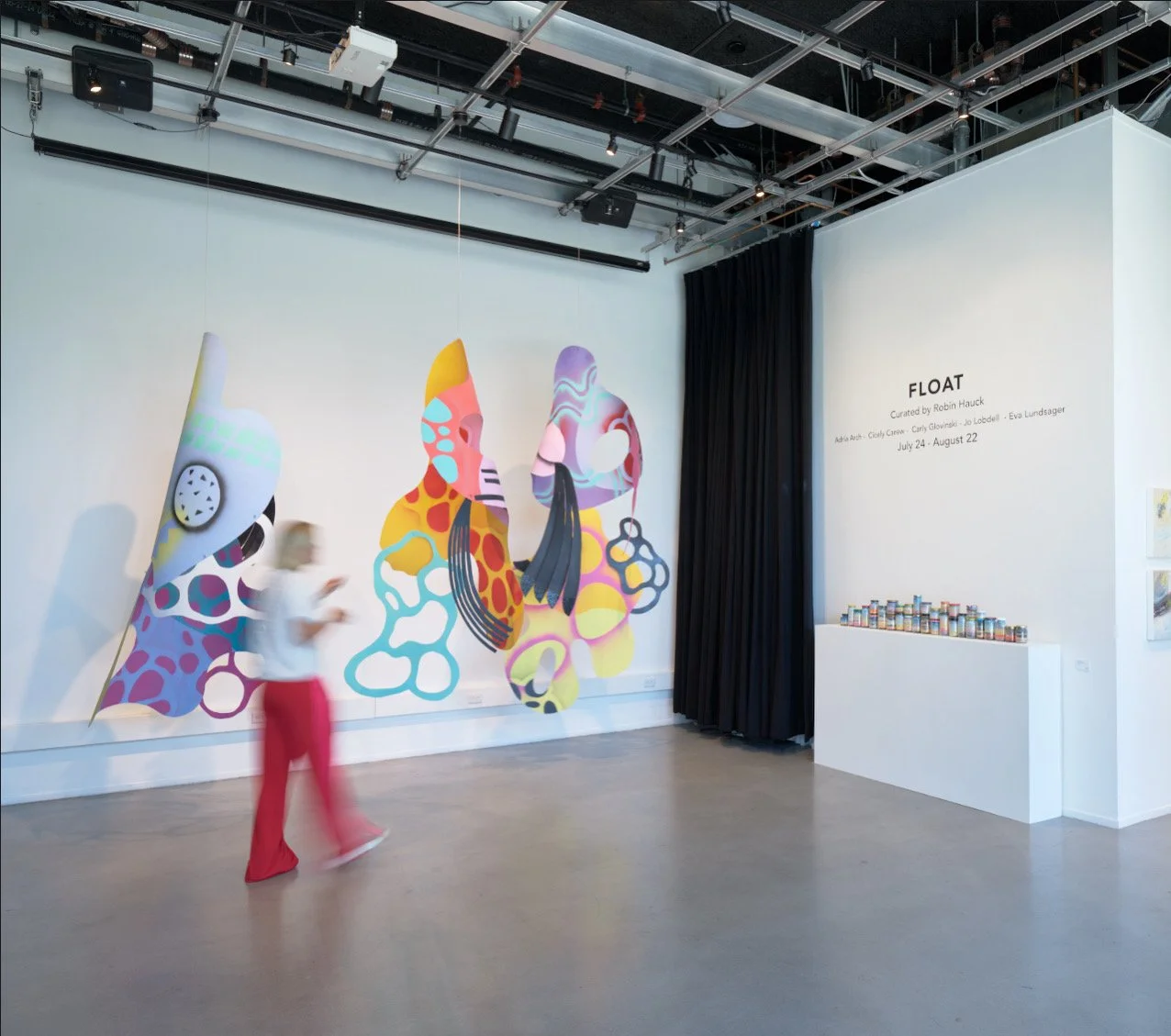
FLOAT is my latest curatorial project, a sculpture and painting show at the FPAC Gallery in Boston, inspired by aerial sculpture, summer moods, and Mary Oliver’s poem The Ponds.
Still, what I want in my life
is to be willing
to be dazzled --
to cast aside the weight of facts
and maybe even
to float a little
above this difficult world. *Excerpt, The Ponds by Mary Oliver. Reprinted by the permission of The Charlotte Sheedy Literary Agency as agent for the author. Copyright © 1990, 1995, 2005, 2016 by Mary Oliver with permission of Bill Reichblum.
This show is for right now. FLOAT is designed as an invitation to drift and a refusal of cynicism. The assembled works lift us beyond knowledge into imagination, where we can appreciate magic and beauty, beyond the noise of the everyday.
Five artists: Adria Arch, Cicely Carew, Carly Glovinski, Jo Lobdell, and Eva Lundsager answer this call in inventive, personal ways. Even as their work varies from rowdy to serene, painted sand to plant-dyed yarn to garden fencing, all cite nature as creative inspiration and spiritual guide. Making is a deliberate resistance to “the pull,” as Jo Lobdell describes it, and a refusal to be hijacked by sociopolitical realities. Lundsager’s insistence: “you will not stop me from having fun in my life” and Arch’s “I want to be audacious,” bring a rebelliousness into the space. Glovinski’s “I make work despite,” and Carew’s “this is not about lightness…” are sober reminders of the sustained effort required to make work that seems buoyant.
Running from July 24 through August 22, FLOAT is a deep-summer show. The beloved trappings of summer—sunshine, abundance, color, tourism, long days, waterfront strolls and dips in the fountain—confront a dark political mood. These artists make beautiful work as an act of defiance. FLOAT suggests that when life is heavy, art offers up possibilities for levity, community, and hope.
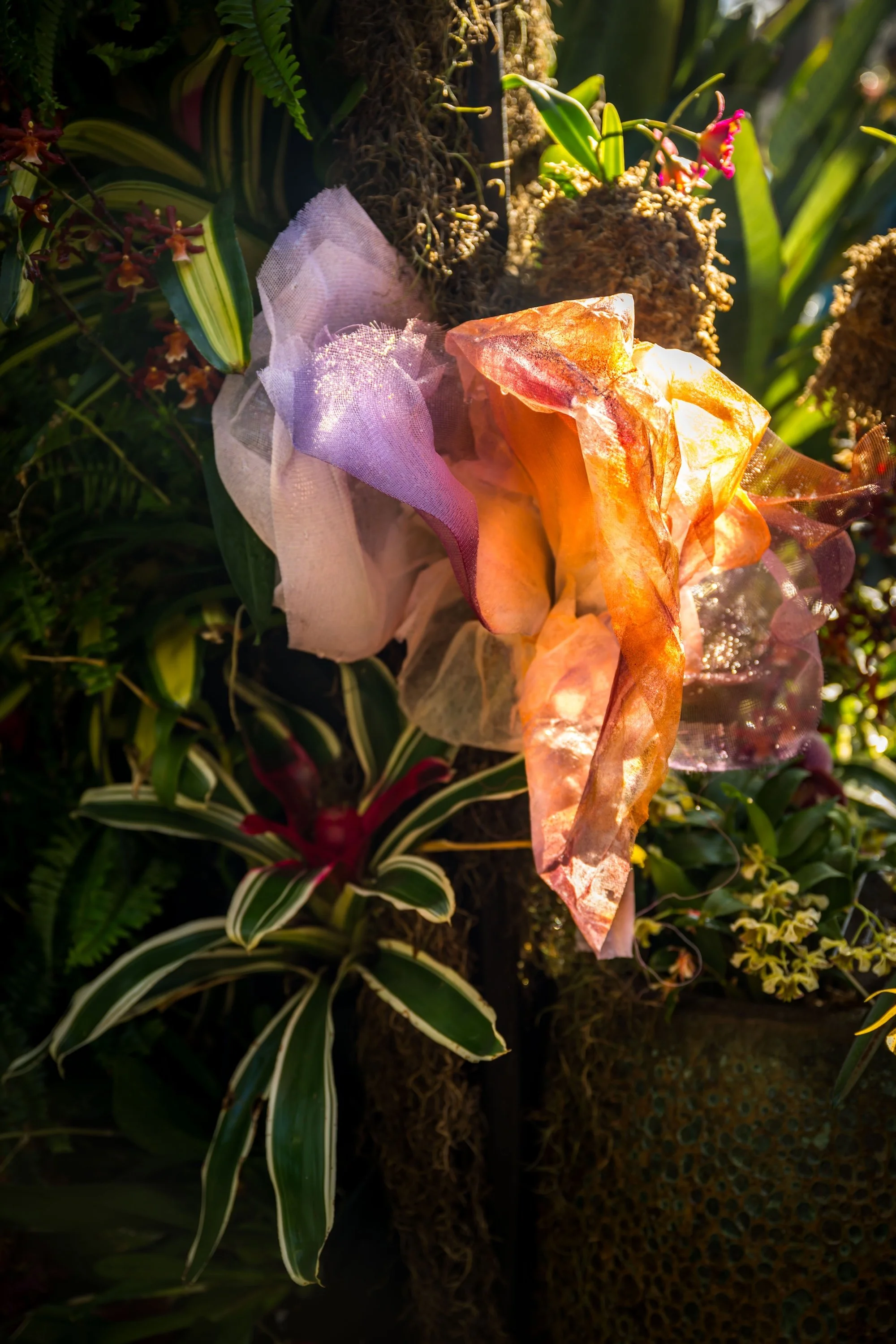
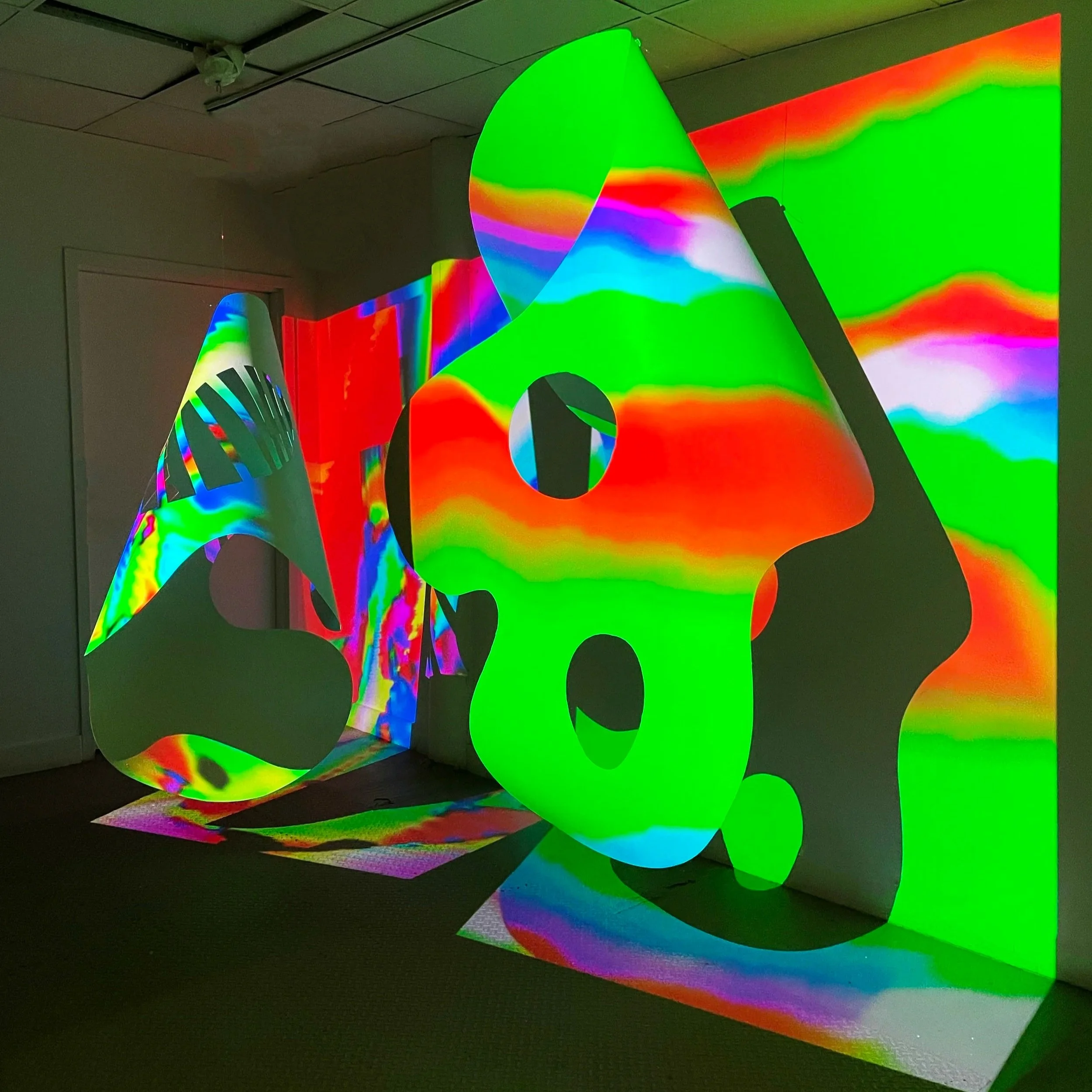
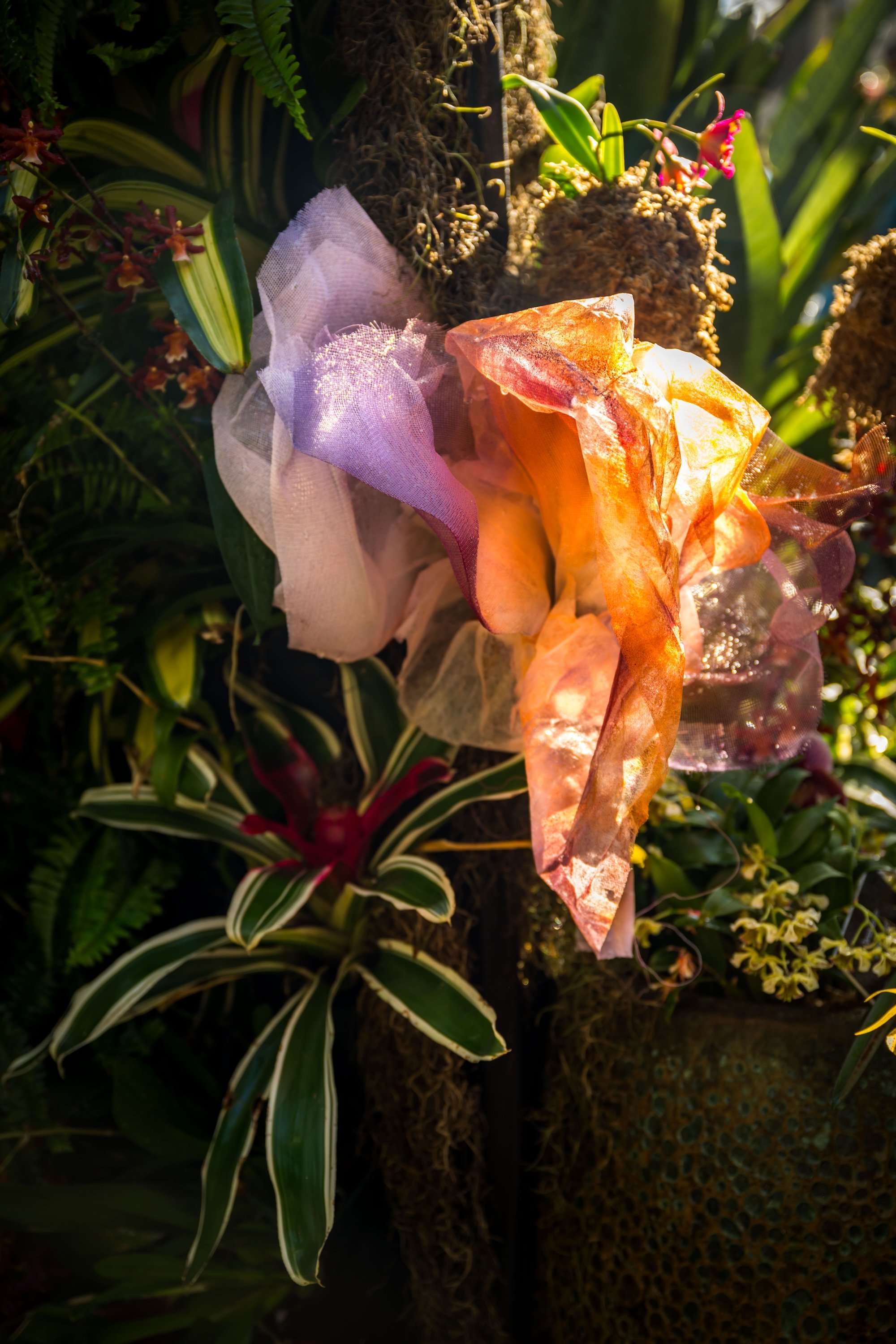
Cicely Carew’s Astral 2 installed in ELEVATED: An Orchid Exhibition at the New England Botanical Garden. Photo courtesy of the artist.
Cicely Carew
“This isn’t light, this isn’t “all is easy and well.” It’s deliberate intention. ”
Cicely Carew's practice spans painting, sculpture and healing arts (yoga, breathwork, teaching). Three pieces from her Astral series travel to FPAC Art Space from the New England Botanic Garden, where they hung amongst petals and pollen in ELEVATED: An Orchid Exhibition. For her, making aerial sculptures is a postural gesture. "Looking up puts one in a posture of curiosity. An open heart is more susceptible to hope and dreaming. During a time when we spend most of our time looking down at our screens, this invitation to look up feels like an invitation to reconnect with each other."
Carew constructs her sculptures from precarious parts. Aluminum mesh, silk screens, fiber optics and paint intertwine with garden fencing to create cloudlike forms. The fencing is not a neutral choice. "[Fencing is] a material of separation, othering, and protection—but from whom? It's apparent that it's not for people that look like me. It's against people that look like me. Hate is allowed."
Other artists have taken up fencing to comment on borders, exclusion, and the environment — take Ai Weiwei's 2017 Public Art Fund project Good Fences Make Good Neighbors. Carew takes the material, mixes it with color and mesh, and bends it into a cloud.
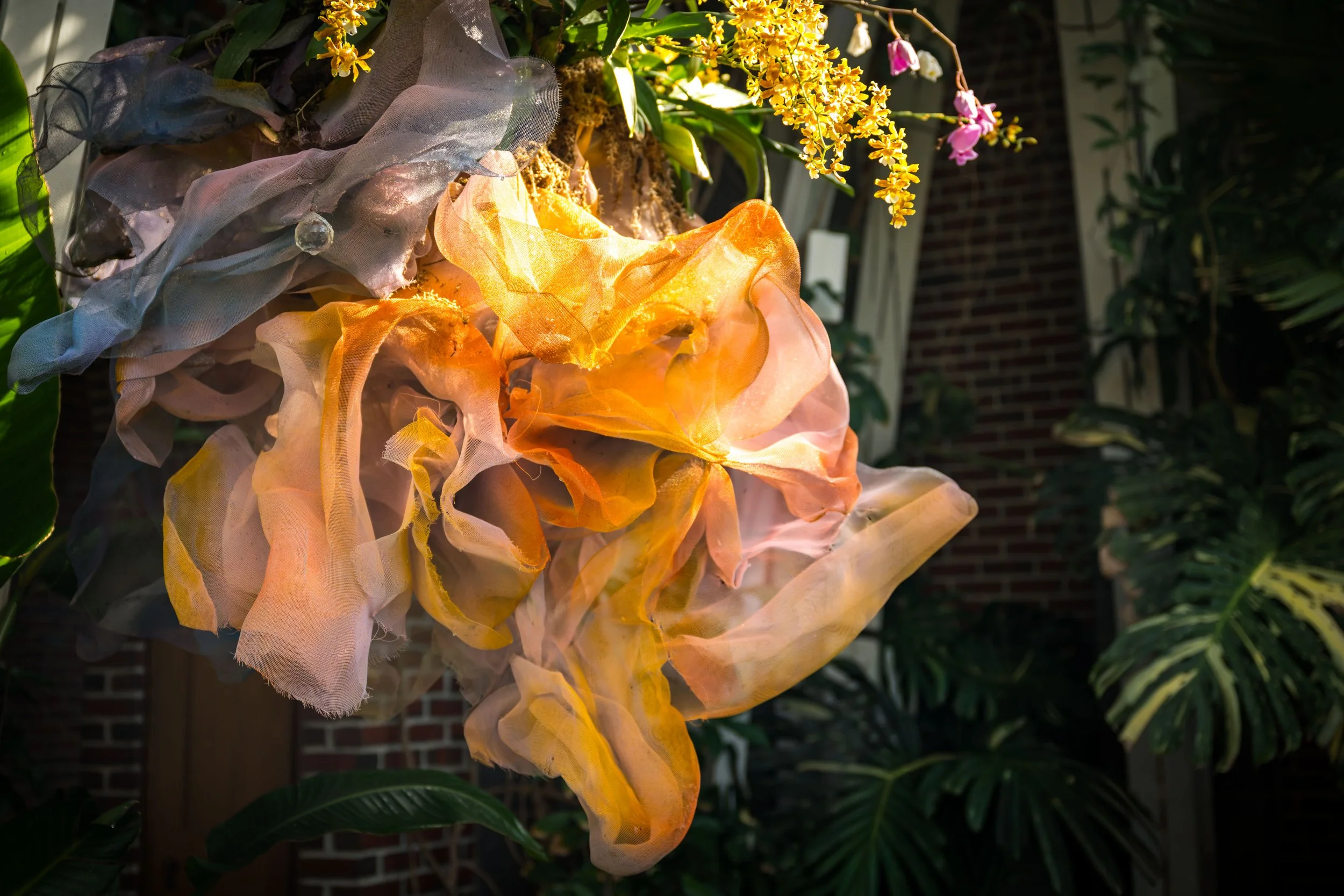
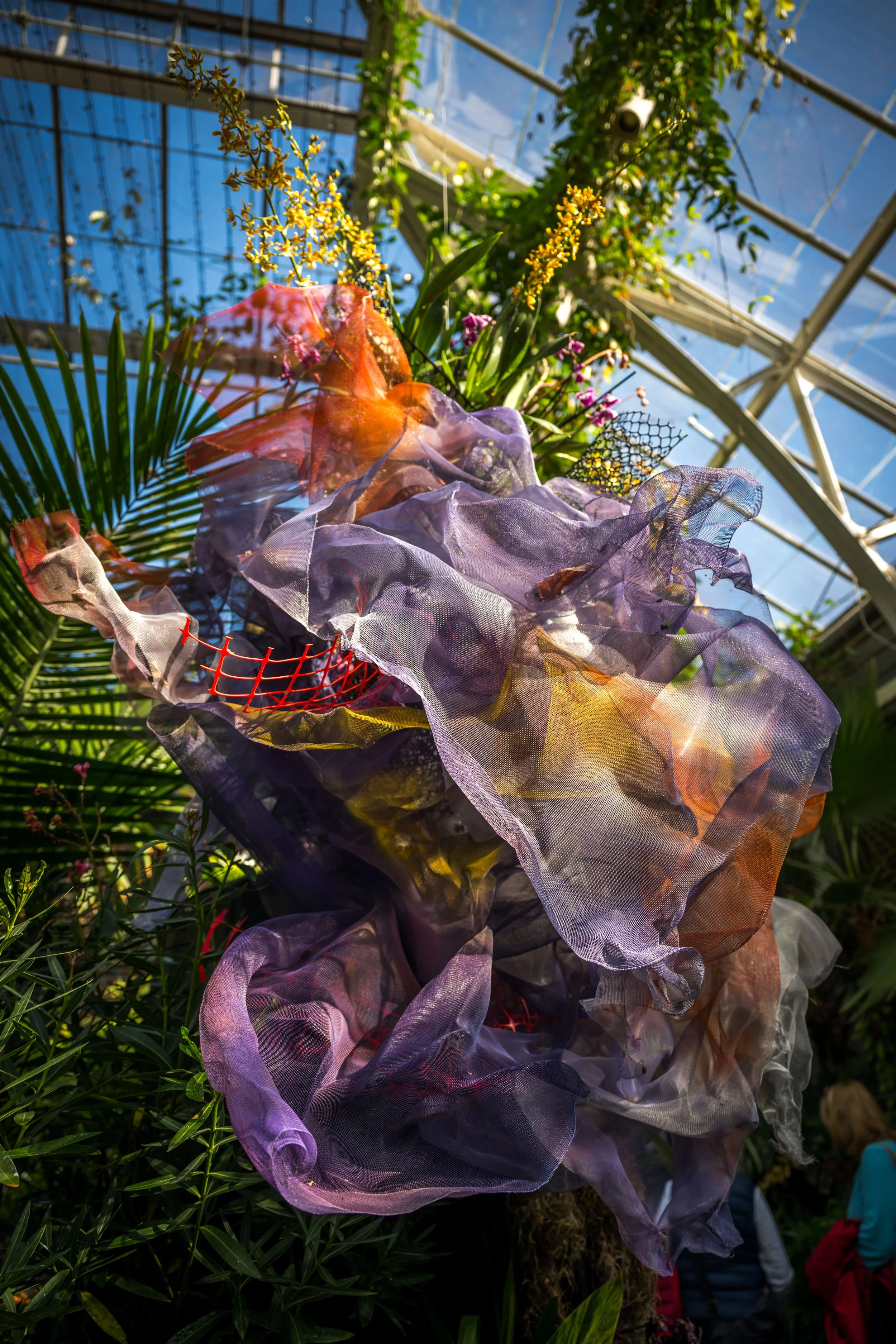
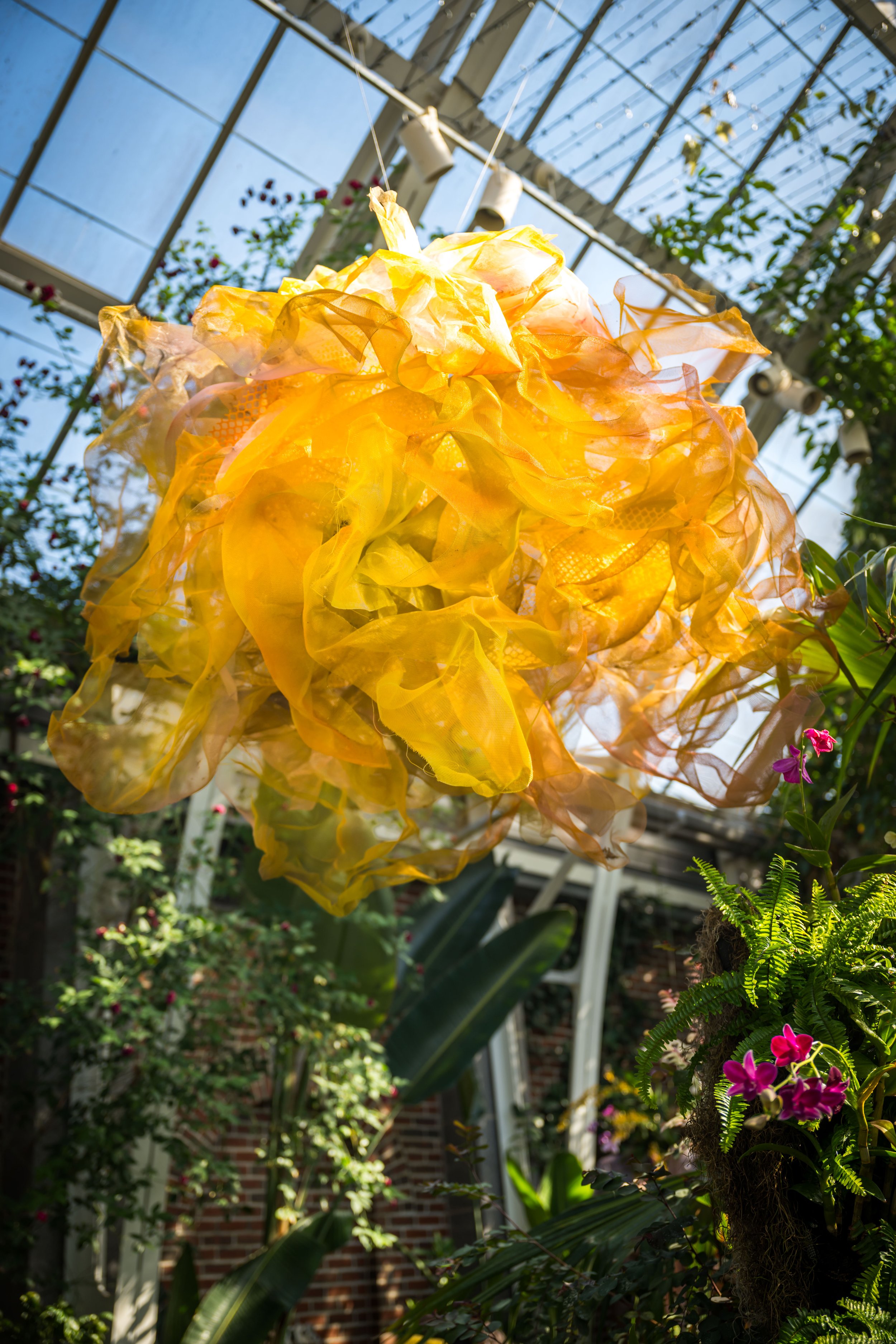
Suspended, the Astral pieces pose a question: can beauty hold complexity? Carew told me, "Having to stay present is a muscle. Staying in a place of play—that's my sense of liberation and joy. There's also a moment for levity. My project is to not turn away, but instead to keep turning toward the uncertainty and difficulty, and walk the path. Creating these pieces keeps my connection to faith."
Eva Lundsager
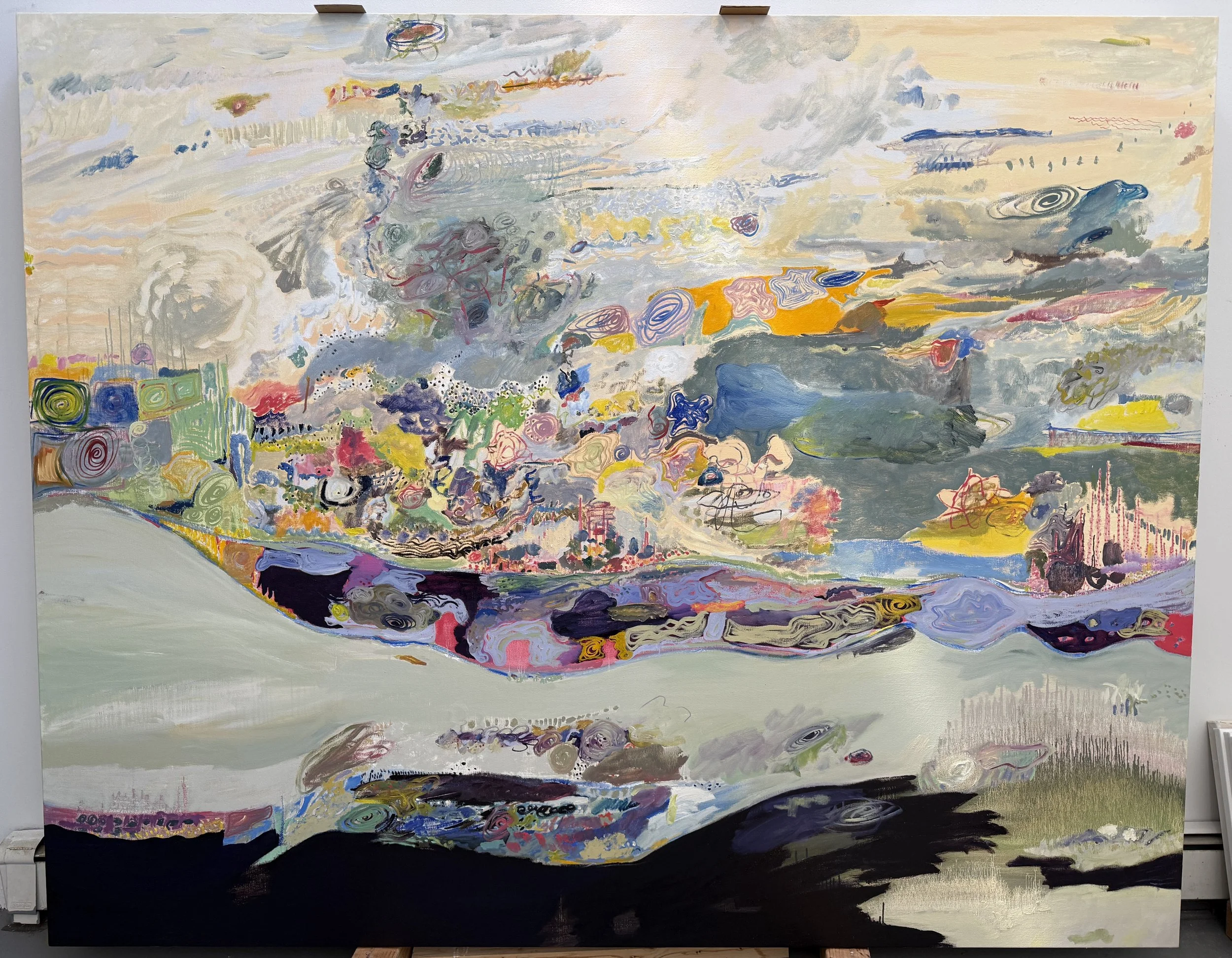
Eva Lundsager, Today I Flew, 2026. Oil on canvas. 72 × 90 inches. Photo courtesy of the artist.
“People sometimes ask me, ‘What is it?’ And I’m like, ‘Well, it’s paint on canvas, and what you see in it is up to you.’
”
Eva Lundsager is a Boston-based painter working primarily in oil, watercolor and sumi ink. Known for her striking palette and dramatic style of abstraction, Lundsager’s large-scale work features great swaths of color, upside down drips, aching horizon lines, and areas of obsessive mark making. A teacher and scholar, she is deeply knowledgeable about art history, and it grounds her creative choices.
When we last spoke, Lundsager had just returned from visiting family in Denmark. Her parents were teenagers in 1940 when Germany invaded, and her father was jailed for being part of the resistance. She wants to keep that history close, she said, for her children and for herself. That attitude matched our conversation about FLOAT bringing together artists making work as resistance. Her way of describing radical joy: "You will not stop me from having fun in my life."
For Lundsager, a ritual drawing practice and looking as a way to stay present are central to being an artist. "We have to be open to what is happening right now, but not get distracted." She titled a 54 × 66 inch painting from 2024 To Be Here Now. "I let myself gaze at things without focus and just kind of take in deep space."
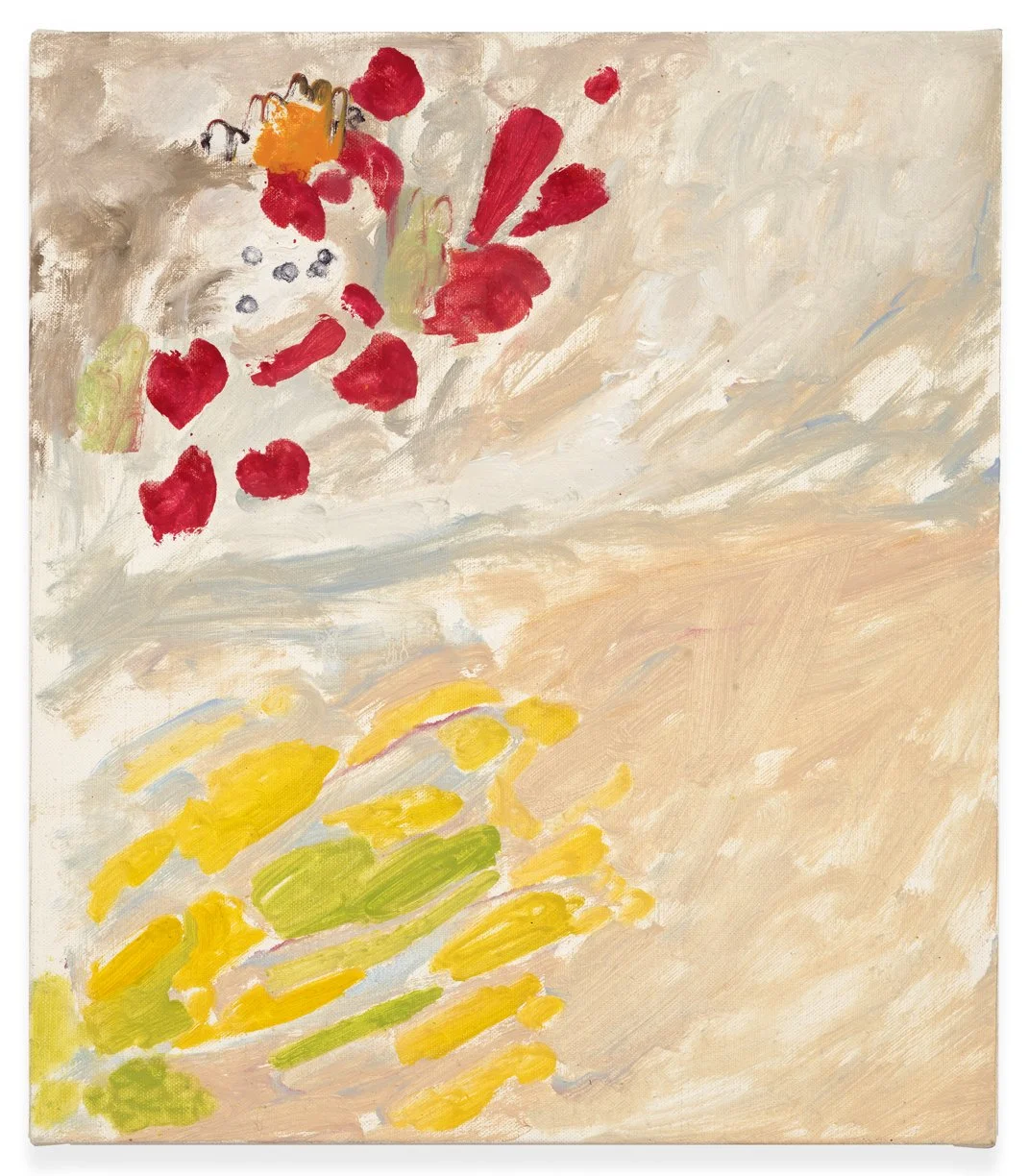
Her 16 by 14 inch Flight pieces came after finishing a large, time-consuming painting. They were inspired by studying the trees and clouds. "It's all about the sky, like Constable's paintings of the sky, or Stieglitz's photographs of clouds. I had these smaller canvases and I wanted to make something like a drawing, relatively quickly, and all of them at the same time."
Never shown before, they speak to practice and process — the direct, simple act of making, done without expectation. A painter must resist the constant pull to self critique her work just like this writer must resist the constant pull to edit. One of her favorite quotes is Barbara Kruger's: art should "show and tell, through a kind of eloquent shorthand, how it feels to be alive."
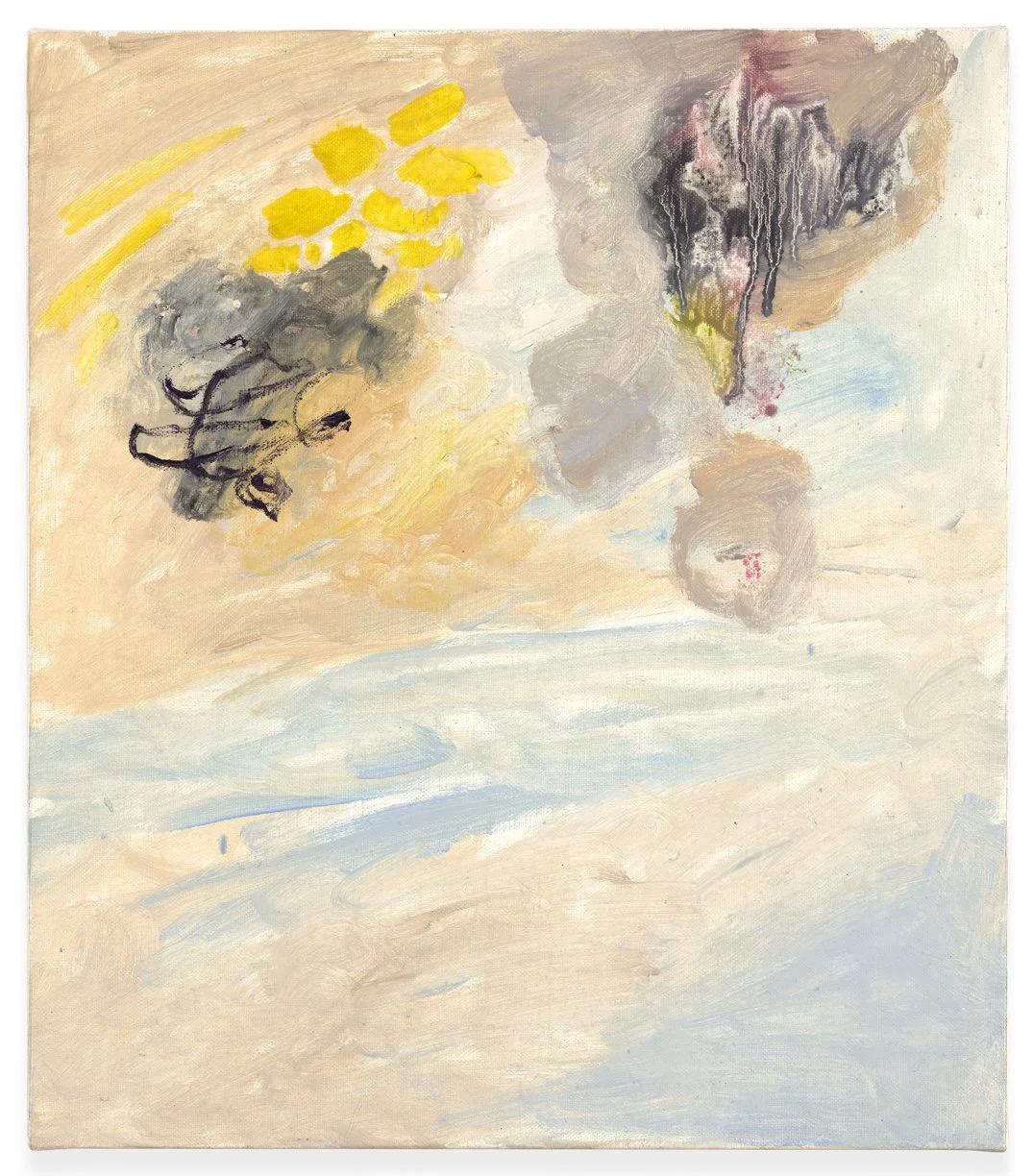
Eva Lundsager, Flight 1, 2015. Oil on linen. 16 × 14 inches. Photo - Stewart Clements.
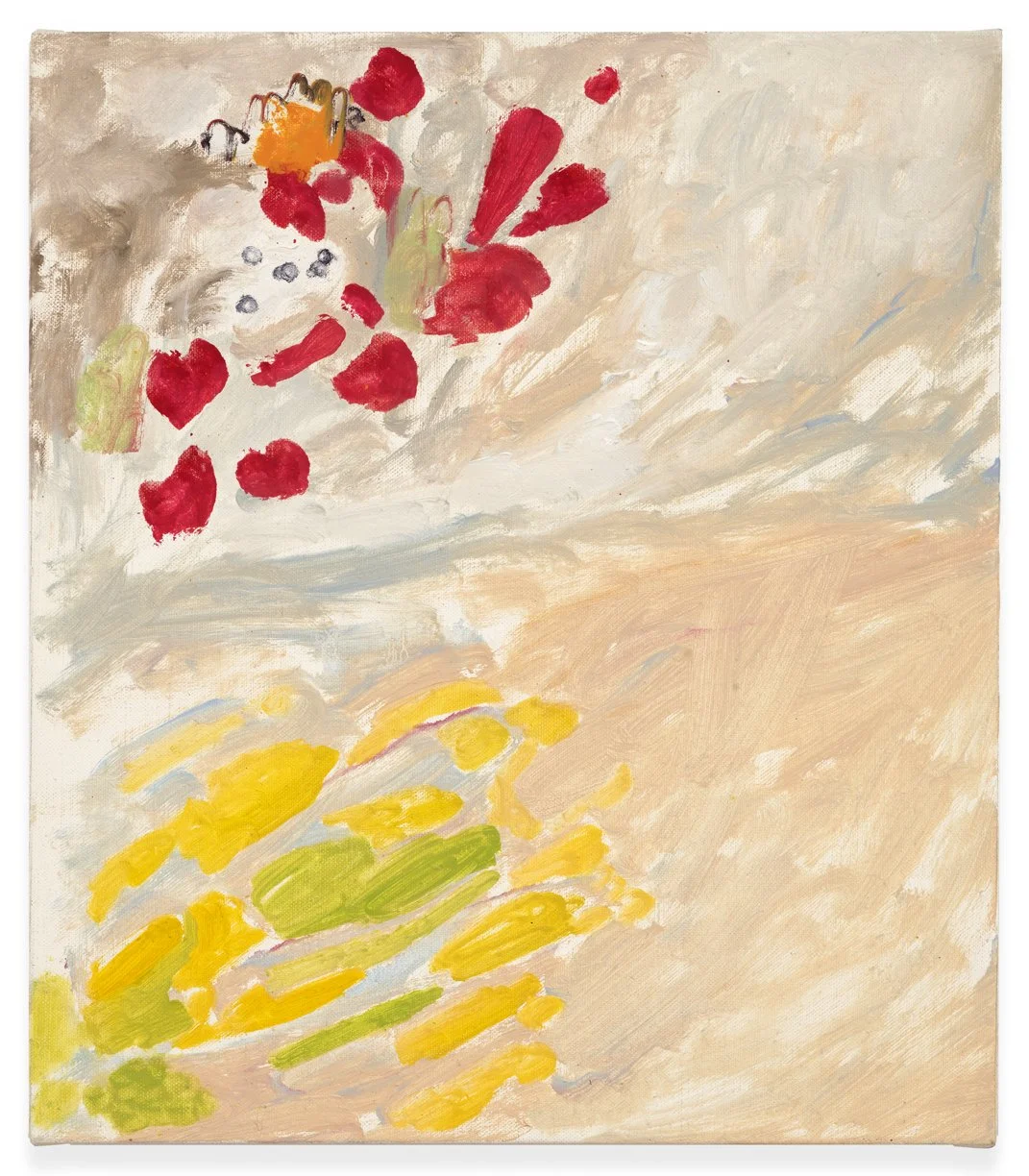
Eva Lundsager, Flight 2, 2015. Oil on linen. 16 × 14 inches. Photo - Stewart Clements.
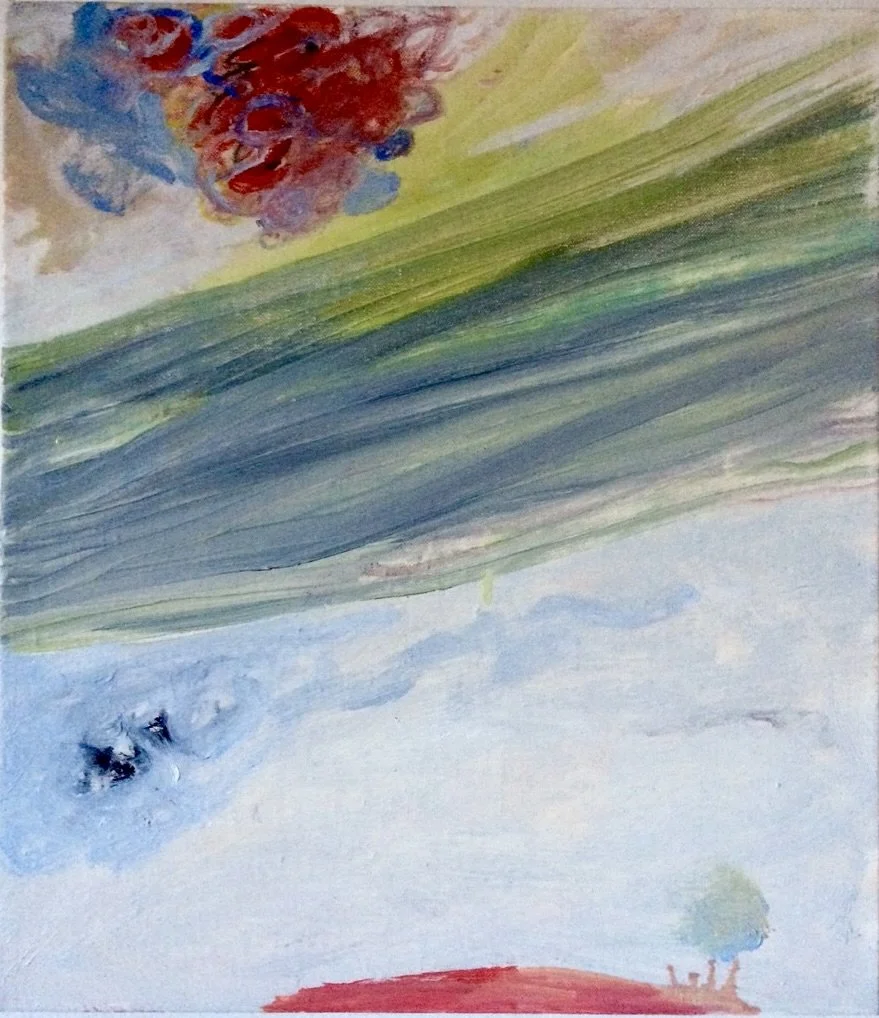
Eva Lundsager, Flight 8, 2015. Oil on linen. 16 × 14 inches. Photo - Eva Lundsager.
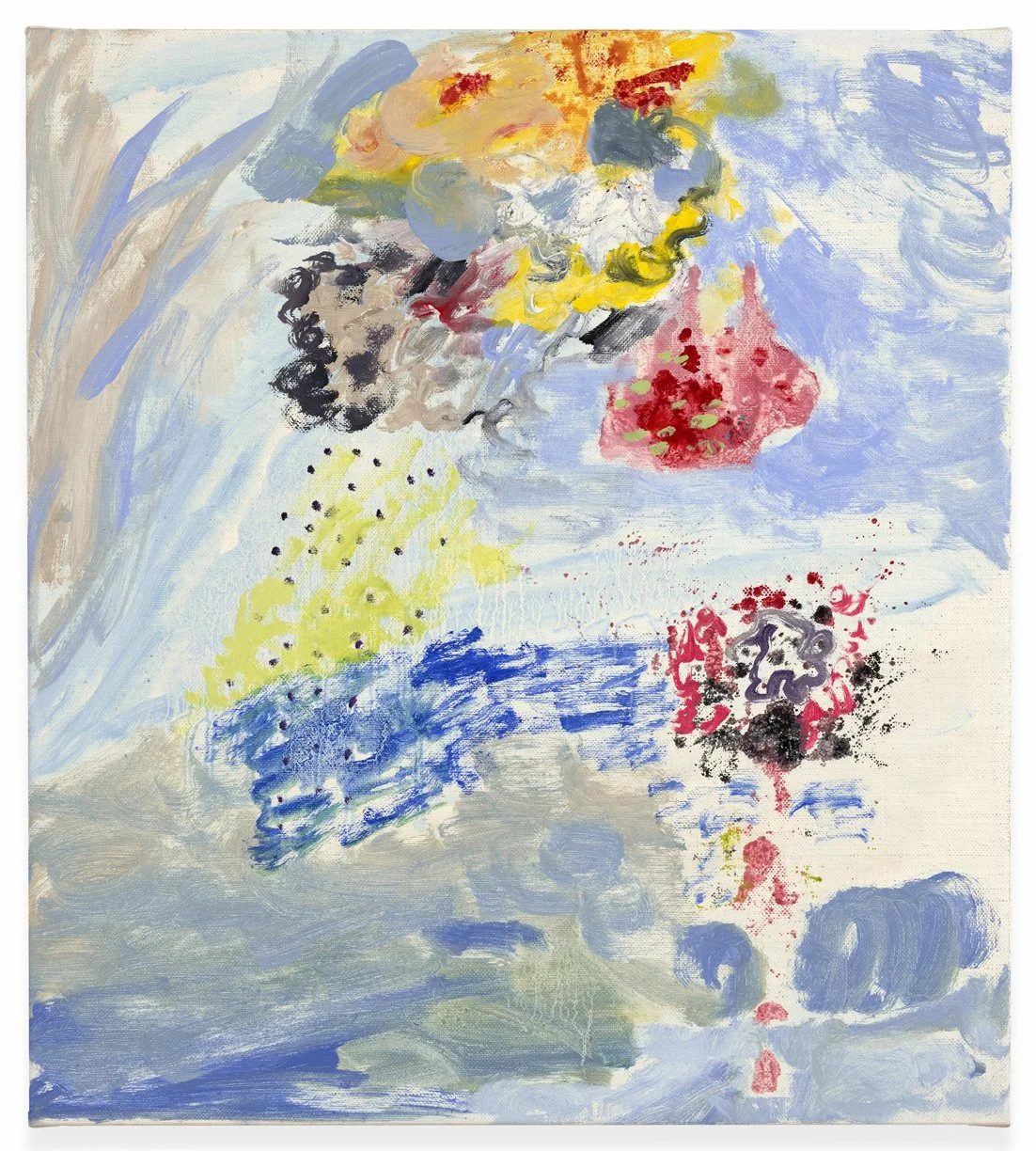
Eva Lundsager, Flight 4, 2015. Oil on linen. 16 × 14 inches. Photo - Stewart Clements.
The larger paintings can be harder to resolve, she says, but she loves the process, the time that goes into it. “Today I Flew was a painting that I thought was finished. I had it photographed and everything. In my studio I kept seeing it out of the corner of my eye. One day, I realized, ‘oh, I'm starting to change it,’ cause I was working on something else. And then I walked up and started doing something to it. I'm curious when I'm working. There's a lot of embellishment. I always want to see, ‘what happens if I do that?’ ‘What happens if I add black there?’ ‘What happens if I dilute it?’ ‘What happens if I push that paint and try to rub it in?’ I hope the viewer has an imaginative response to it, that it's a place for them and their thoughts."
Carly Glovinski
“I like the idea that we’re all seeing the same sky. That it is a really powerful equalizer.”
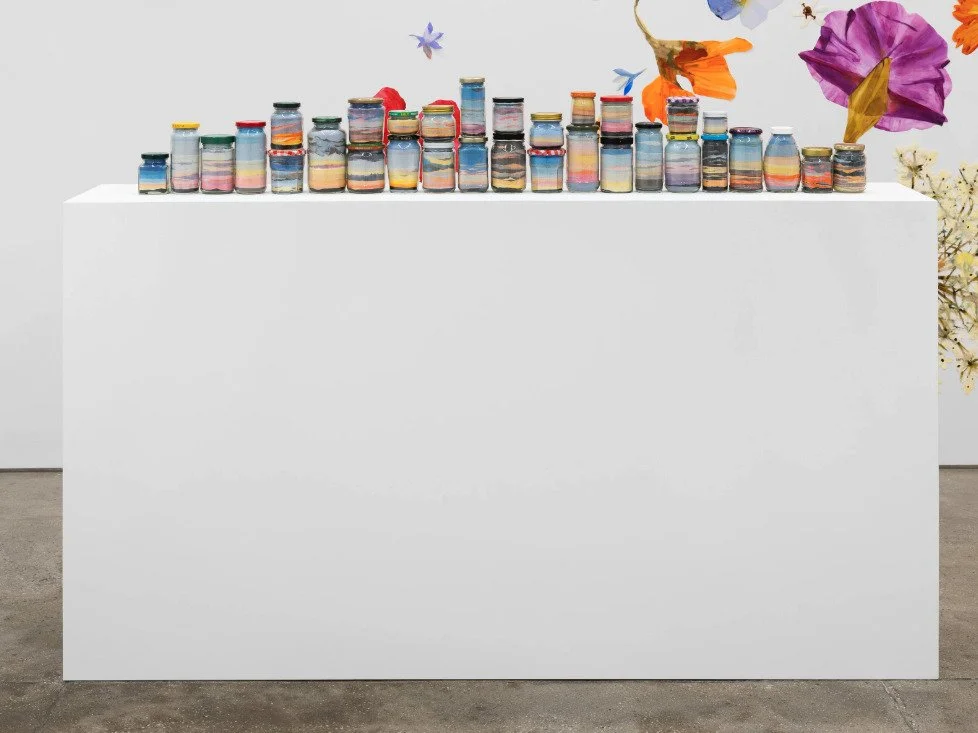
In her expansive, multimedia practice, Carly Glovinski considers nature, seasonality, care, domestic labor, and the passage of time. Often she references the tradition of New England women who made gardening party of their artistic practice. Her public step installation Ope at Commonwealth Pier in Boston recalls the writings of Celia Thaxter (An Island Garden, 1894) and May Sarton (The House by the Sea, 1977). Her 100-foot wall work Alma at MASS MoCA is a catalog of flowers she studied, harvested, and pressed from the Wild Knoll Foundation Garden at Sarton's former home in York, Maine. And her own garden in Maine is integral to her practice. "Gardening is one of those things," she explains. "I'm carving out time where I'm more present, with things that are on a different timeline."
Canning the Sunset began during the pandemic, when she found herself stopping each evening to watch the sun go down on the drive to her studio. She wanted to capture the sunsets as if to save them for hard times. She began painting with sand — drawing each sky in colored grains, then sealing it in a jar. The project has grown to hundreds of compositions; 36 of them come to FPAC. "That idea of the persistence and the choice that you have — I find that comforting. And a sunset is accessible. I work that way. My subject matter is not rare, it's very accessible. Giving access to wonder is an important thing that this piece does."
In a show where much of the work hangs or spins, Glovinski's installation is a center of gravity. Her jars of light ground us in stillness. "The reason we're attracted to a sunset at all is, it's like a color show in the sky — nature's color show. But the repetition of that, the fact that it keeps happening despite whatever's going on, I think is a really important thing. For people to understand that there is a silver lining, because so often I think we get consumed by the bad stuff."
Some people connect to the physical craft of the project, she says, they remember sand art at summer camp. Some connect to the jars, recognizing the one that held their favorite pickles or honey or jam. Some to the beach-souvenir tchotchke. The layers are the point. "I make work so people can have multiple points of connection. I don't want to be a director and say, 'you must come here and look at it this way and feel this thing.' It's more about presenting questions. How do we live meaningfully in a world where everything is always changing?"
Jo Lobdell
“It’s not that I’m trying to make something so light, it’s more about the resistance to the pull.”
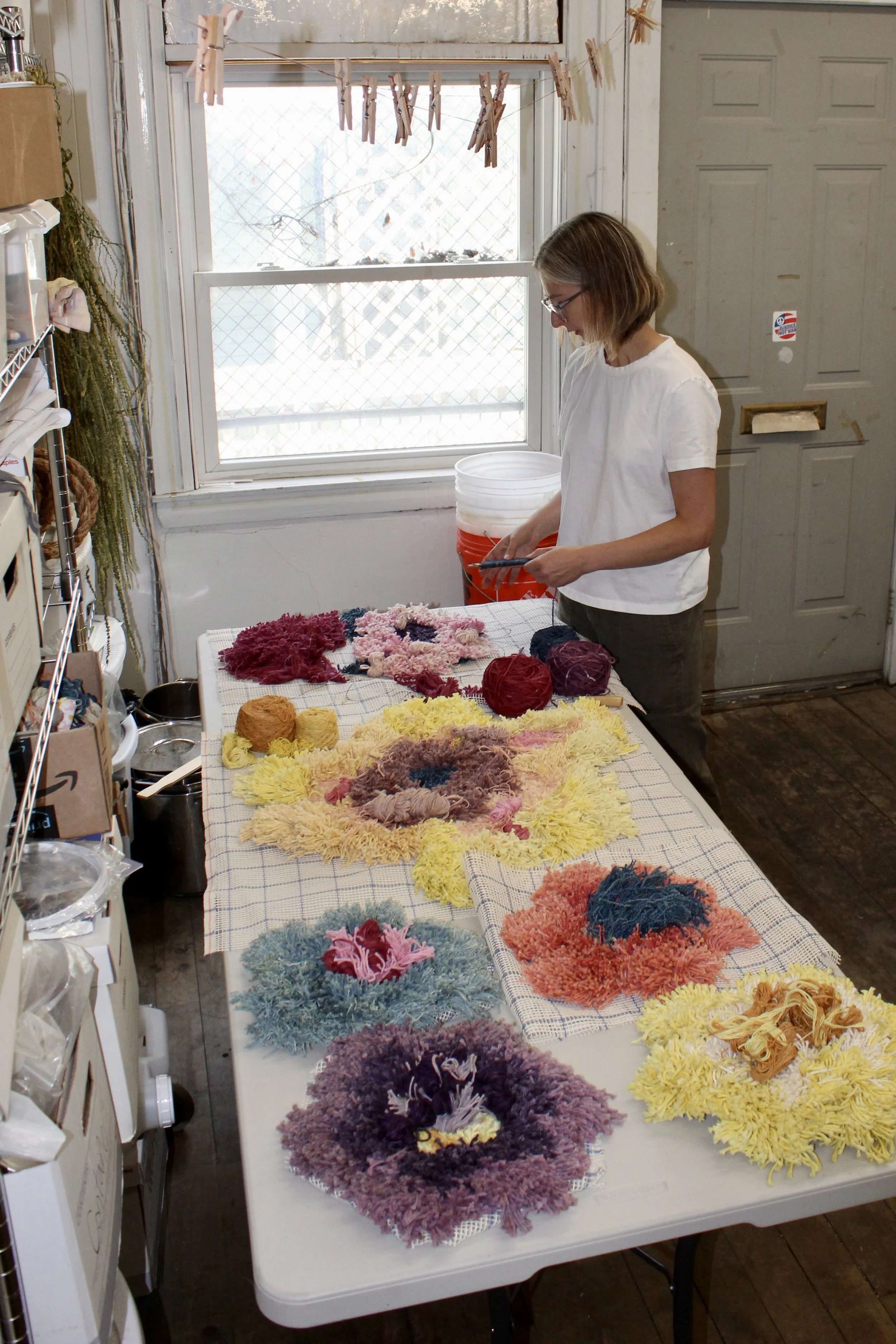
Jo Lobdell at work on her installation for FLOAT in her studio. Photo: Robin Hauck.
Like Glovinski, Jo Lobdell is also a gardener, but rather than preserve and press what she harvests, the artist-designer extracts their pigments to make dye. Maintaining a dye garden is not separate from her artmaking, but central to it. It is a skill passed down from her grandparents, and that inheritance adds generational significance to her craft. “For me, working with plants is a collaboration. I’m tending a garden. The plants have their own history and by incorporating them I bring that history into the work.”
During a visit to her Jamaica Plain, MA studio to see her work in progress, Lobdell explained each plant and its corresponding pigment. Madder root for reds, marigold and weld for yellows, Japanese indigo for blues, logwood extract for purples, cochineal (made from the dried bodies of female bugs found in Mexico, not a plant from her garden) for crimsons and pinks. She sometimes adds iron to make her dyes “sadder,” and experiments constantly, mixing multiple dye pots in industrial buckets and experimenting with timing, intensity and combinations. Tall stalks of weld hung in her studio when I visited, waiting to be ground and mixed with water to create a sunshine-yellow dye.
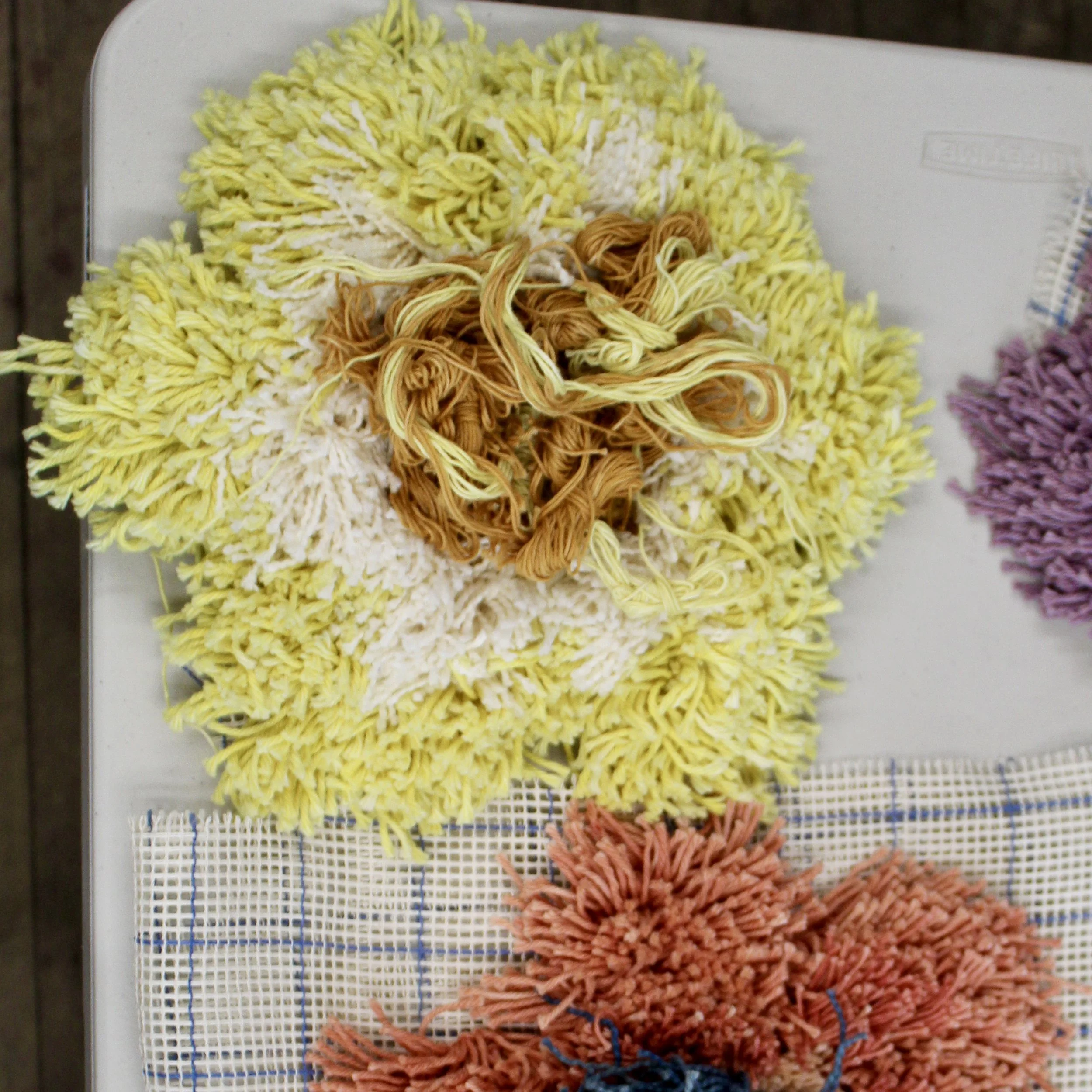
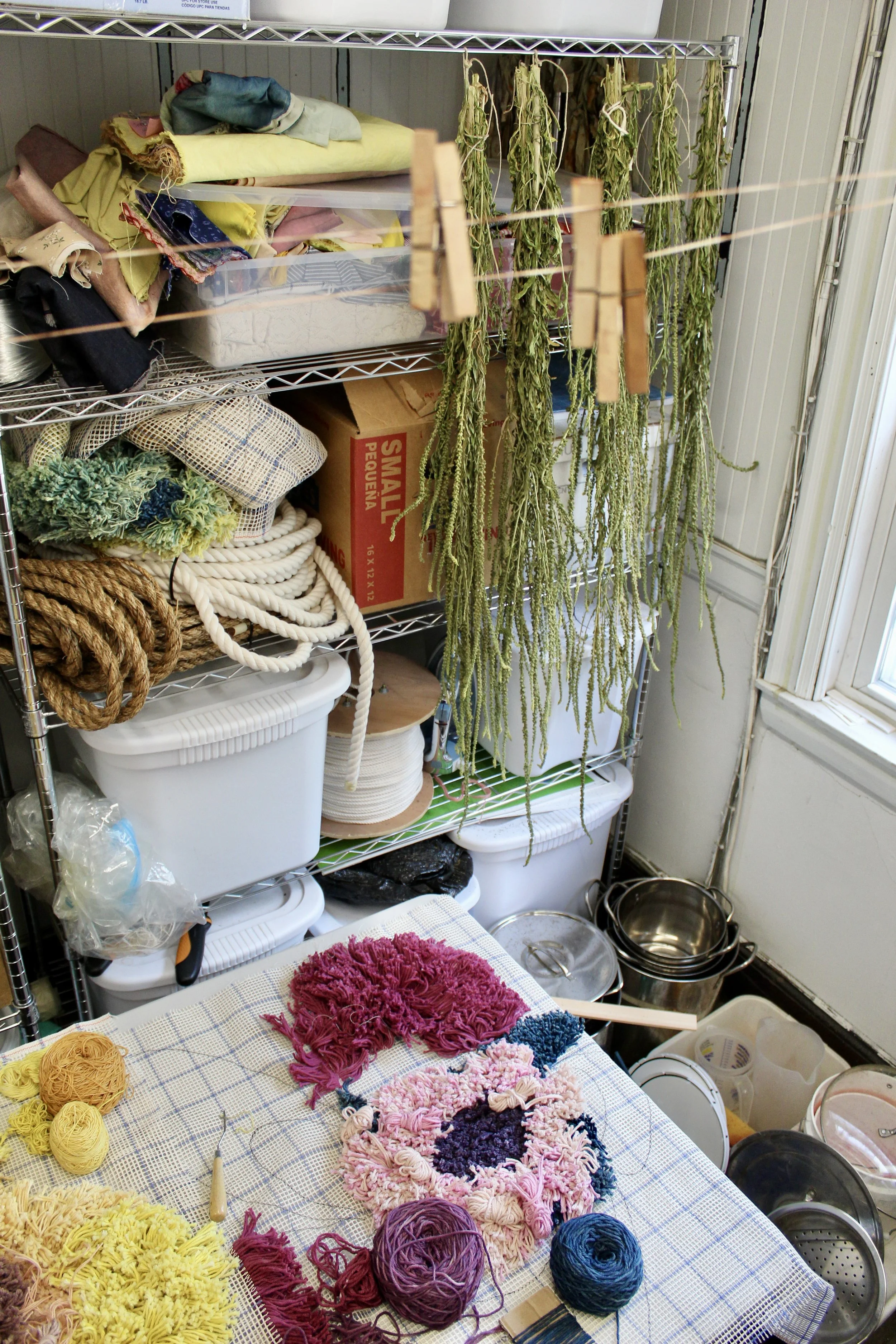
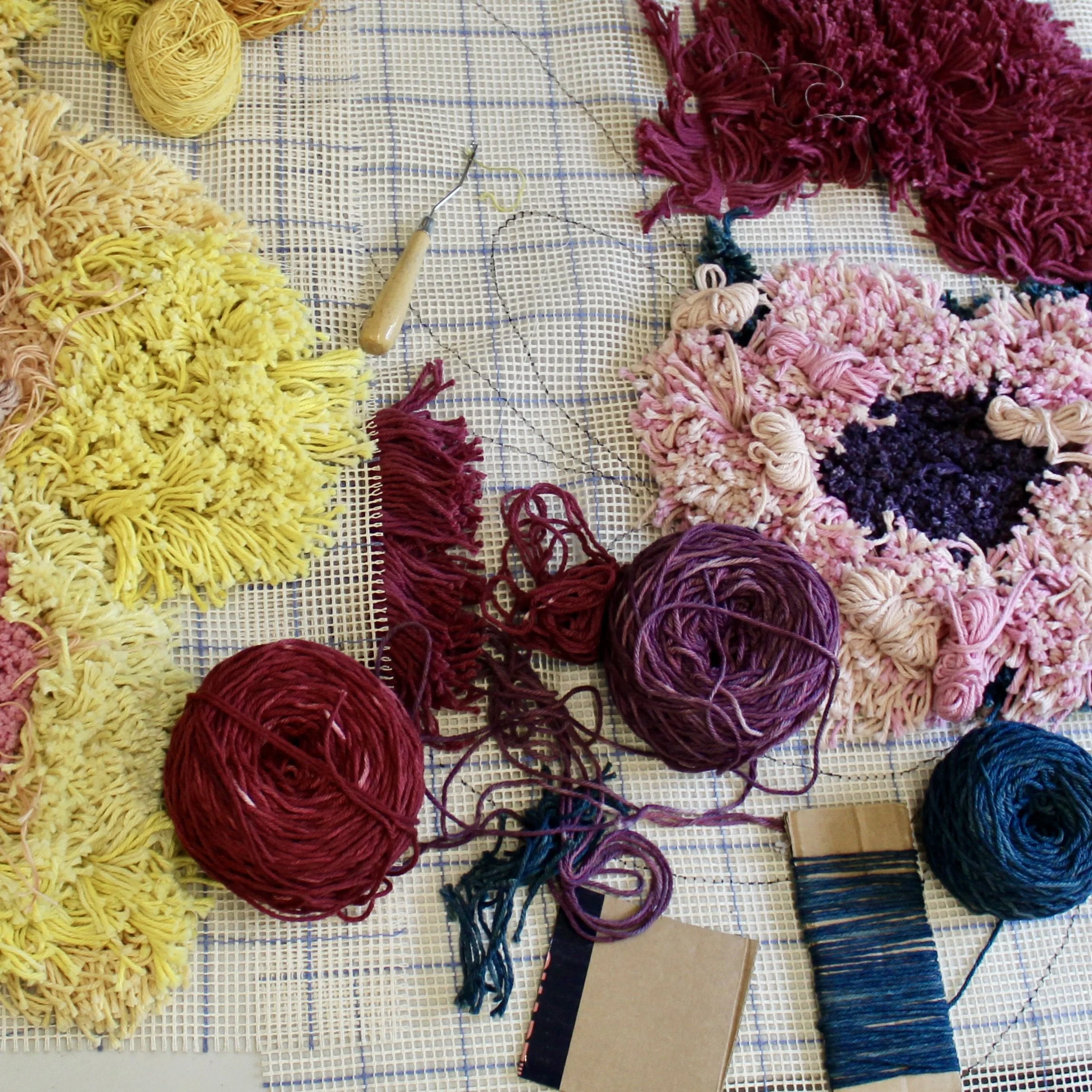
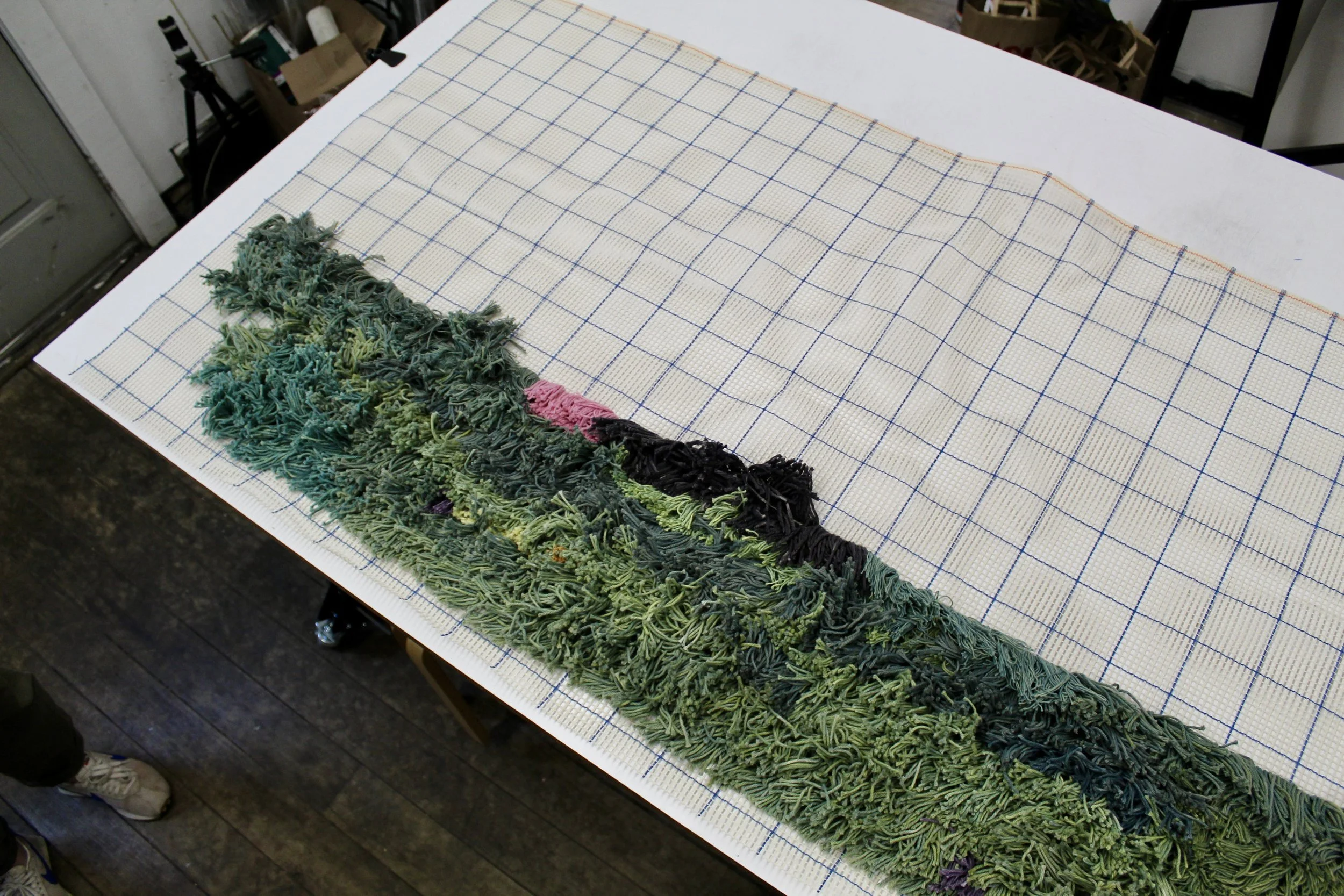
Lobdell’s custom aerial installation for FLOAT is an imagined canopy of plush daisies, abstracted and hung facing down upon a mat she is crafting out of green, pink, red and yellow yarn. Like her 2022 installation Bath Bomb, her work for FLOAT includes a separate piece made for the floor. She invites visitors to step and lie down on the soft mat in order to experience the work by looking up at it.
Adria Arch
“There is always that little bit of a wink, wink, nudge, nudge in my work.”
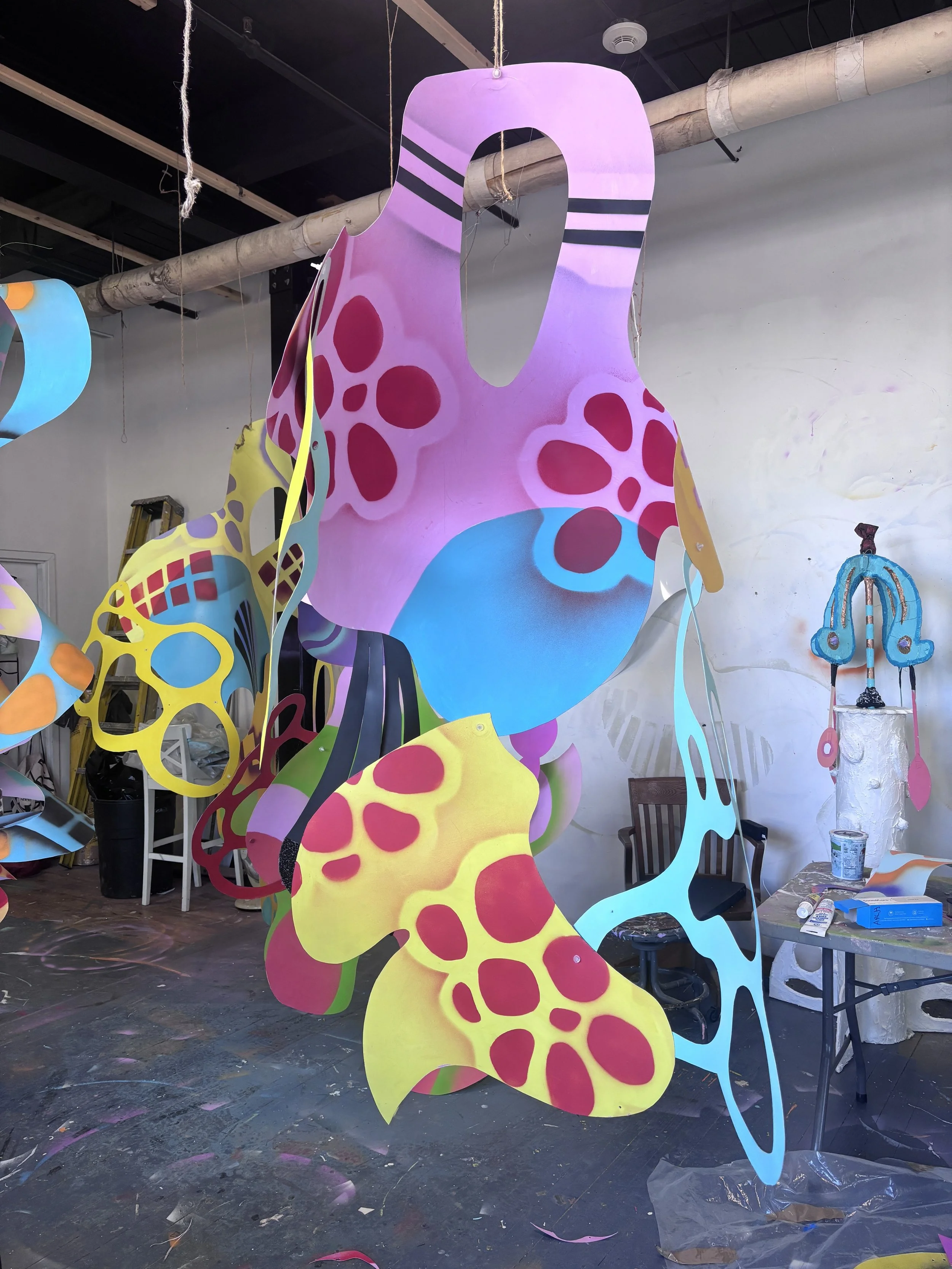
Adria Arch’s Camoflower sculptures in process in her studio. Photo courtesy of the artist.
Like Carew and Lobdell, Adria Arch wants viewers to be able to experience her work from multiple vantage points. Trained as a painter, she thinks of her large scale hanging sculptures as three dimensional paintings. Like Lundsager and Glovinski, she abstracts shapes found in nature, creating a recognizable visual language. But rather than using earthly materials like sand, cotton, or plants, Arch makes her sculptures from polystyrene and commercial acrylic paint, and rotates them on motors designed to spin disco balls. Her materials are deliberately unnatural even as they reference natural things: sea creatures, branches, shapes, eyelashes.
Arch loves dance, and her work is designed to collaborate with gravity and move with its own rhythm. A feminist artist with a rock and roll spirit, she makes work that insists on taking up space. "I was thinking of the word audacity. It underlines what I want to do with my work in the world, and models a frame of mind. The work is big and colorful. You can't miss it." As seen in her installation Airplay at Boston City Hall, she likes work that has a sense of humor and doesn't take itself too seriously.
She named her series Camoflower — camo, as in camouflage, because the patterning breaks up the shape, a phenomenon she likens to an octopus shifting the pattern on its skin. Camouflage and flower: the thing that hides and the thing that displays, in one object.
A shy teenager, Arch found herself attracted to loud peers not afraid of attention. Now she channels that attraction in bold, confident sculptures like paintings ripped off the wall and hung in sheets. The work invites you to dance, dares you to tell her no.
"I like to be surrounded. I like my visual experience to include peripheral vision as well. I love looking at big paintings up close. I think it has something to do with this thing I have about floating. When I was a little kid, I had this idea of hovering in space, not very high, just above the ground, I just loved that."
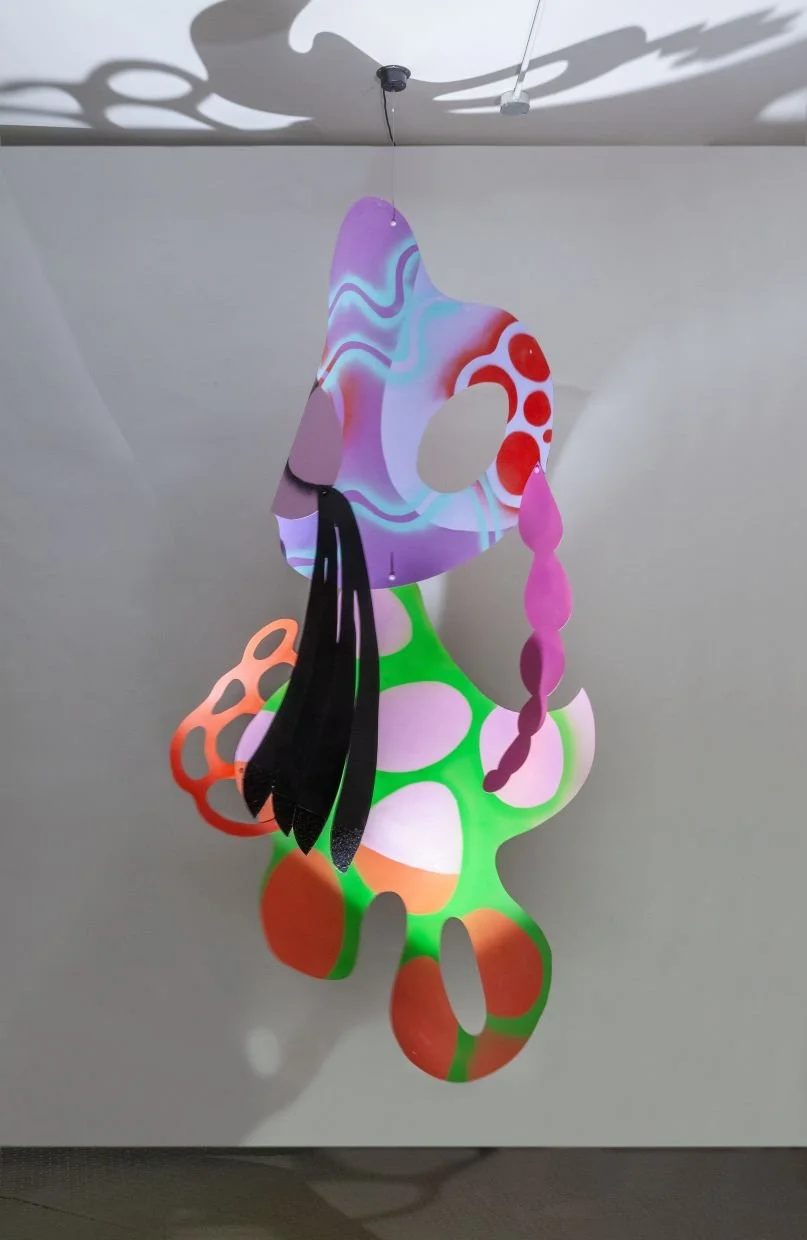
Adria Arch, Camoflower 5, 2025. Acrylic on polystyrene, motor. 9 × 5 × 3 feet. Photo courtesy of the artist.
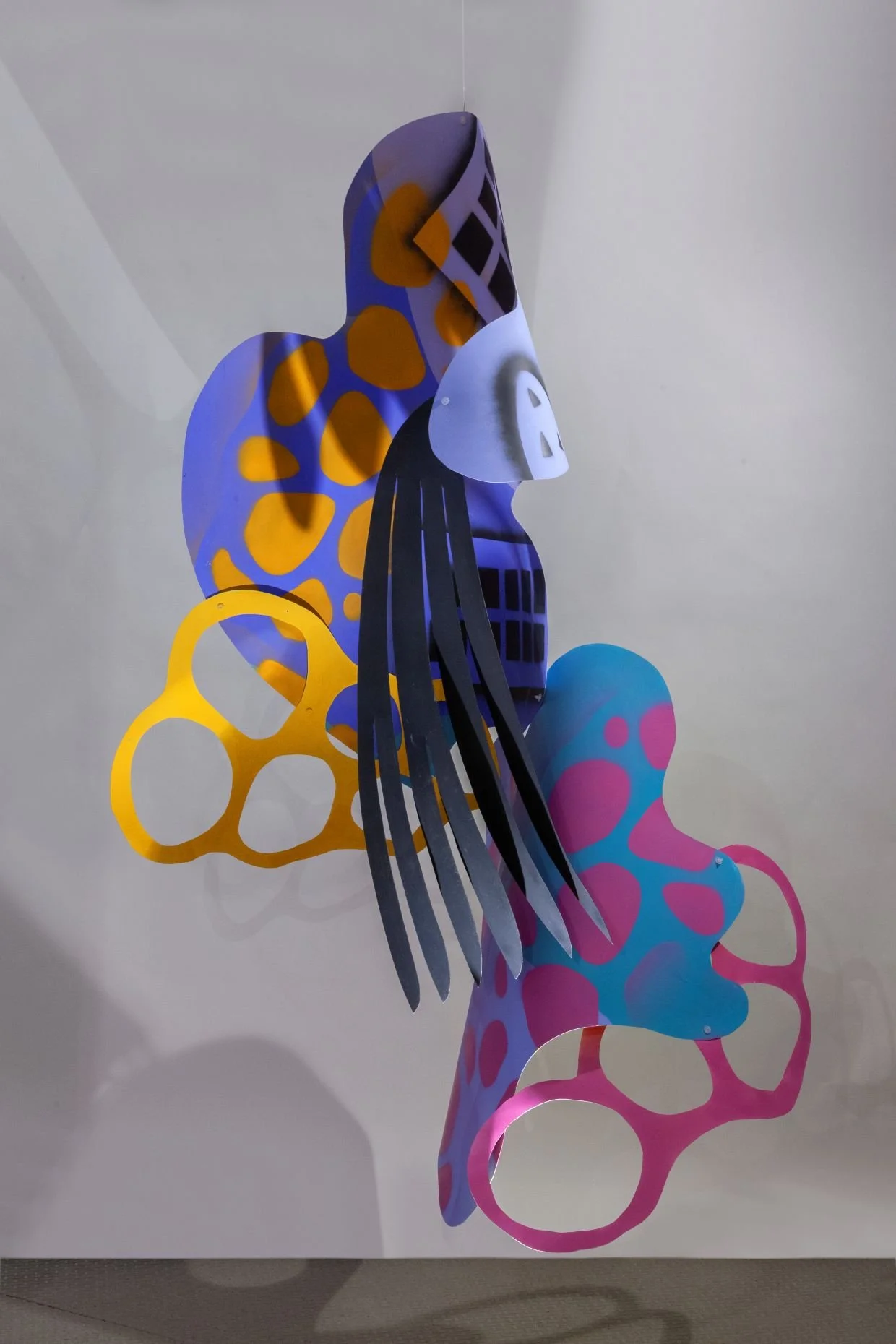
Adria Arch, Camoflower 6, 2025. Acrylic on polystyrene, motor. 10 × 6 × 2 feet. Photo courtesy of the artist.
FLOAT
FPAC Art Space @ the Envoy Hotel
70A Sleeper Street, Boston, MA
July 24 - August 22, 2026
Opening Party July 29 6 - 8 pm. RSVP for the opening here.