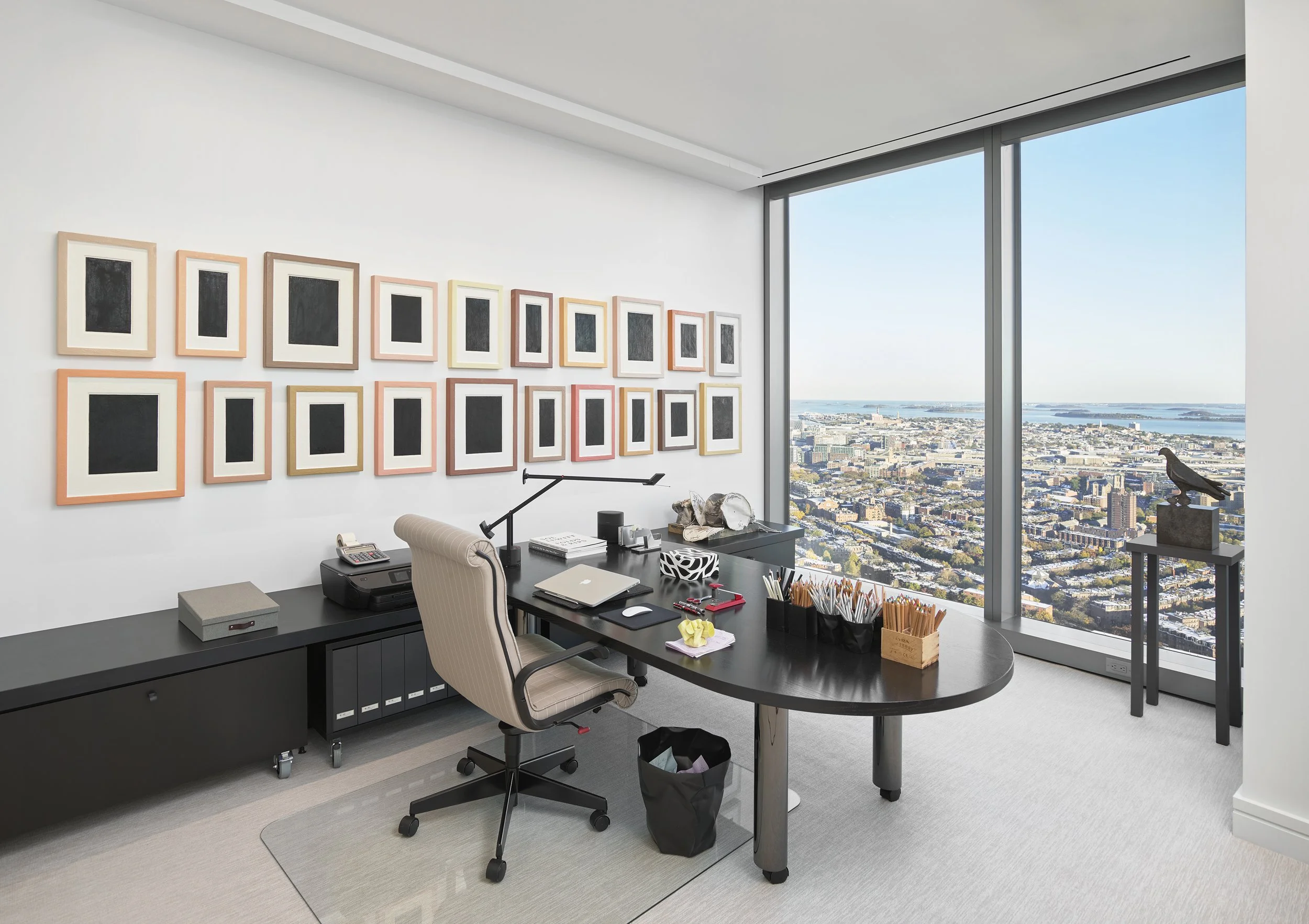
The Visionary Series: Barbara Krakow, "Untitled (Life Drawing No. 90)"
Barbara Krakow turns ninety this week. Of all the things going on in the art world right now, this to me is the most important. Her life story reads like an instruction manual for humility, success and happiness. Over the course of her extraordinary sixty-year career, the Boston native became one of the country’s most celebrated gallerists, expanding her power and influence by following convictions rather than market trends. She never wrote a business plan, preferring to “talk with people” and learn through experience. Though her business evolved through many stages, including naming her partner and gallery director Andrew Witkin as successor in 2003, certain immovable principles always guided her work: valuing all people equally, prioritizing relationships, supporting her city, and, in welcoming people to the gallery—”no judgement.”
Over the past year, I have met Krakow many times in her apartment or on walks along the Charles, and spoken with Witkin, friends and colleagues. I’ve come to appreciate how the core convictions she followed in business show up in her personal life: sustained curiosity, intellectual rigor, commitment to people. And I’ve come to believe that she represents an ethical and moral posture — a way to be in the world — that offers a powerful counter to the status quo.
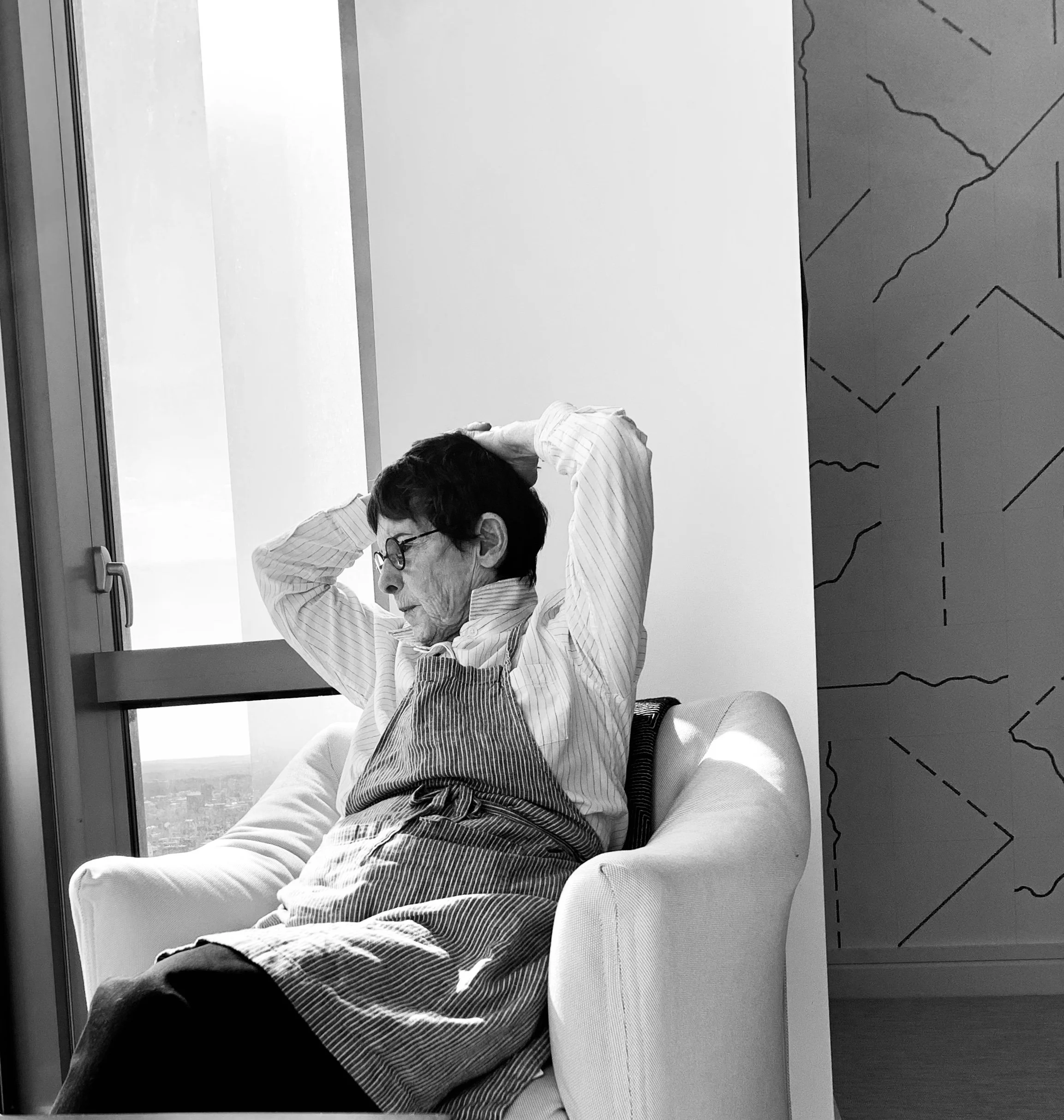
The gallerist in her apartment.
THE HISTORY
Telling the full history of Krakow Witkin Gallery from the beginning could fill an article — perhaps a book. Between 1959, when Krakow first began selling prints by Alberto Giacometti and Joan Miró (discovered on her honeymoon in Paris and offered through the Newbury Street furniture store where she worked), and 1983, when she officially opened her own gallery, she embarked on numerous iterations with various partners.
She first sold work through her home, calling it Carriage House Gallery. But when it became difficult to separate caring for her son and showing work, she decided to open a dedicated space. In October of 1964, she teamed up with Portia Harcus to open the Harvard Square location of Carriage House. The gallery did well, and in January 1966, they moved to 167 Newbury Street, becoming Harcus Krakow Gallery. Between 1967 and 1974, she, Harcus, and Vera List also ran a print publishing company called HKL Ltd. until they sold the inventory to Krakow’s friend Dick Solomon (from the family that started Stop & Shop, and who would open Pace Prints). Around that time, Krakow and Horcus began a partnership with Obelisk Gallery, owned by Phyllis Rosen and Joan Sonnabend, called Parker 470, near the MFA, Boston. As Witkin explained, “this venture, started in June, 1970, was in a 16,000 square foot building where the four women rented approximately 8,000 square feet and architect Don Stull rented the other 8,000. The space gave the gallerists the opportunity to exhibit large-scale sculpture and painting – something no gallery in Boston had done before.”
With Parker 470 still in business, the four women founded Harcus Krakow Rosen Sonnabend at 7 Newbury. Krakow has many stories about that venture. “All those names,” she jokes, “we called it the law firm… This one wanted to put flowers in the window, this one wanted white paintings. It was a nightmare. We finally met with a business manager to help us. At the end of the day he said, ‘You people aren’t ready. You don’t need a business manager; you need a therapist.’” That was the end of the “law firm,” and though they tried from 1976 until late 1982 to run a gallery “showing a mixture of prints and original works by famous artists, as well as original works by younger artists working in the Boston area” (Witkin), Krakow and Harcus eventually decided to part ways.
In 1982 Krakow struck on her own. She hired architect Lee Cott of Bruner/Cott and in 1983 she opened Barbara Krakow Gallery at 10 Newbury Street on the fifth floor. “We were the first gallery in Boston to come off the ground level. It’s a destination, so the people who come up are interested. It was the best thing; turns out we would be terrible on the first floor. Too many people come in who don’t know anything [and are embarrassed to ask]. This way they come up, and you don’t talk about art. You start conversations so people get familiar. I want them to feel that it’s ok to say, ‘I don't know anything.’”
In 1982–1983, the US was in a recession. Ronald Reagan’s trickle-down economics did not hit the average worker. The art world responded with loud, maximalist art and a focus on big names (think Julian Schnabel). Barbara stayed true to her instincts and her roster. She put on shows that were idea driven and provocative. She developed her appreciation for relationship building and teaching instead of selling.
In 1971, while operating from one of her earlier gallery spaces, she began showing Sol LeWitt, who would become a defining pillar in her roster. Eventually she exhibited many of the biggest names in minimalism and conceptual art: Josef Albers, Mel Bochner, John Cage, Agnes Martin, Brice Marden, Robert Ryman, Kiki Smith, Fred Sandback and Richard Serra (featured currently in the gallery), among many others. Later artists added include Tara Donovan, Martin Puryear, Sarah Sze and Fred Wilson. The full roster reads like an art history textbook.
“She has incredible intuition. It’s in her bones.”
As owner of her own gallery, she wielded the kind of influence most women dealers didn’t have, and she used it to challenge gender inequities in the market. She ensured that pioneering female artists like Agnes Martin, Liliana Porter, and Kiki Smith were treated with the same gravitas as their male peers. She was also able to mount shows for consequential artists outside of the gallery roster, as she did with Cornelia Parker in 2016 and Sarah Charlesworth in 2019, for example.
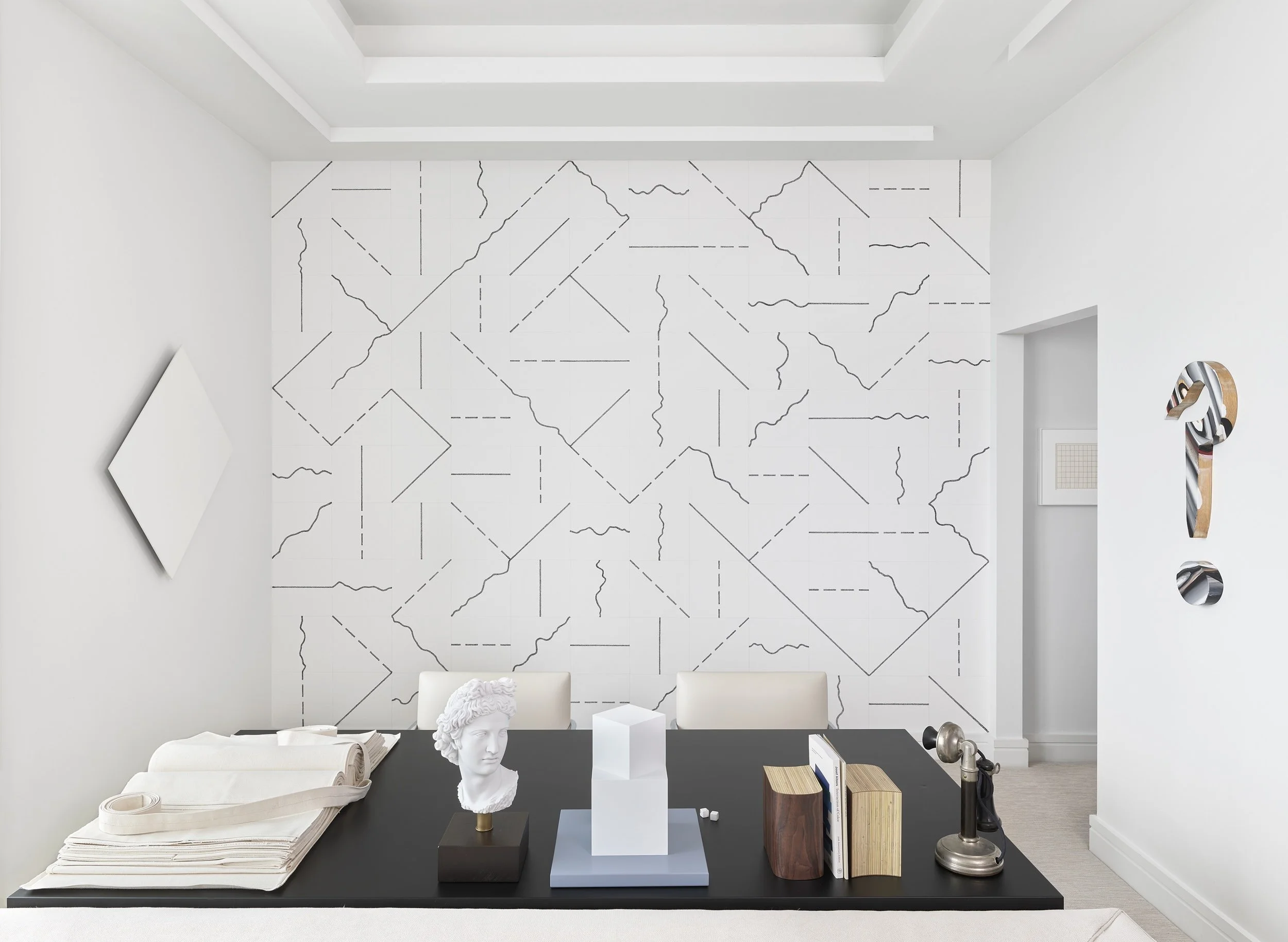
In the living room a white Ellsworth Kelly painting and a Richard Artschwager Pregunta flank a Sol Lewitt wall drawing. Photo: Julia Featheringill
MINIMALISM TO THE MAX
Krakow likes minimalist work in part for “the quietude. In a sense it’s spiritual, it’s not jagged.” Her Boston home is a sublime combination of zen restraint and intentional excess. The same goes for her personal style—elegant, chic, and resistant to color. A pixie haircut accentuates her attentive eyes and sets off popped collars of starched shirts. Monochromatic sweaters complement the art, and match, unfailingly, her sneakers. She walks two to four miles every day, often with friends. One might worry that a visit to Krakow’s home would be intimidating. Instead she puts everyone at ease. She chats with doormen, dog walkers, fellow residents, and clients with the same curiosity. She brings the intellectual rigor and rarefied taste of the elite without the gatekeeping.
A globally recognized authority in minimalism and conceptual art, Krakow has taught clients from Boston to Asia how to build valuable collections. But while prices for contemporary art have skyrocketed since 1983 when she opened Barbara Krakow Gallery, she insists that building a meaningful collection doesn’t have to cost a lot of money. All people are potential art collectors in her opinion, regardless of their budget, and education is the key. As a case in point, Krakow collects inexpensive, common objects that appeal to her aesthetically and intellectually, and bring her joy when paired with the reductivist art sold by the gallery. These include desk clocks, tintypes, hankies from the 50s and 60s, antique office supplies, quotes, books, stories, friends, and memories.
To appreciate her collections is to be transported to the sophisticated, imaginative world she inhabits. Krakow doesn't own the things so much as she makes them a part of her. Her collections are compositional devices establishing priorities and boundaries that maintain the minimalist aesthetic she prefers while bringing lightness to the weight of the artwork and the truths it reveals.
“
Barbara always operates with a keen ethical sense and an abiding interest in others. That was evident in how she ran her gallery and is still ever present in all her interactions. She’s a collector and a creator at heart - whether it’s conceptual art, rulers or rolling pins- Barbara surrounds herself with the things people make; she makes beautiful things, herself; and she makes a difference in a lot of people’s lives, often anonymously. Goodness knows, she makes a huge difference in mine. ”
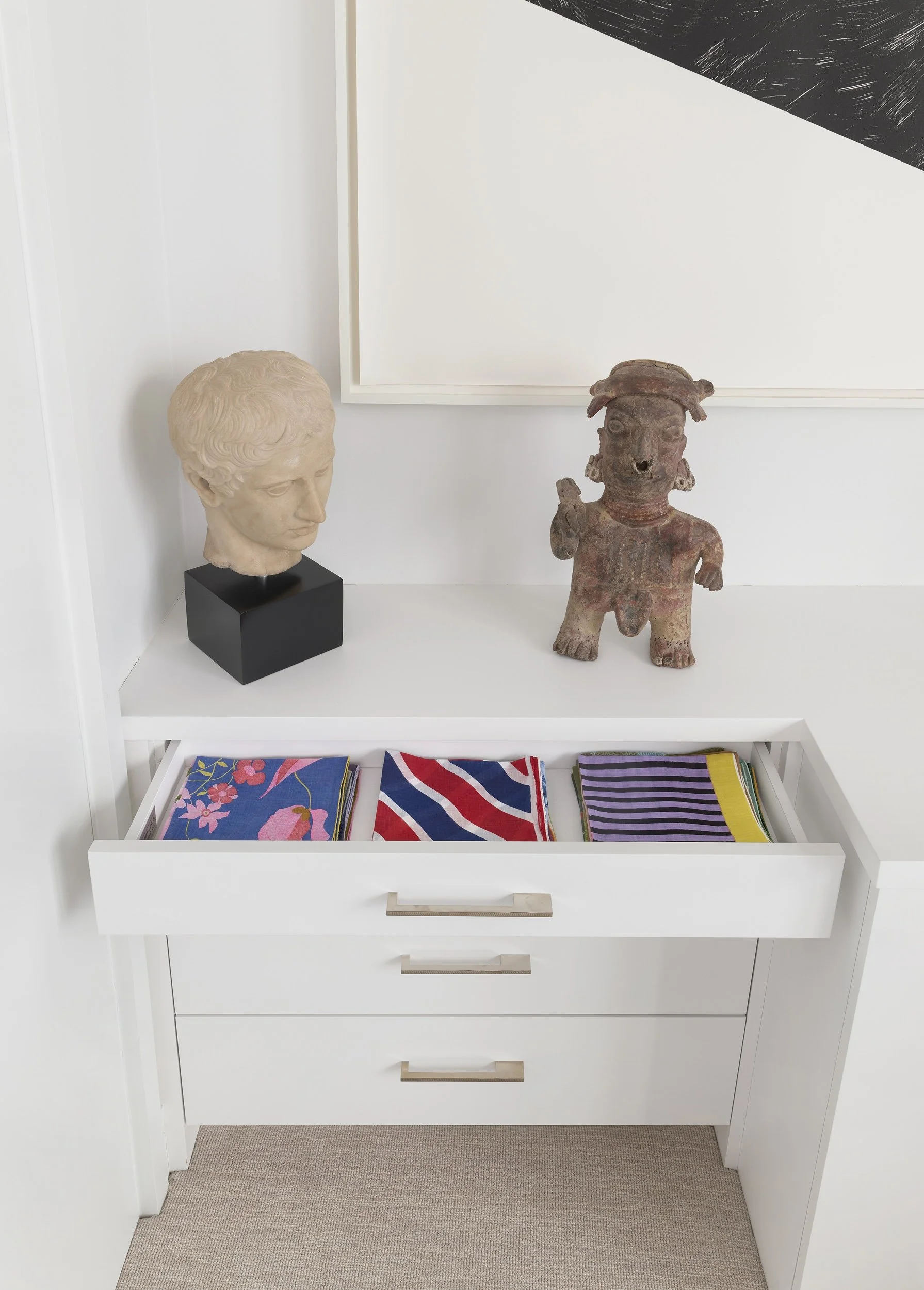
One drawer of Krakow’s collection of mid century hankies. Photo: Julia Featheringill.
THE ONE PRICE POLICY
Krakow gives the same care and respect to a $19 antique hankie that she does to a Sol Witt wall drawing. Her aesthetics follow her moral insistence on equality. A devoted reader of Harvard philosopher Michael J. Sandel, she appreciates that “all people want to be treated equally.” And as the professor of ethics and morality wrote in his book Justice: What’s the Right Thing to Do, “the way things are done does not determine the way they ought to be.”
Her extended, education-focused sales strategy flew in the face of market power dynamics. Experienced collectors are used to competitive transactions they can win. Getting access and discounts others do not perpetuates their sense of superiority. But Krakow does not bend to pressure, she doubled down on what she believed was right and in the early 2000s instituted a radical, no discount pricing policy. As she wrote in the gallery pricing policy letter: “To answer your questions regarding discounts, the short answer is that the gallery offers one set price for everyone.”
The policy, which became the subject of a Harvard Business School case study, was rooted in Krakow’s criticism of the way galleries artificially inflate prices to accommodate demands for discounts, often making the discount more important to the buyer than the artwork itself. For her it made sense; it was ethical, it put the focus back on education and understanding, and as proven by the gallery’s success since, it was good business. For roster artists, it locked in their work’s market value and proved she would not trade their labor for favors. And it leveled the normally uneven playing field of the contemporary art market. A museum on a public budget or a brand-new collector could acquire the same art at the same price as a billionaire.
"We made a radical decision. This is the story: a guy calls from New York and says, 'I'm interested in an Ellsworth Kelly. I want 20% off.' We were giving 10% at the time, almost 30 years ago. He was going to a baseball game with Steinbrenner and said, 'You ought to come, he doesn't know anything about art.' My staff did research and discovered he was a very powerful man. No one in Harvard Business School would say that was a good time to make a decision. Was he really going to break my knees? No. But if he found out I'd given someone else a discount..." She shakes her head. "We had to let many artists go. They wanted higher prices. Our concept is: keep prices as low as possible so the most people possible can buy work. We don't make as much money either, but until you get the work out, every time you go up another dollar, you've lost a portion of your audience. Low prices are not a source of embarrassment, but artists always compare themselves to other artists."
Witkin recalls, “It could have cancelled the whole business. But we could defend it because the gallery had been building for years an ethos of equality and transparency. Barbara is the best negotiator. The pricing policy is the way she is, but she is putting herself in your shoes. On the one hand it was a giant leap, but it wasn’t a leap, because she was always about fairness. We spent years tweaking the vocabulary because it was so unusual. My staff has never had to do anything shady or have conversations behind closed doors. It’s, ‘This is the price so let’s just talk about the work.’”
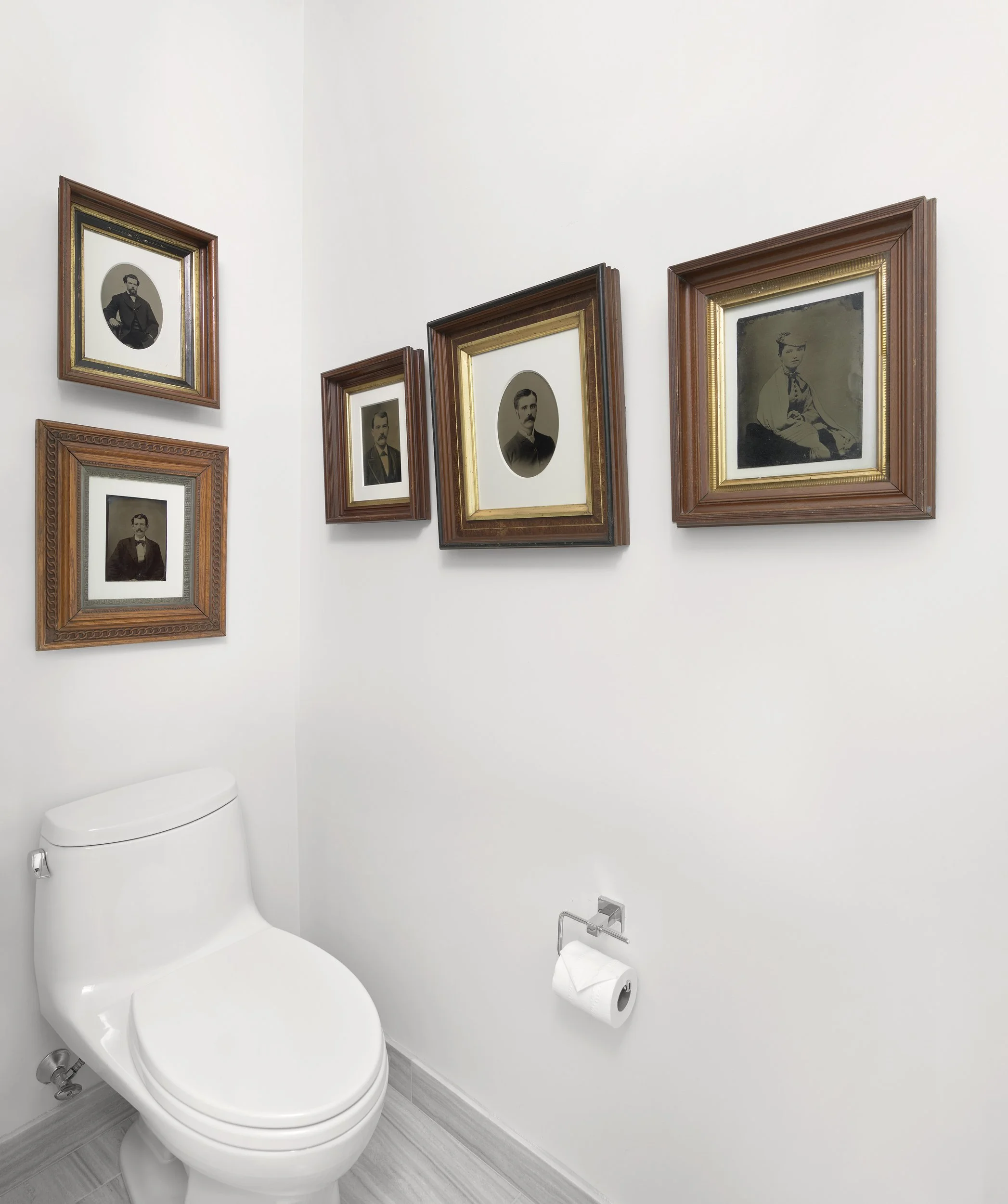
In the guest bathroom, antique tintypes — like the clocks in the living room — bring the past into conversation with the present. Photo Julia Featheringill.
TEACH DON’T SELL
On June 22, 2021, Barbara Krakow sent me an email with a looking list for the summer: Helen Frankenthaler, Kusama, Diane Arbus, Carrie Mae Weems, Gillian Wearing, Lee Bontecou, Rineke Dijkstra. For you, summer looking, she wrote. It was the first hint of what visiting the gallery would feel like.
I had asked Barbara if she would meet me at the gallery and show me around. I arrived with prepared questions about certain artists, expecting to be regarded with a sort of silent question – are you here to buy? Instead, I found myself in a chic classroom with a teacher who made me excited to do my homework.
“Everybody knows sadness. Period... Great art deals with that. The fact that minimal and geometric work also has that idea of clarity, a sense of calmness and a sense of peace, appeals to us.
”
Minimalism and Conceptual Art do not lend themselves to brisk transactions. With work that reduced the viewer’s experience to the likes of an all-white canvas or colorful letters spelling Blah Blah Blah, traditional sales pitches didn’t work. The work asked a lot of the reader, they needed trust and a new visual literacy. Krakow became more of a teacher than a dealer, or rather a teacher and a dealer. (Though she famously hates the word dealer). She spent considerable time getting to know her clients, demystifying the abstract so that people who thought they would never understand it ended up wanting it in their homes.
The teaching pervades everything. This includes the gallery design with carpeted floors so that work can be brought out at any time and lined up along the wall. Witkin explains, “No matter where you stand there is always something to explore. No back room, nothing hidden. Conversations can happen spontaneously.” Instead of cocktail openings, the gallery holds artist talks, they open their archives to schools, and they publish significant Catalogues Raisonnés—complete records of all works in a category by an artist. For example, the Sol LeWitt Prints Catalogue Raisonné 1947–2006, edited by Andrew Witkin is “a complete record of all known, signed and numbered, editioned works on paper by Sol LeWitt.”
Esta Gordon Epstein, who has collected with Krakow since 1990, described the experience: “Knowing Barbara Krakow since 1990 has been a distinct pleasure and a thrilling ride. Her discerning eye for consequential art, her historical art knowledge, and her ability to put artistic value above the quest for personal profit has made her unique in the art world. Travelling with the Krakows to Münster, Documenta and the Venice Biennale in 2012 was an eye-opening educational treat. She is the primary influencer of our own art purchases of contemporary art, a delightful lifelong quest.”
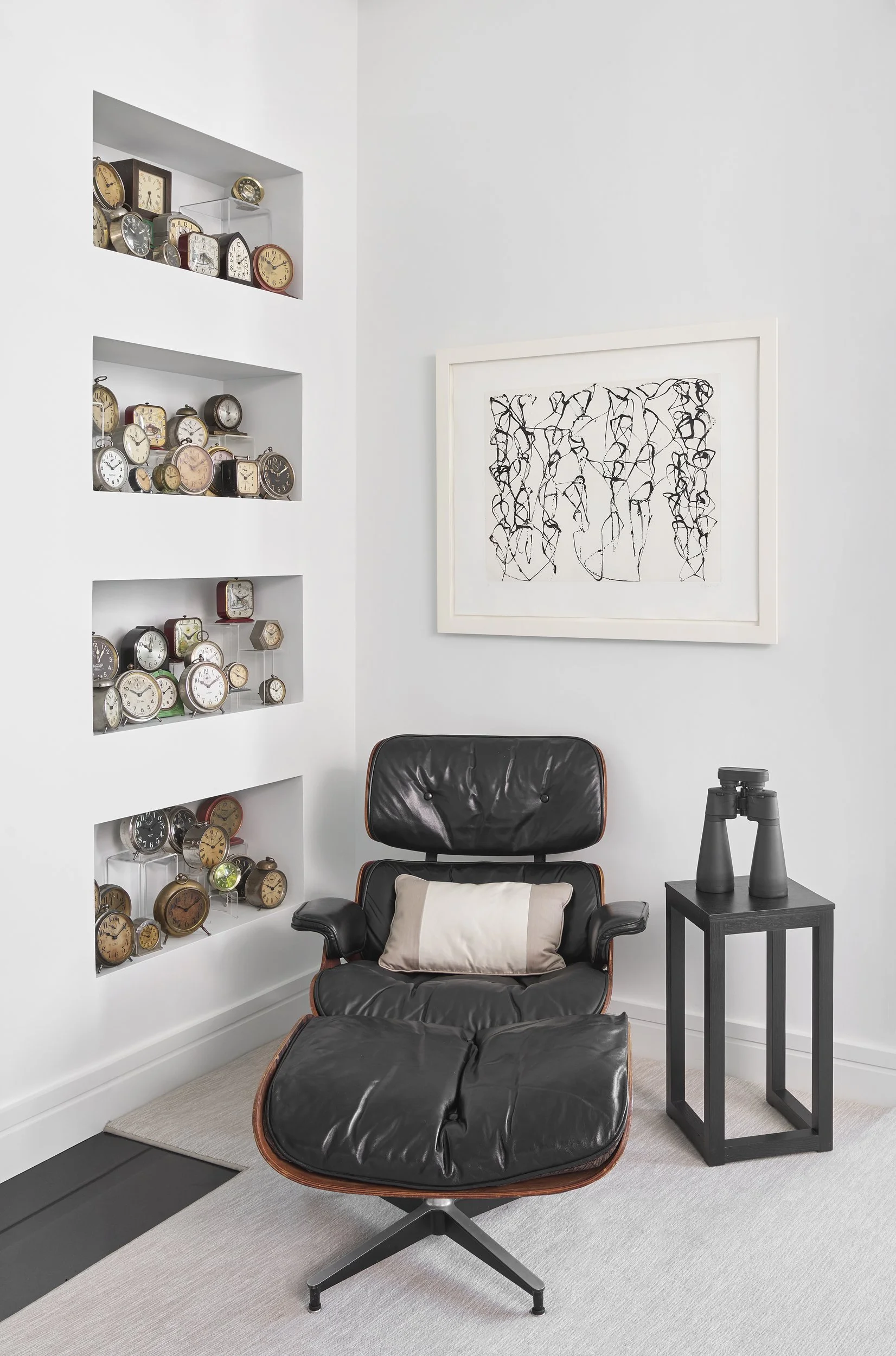
Krakow’s collection of windup desk clocks manufactured in Connecticut in the 1800s. Photo Julia Featheringill.
ART IS FOR EVERYONE
“God knows how it started with the clocks. All of a sudden they had to be windups. You can end up researching anything. In Connecticut there were at least eight clock manufacturers in the 1800s. So now my clocks all have to be from Connecticut. You pick these sort of ridiculous guidelines, then it develops what you are looking for and the excitement of finding something.”
Krakow’s collection of desk clocks accumulates according to strict rules, as do all good collections. Yet within those parameters, they’re endlessly various: brown, white, green, yellow, pink, grey, black, and silver faces. Long-footed, short-footed, flat-footed and some with no feet at all. Round, square, rectangular, oval, pentagon, and beehive-shaped. Big enough to hold in your hand, small enough for a child's palm. These clocks paint a portrait of Krakow’s philosophy: revel in life’s diversity, honor everybody as they are, stay open to learning. The more you know about a person, an object, or a work of art, the more meaningful it becomes.
All of Krakow's clocks are set at 10:10. "When I looked at magazines with watch advertisements, I noticed the watches were always set at 10:10. So I figured I ought to make my clocks at 10:10 and be in step." Even her timepieces follow an aesthetic discipline, but with a nod and a wink, without taking herself too seriously.
The best offense against the passage of time is making the most of it, and Barbara Krakow has made the most of her 90 years. Her legacy will live on, not only through the work of her successor and gallery staff, but through her own collections, and the impact she has made on her friends, family and community of collectors. Her life reveals a consistent ethic of care: for herself, for her artists, staff, clients, friends, family, and for strangers.
At 90, she laughs at the number, refusing to be cowed by it. "Who decided this was a big one? Why wasn't 89?" She just returned from the Venice Biennale with a list of shows she loved so long I thought it was a typo. “walk, walk, walk and again walk, walk, walk,” she wrote.
Witkin, who carries that legacy forward, said it best: "The most impressive thing is now. She's more open than she's ever been. Warmer, happier, more thoughtful, more generous. More so now than ever."
*All photographs by Julia Featheringill.