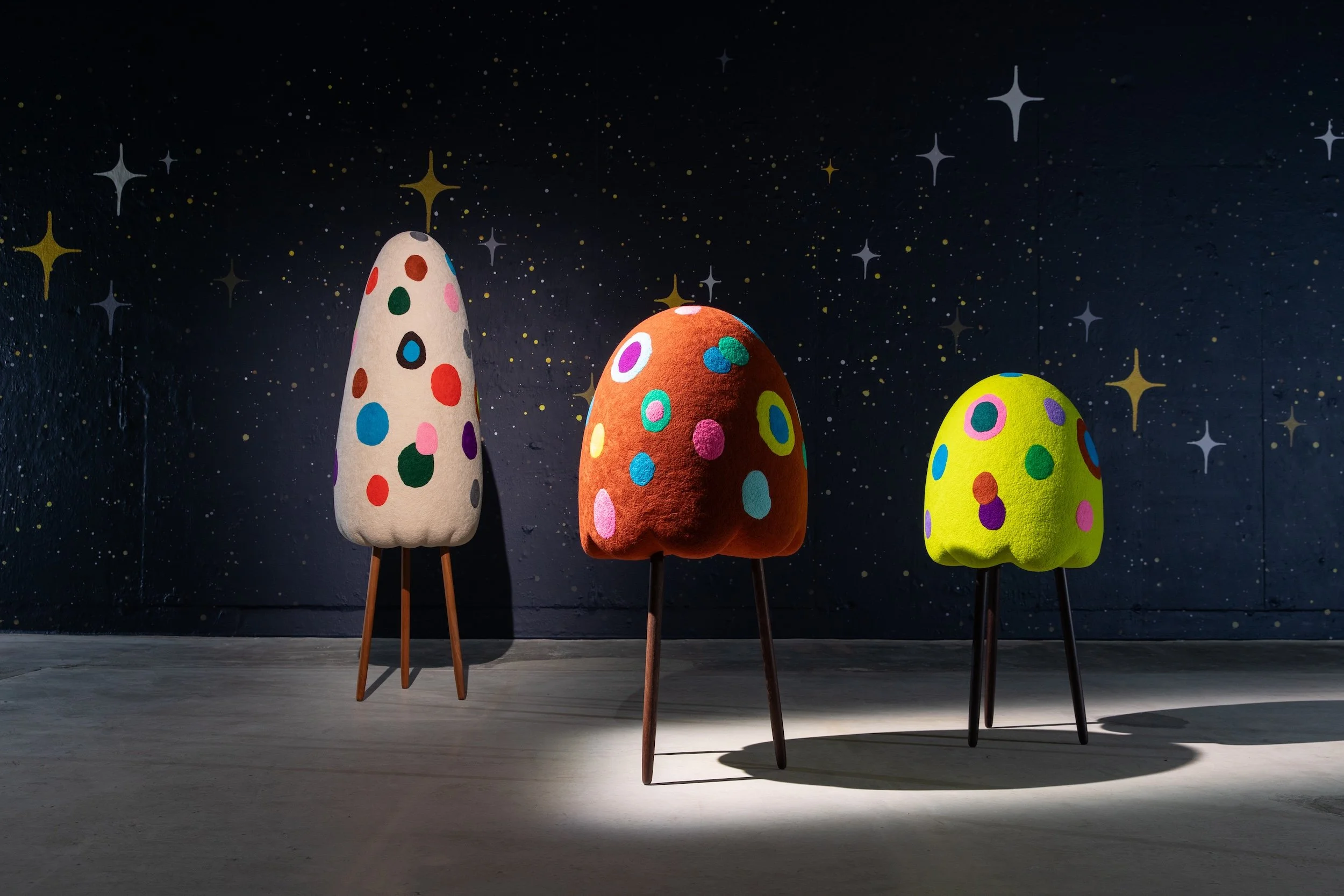
Masako Miki's March of Empathy and Transcendence
Masako Miki’s Midnight March invites us to immerse in an alternate cosmos entirely of her making, where binaries disappear, ambiguous shapes replace known figures, and ancient narratives evolve to meet contemporary anxieties.
Miki’s site-specific exhibition at the MassArt Art Museum (MAAM) travels to Boston from the ICA San Francisco where it was curated by Alison Gass, Founding Director and Chief Curator, with Meghan Smith, LYRA Foundation Curator. The most expansive presentation of Miki’s work to date, Midnight March weaves together the artist’s two and three-dimensional works, pushing her engagement with Japanese folklore into new territory, and reimagining centuries-old narratives through her distinctive lens of empathy, insight, and imagination.
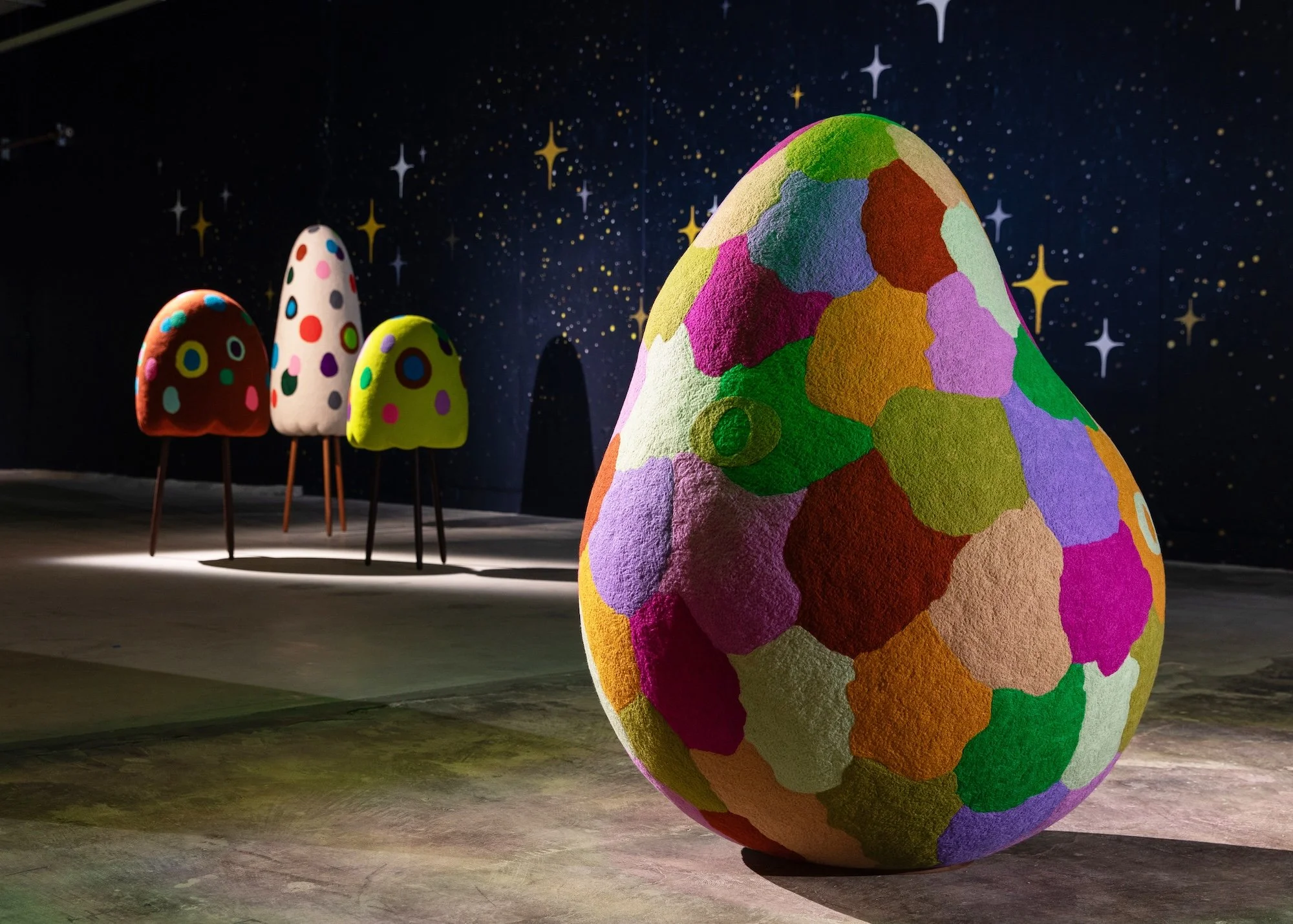
Masako Miki: Midnight March. Installation view: Institute of Contemporary Art San Francisco. Courtesy of the artist, RYAN LEE Gallery, New York, and Jessica Silverman, San Francisco. Photo: Nicholas Lea Bruno.
Miki’s twenty three individual works combine to create one cohesive experience—a full-body decampment into her alternate universe. Head up the stairs from MAAM’s warm, wood-floored lobby and cross the threshold into a psychedelic nighttime scene. Ink-violet wallpaper dotted with golden-yellow stars covers the walls and floor, turning the gallery into a galactic void, ripe for interpretation. With MAAM’s deliberately dramatic lighting, the effect is thrilling, mystical and disorienting, encouraging what Miki describes as “the magic of going to a museum; you are there to reflect and contemplate, to recalibrate and center yourself.”
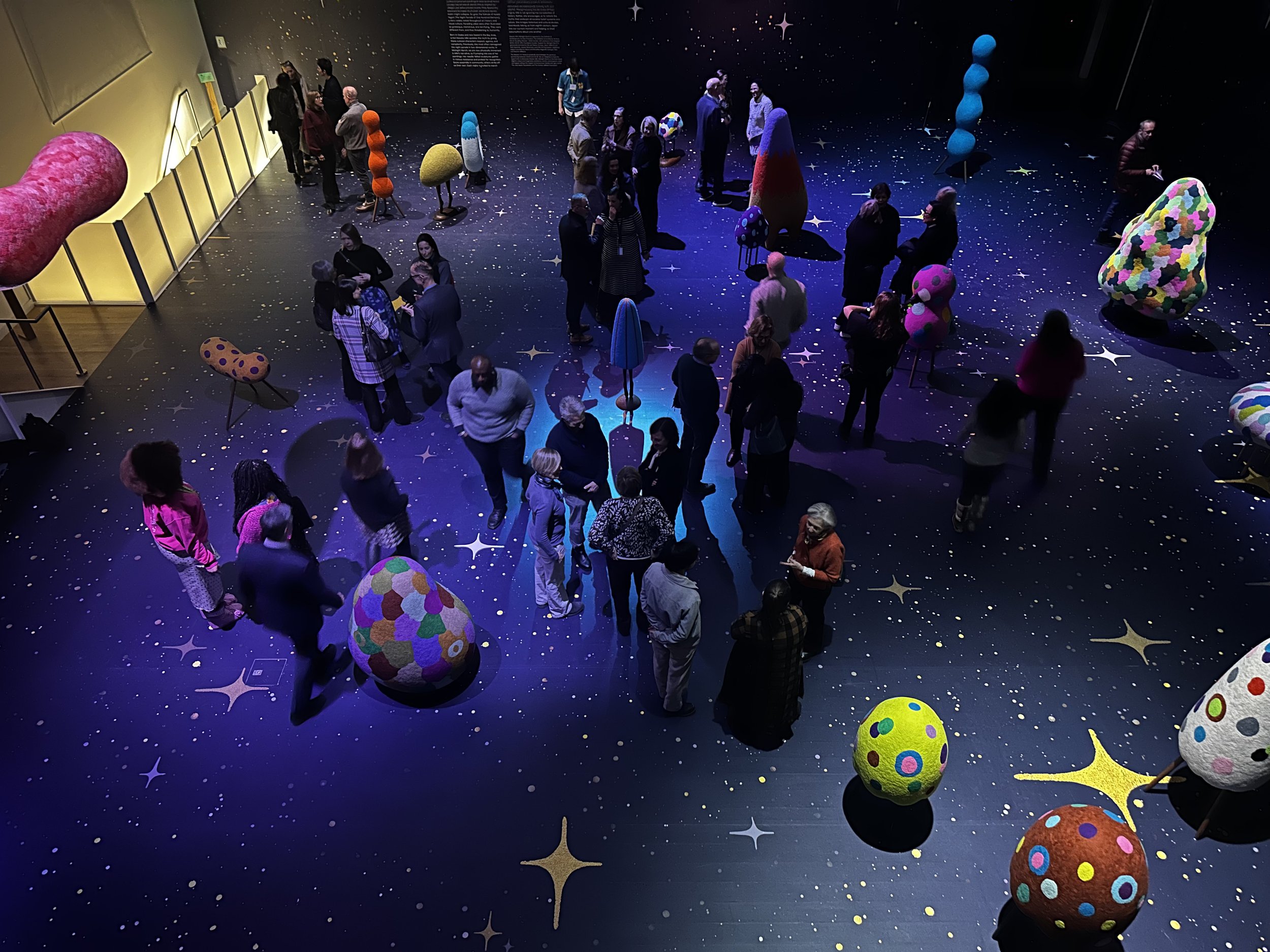
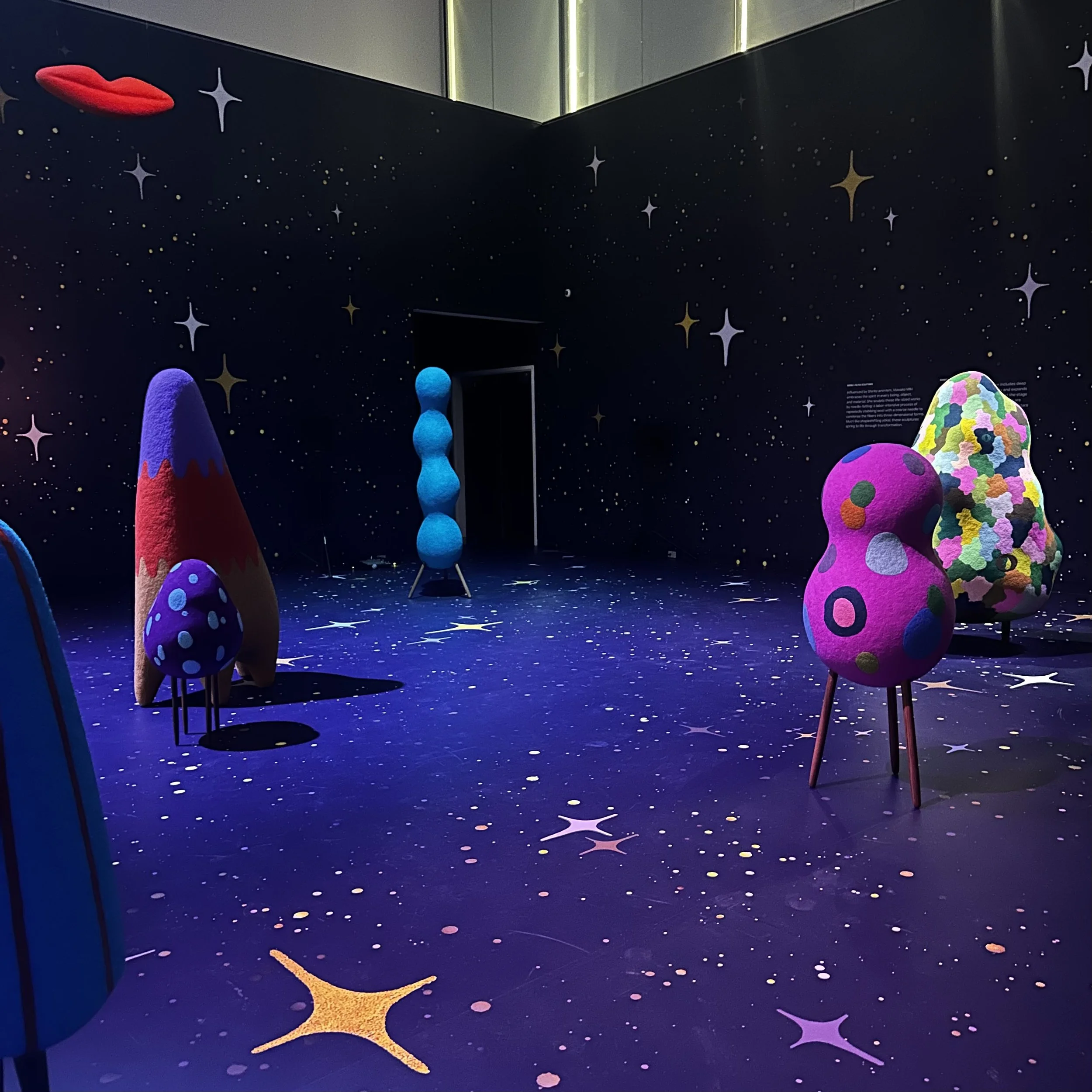
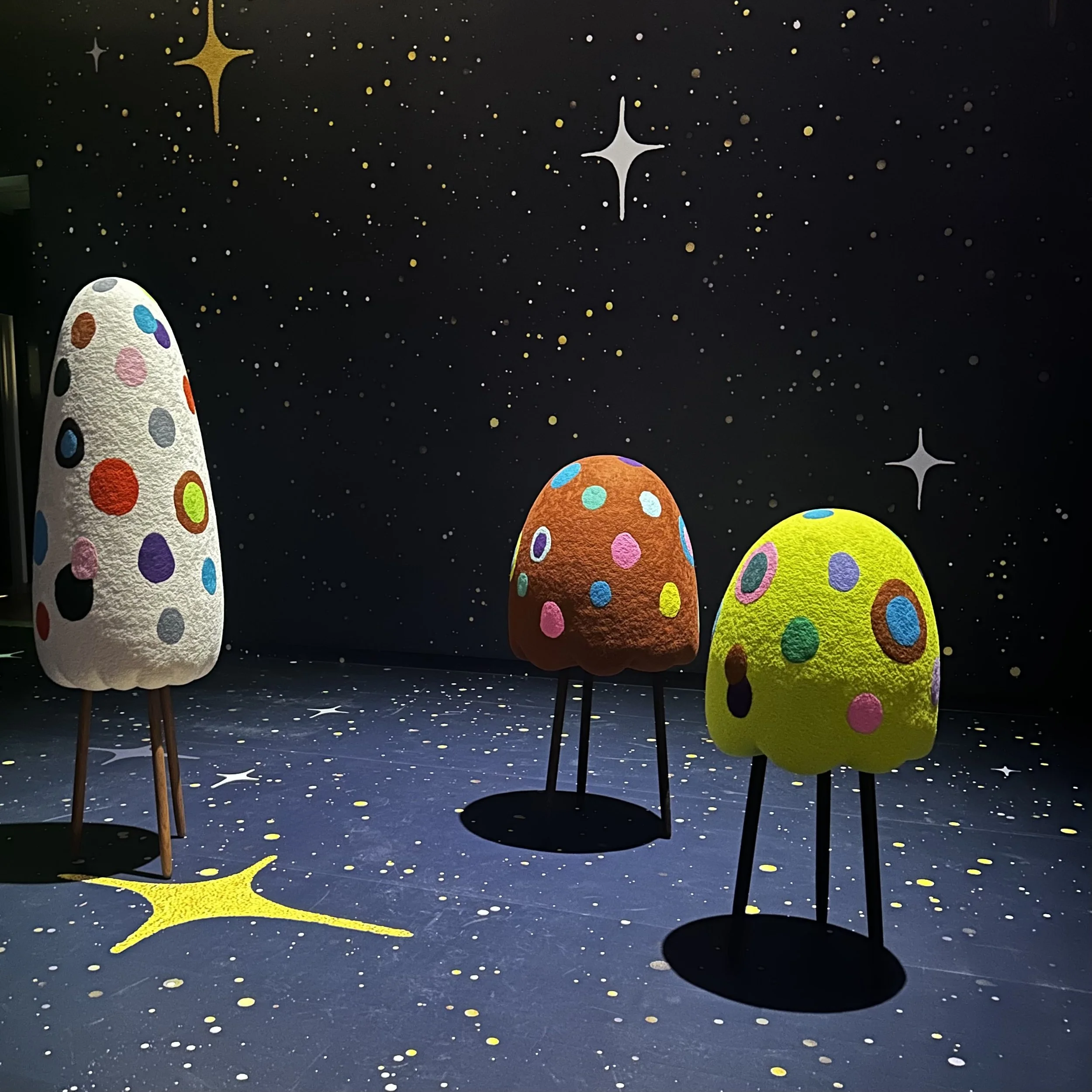
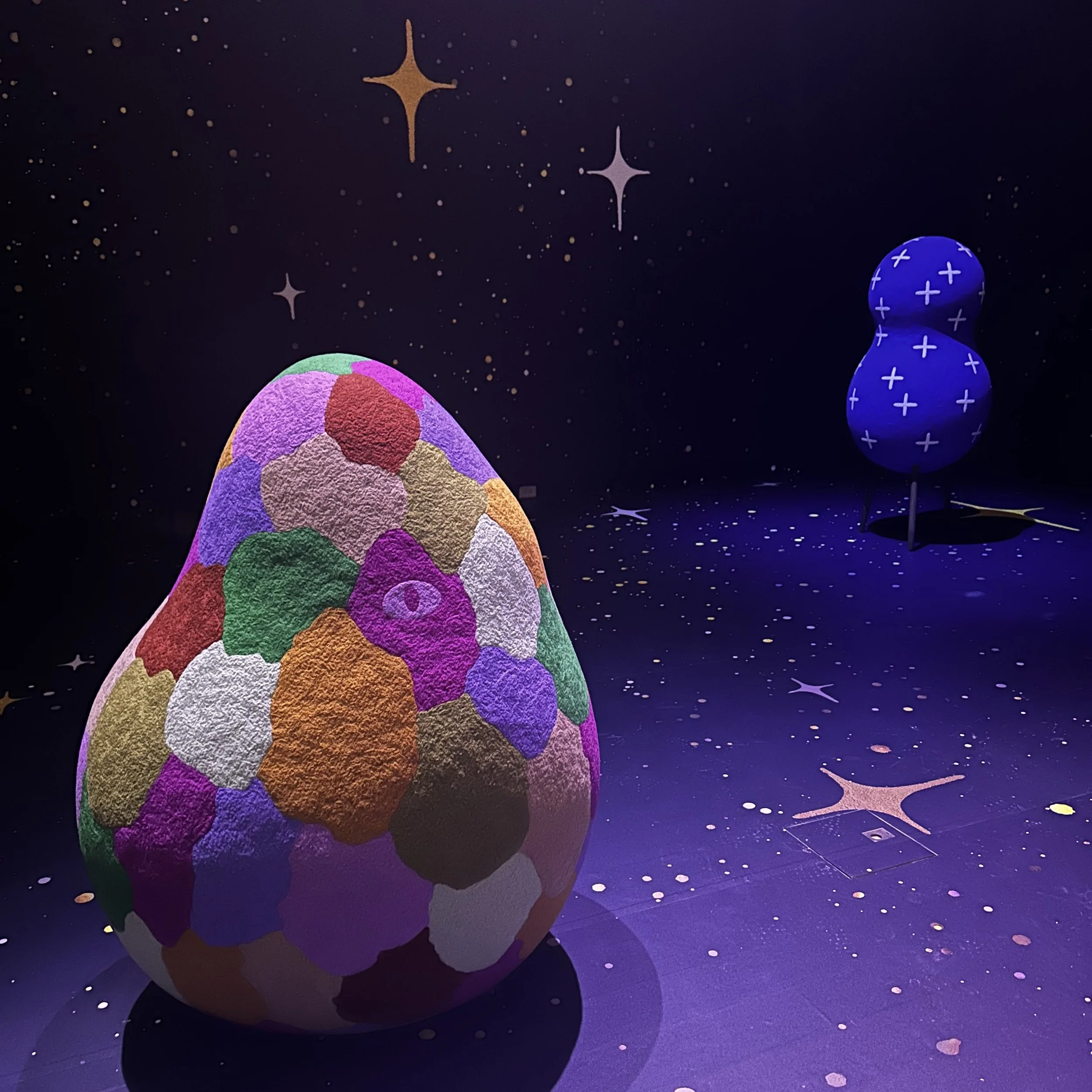
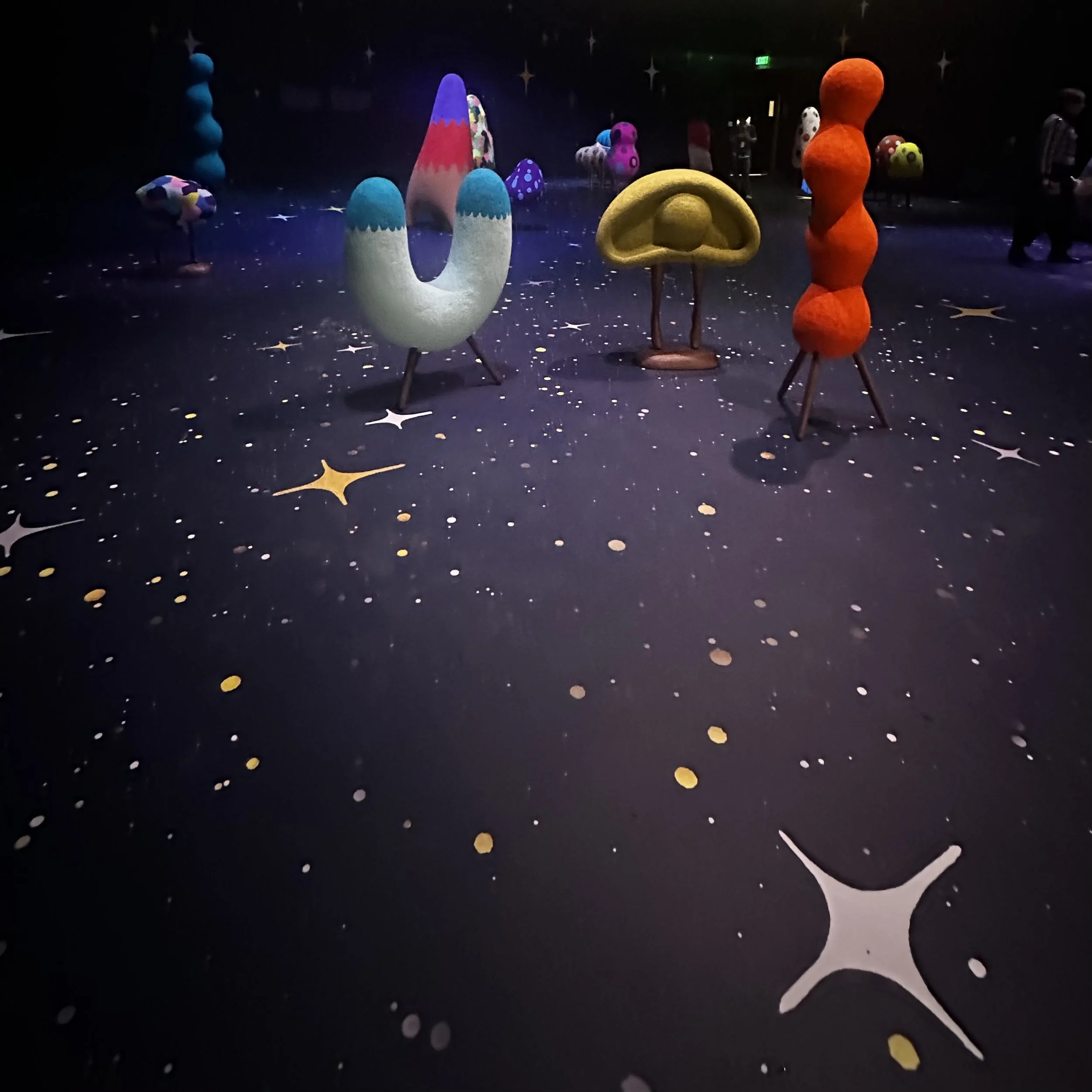
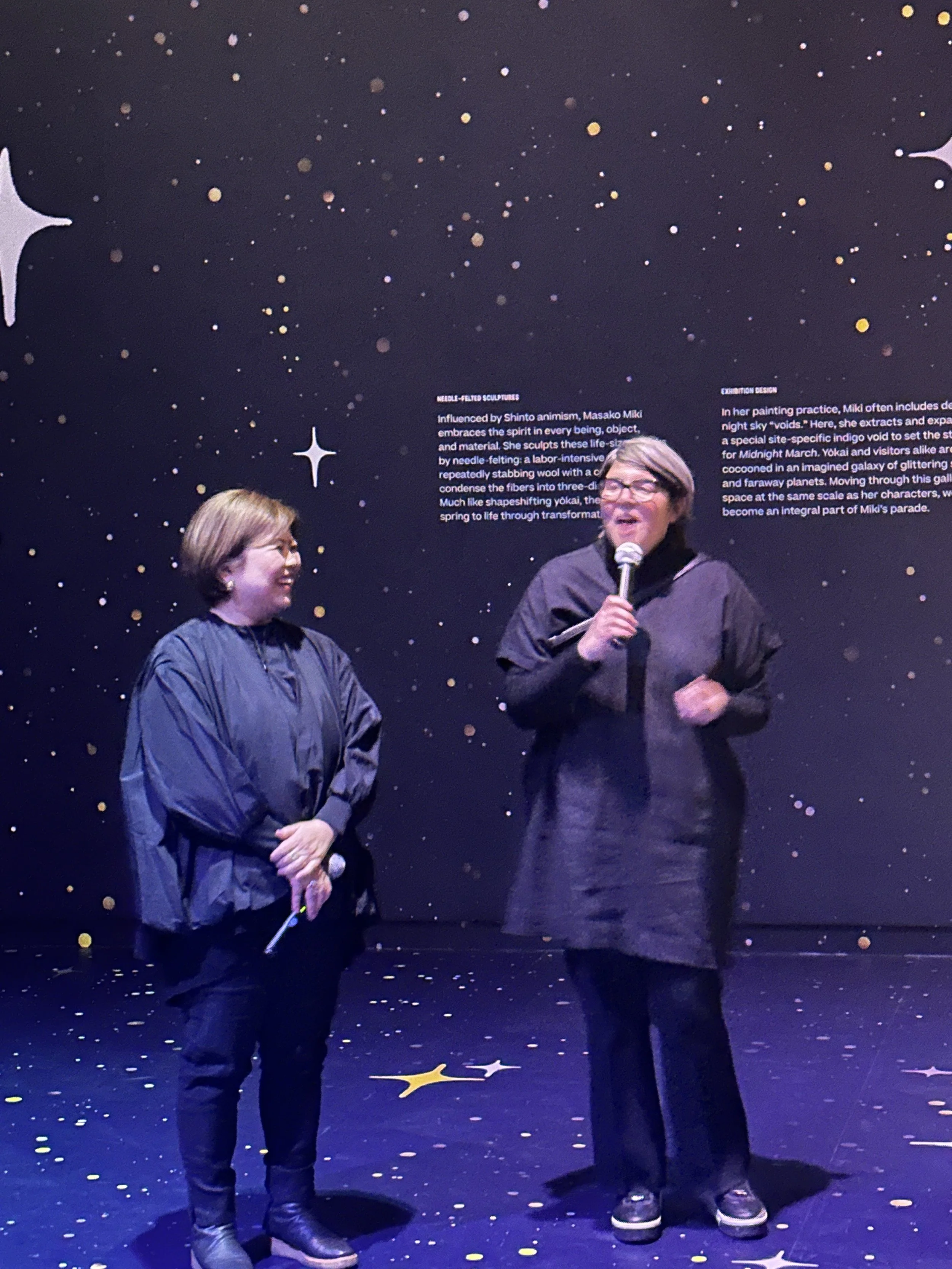
“Stars and space are a motif that I use in my work. I think they are the unknown world that I feel closest to.”
Masako Miki was born in Japan and moved to the United States when she was 18. She earned her BFA from Notre Dame de Namur University in Belmont, California, and her MFA in Pictorial Arts from San José State University. For the last twenty years she has lived and worked in Berkley, CA.
Her practice investigates the tensions this dual identity reveals, as well as the powerful way cultural stories inform identity.
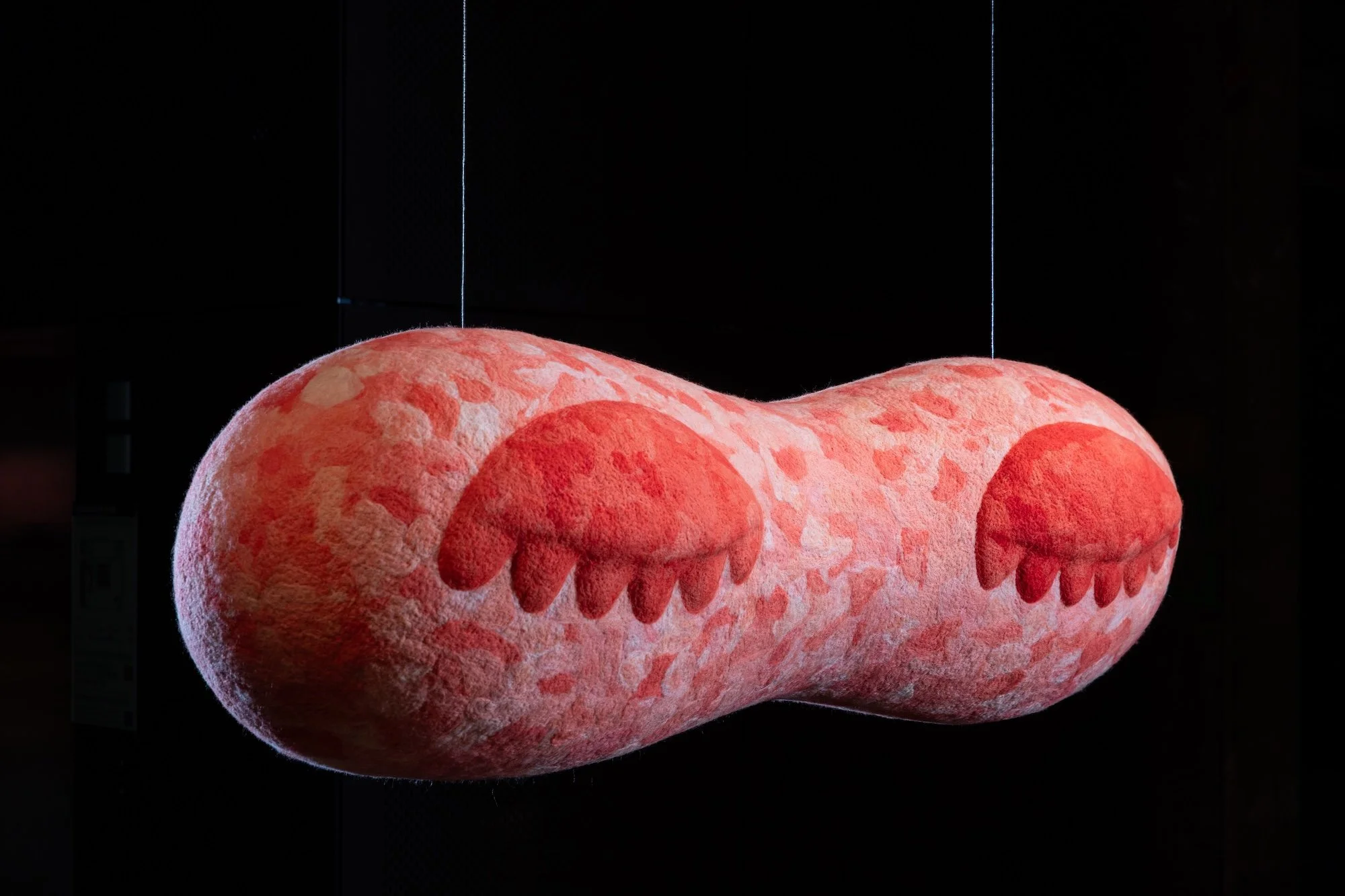
Masako Miki. Watcher with Continuous Eyes, 2018. Courtesy of the artist and Jessica Silverman, San Francisco. Photo: Nicholas Lea Bruno.
In Japan, Shinto belief holds that all things possess a spirit—animals, nature, landscapes, ideas, sounds, and even human-made objects like umbrellas and teapots. As Miki explained to me when we met in the gallery, one folktale in particular—Japanese folkloric tradition known as the Hyakki Yagyō (The Night Parade of One Hundred Demons), describes what happens when the spirits of neglected objects get fed up with human disrespect: they rise up and surge through the streets in a riotous, destructive procession. This myth, along with the spirits known as yōkai, forms a central wellspring for Miki’s work.
Miki utilizes the concept of Shinto animism not to intimidate people into "behaving," as was often the case with traditional indigenous folktales, but to remind them of their interconnectedness. Her work suggests that if everything has a soul, then nothing is truly "other." Rather than terrifying, her characters are friendly. Rather than scaring her audience into learning, she invites, includes, welcomes - intending for all to feel seen, heard and included in her alternate mythology.
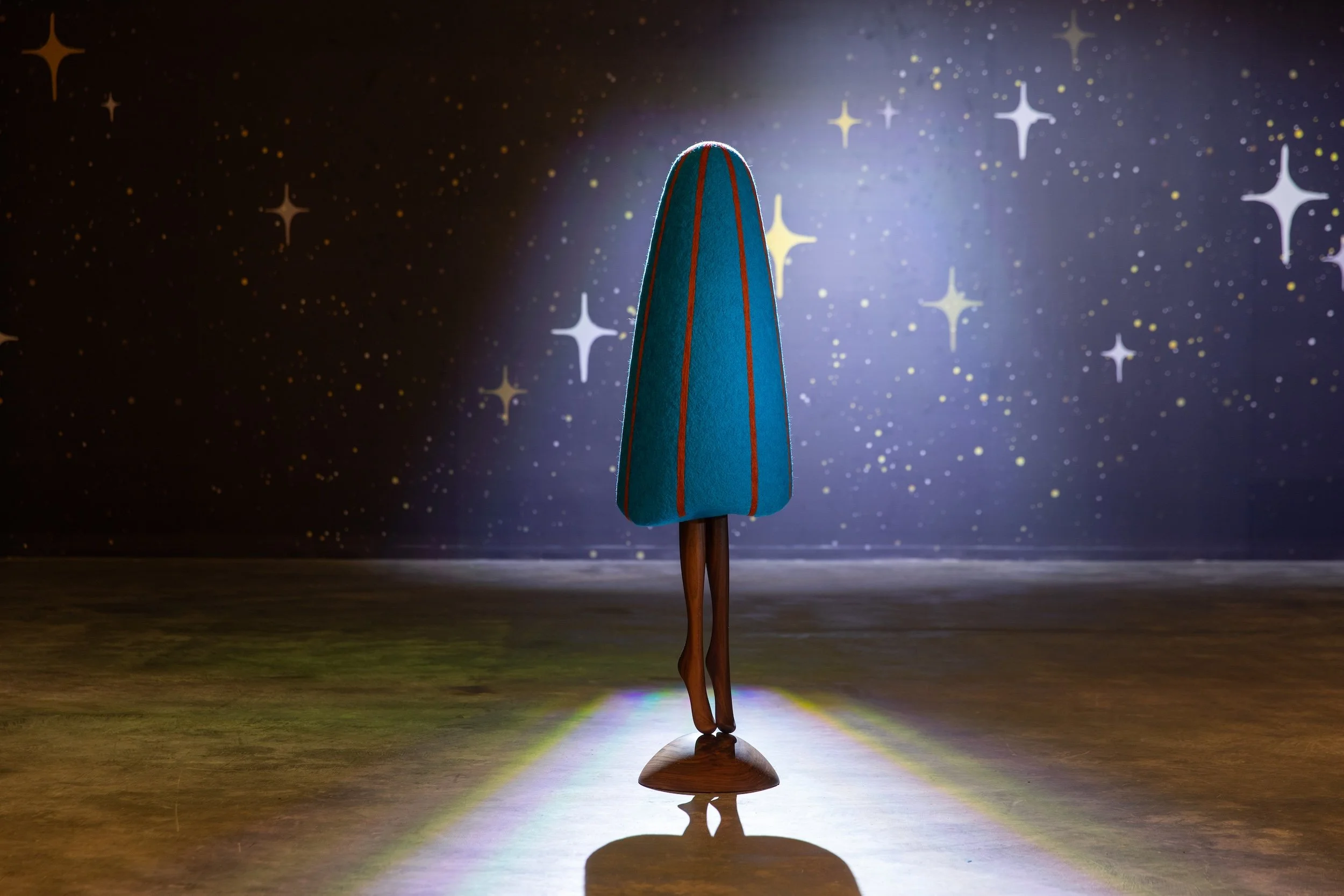
Masako Miki. Umbrella’s Whispers, 2025. Collection Dear Kala Trust. Photo: Nicholas Lea Bruno.
Miki’s world is one of transition and possibility. Her characters are shapeshifters who move between the sacred world of spirits and the secular world of human folly. Neriio Furusoma Yokai (Sound shapeshifter in Cream), 2022 and Singing Shapeshifter (Lilac), 2024 appear to be in the midst of a metamorphosis, their figure eight shapes dotted with multicolored Kusama-esque polka dots like spotted salamanders post-metamorphosis. Umbrella Whispers (2025) is a cobalt Japanese umbrella brought humorously to life. Miki explained that in Japan, umbrellas are considered disposable and often thrown away. This umbrella resists such treatment with its delicate red piping and bronze feet.
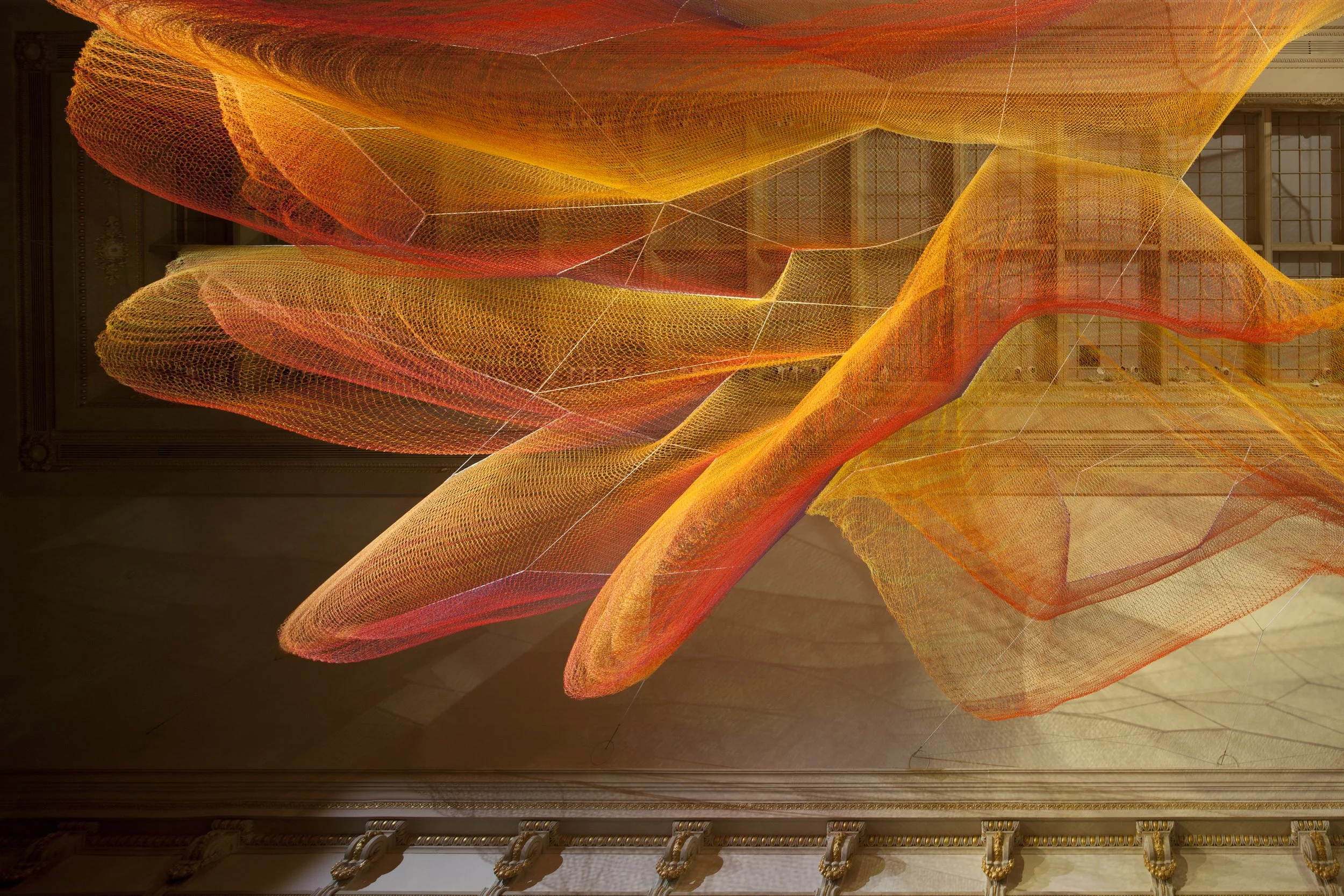
Watcher With Continuous Eyes, 2018 hangs high above the celestial scene, minding the march with eyes closed in knowing acceptance. These characters have in fact seen it all, their origin stories date back thousands of years to the first introduction of the yōkai. In 1776, the artist Toriyama Sakien published Gazu Hyakki Yagyō (The Illustrated Night Parade of One Hundred Demons), solidifying the visual forms of many yōkai.
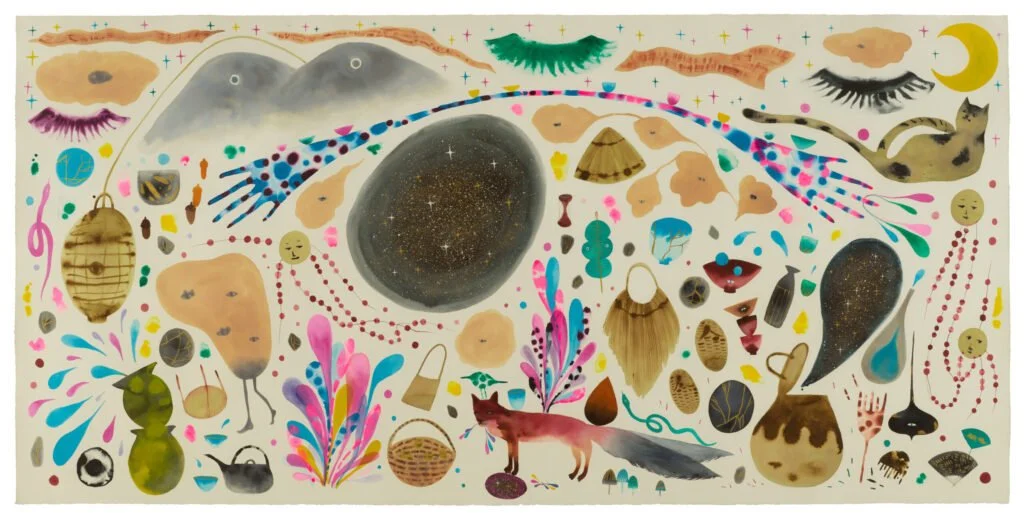
Masako Miki, Hyakki Yagyo, Night Parade of One Hundred Demons — Beginning of Another Life with Ruby Red Fox Deity, 2021. Collection SFMOMA.
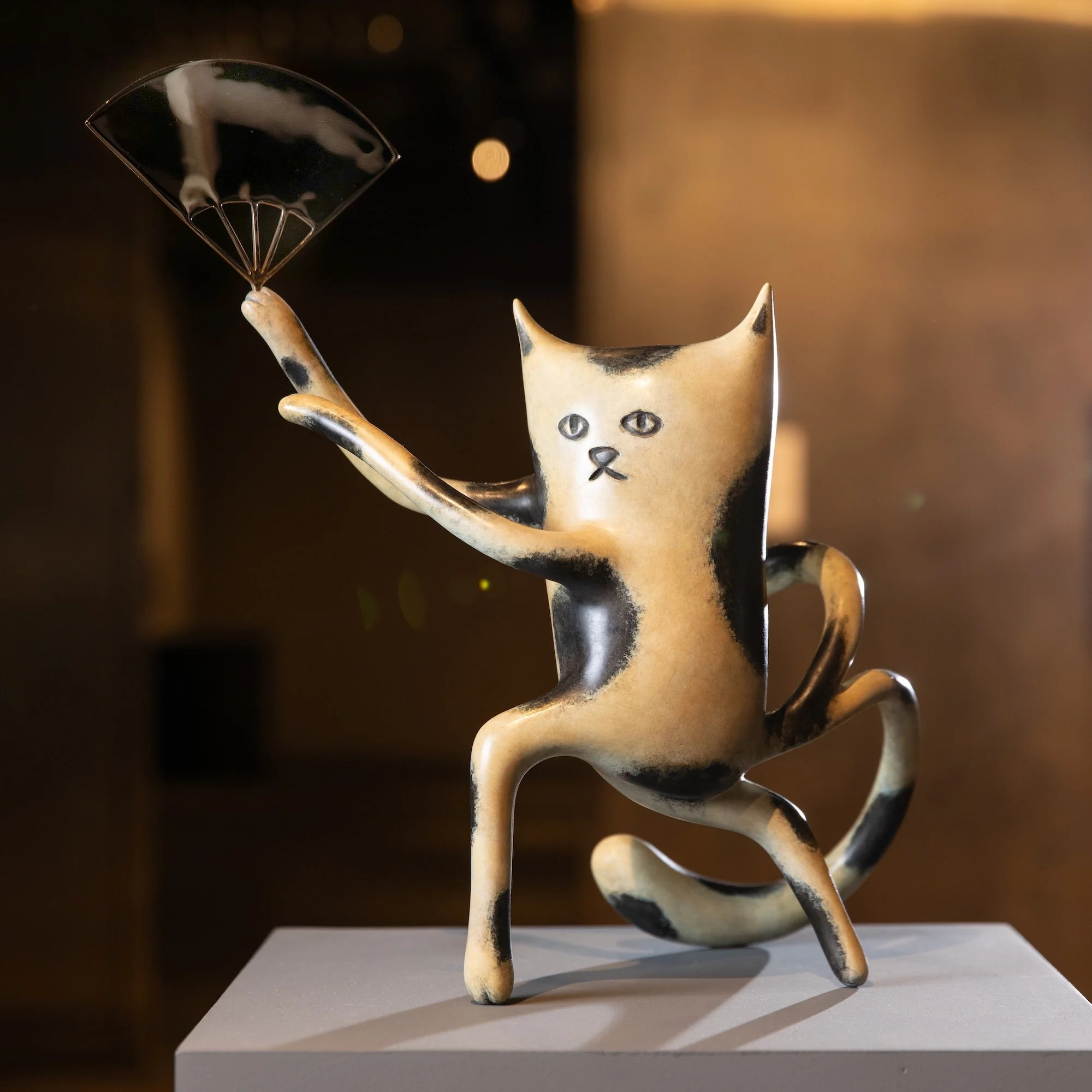
Masako Miki. Awa-dancing Cat Leading the Crowds, 2025. Courtesy of the artist and Jessica Silverman, San Francisco. Photo: Nicholas Lea Bruno.
For Miki, Hyakki Yagyō is a metaphor for cultural identities. Cultural identity is not simple or static, she told me, it incorporates all of a person’s complex parts. She adopts the metaphor to include those who have been overlooked or “othered.” Traversing between the spirit and secular worlds, the yōkai model how to break boundaries and follow the instincts which make them inherently themselves.
The pure diversity of the characters, from cats to umbrellas to rainclouds to sounds, reflects earthly diversity and eliminates binary classification systems. Rising Prayer Beads (Orange), 2024 is a character based on prayer beads freed from their string, a motif seen also in Miki’s gorgeous watercolor paintings displayed on the landing above the main gallery.
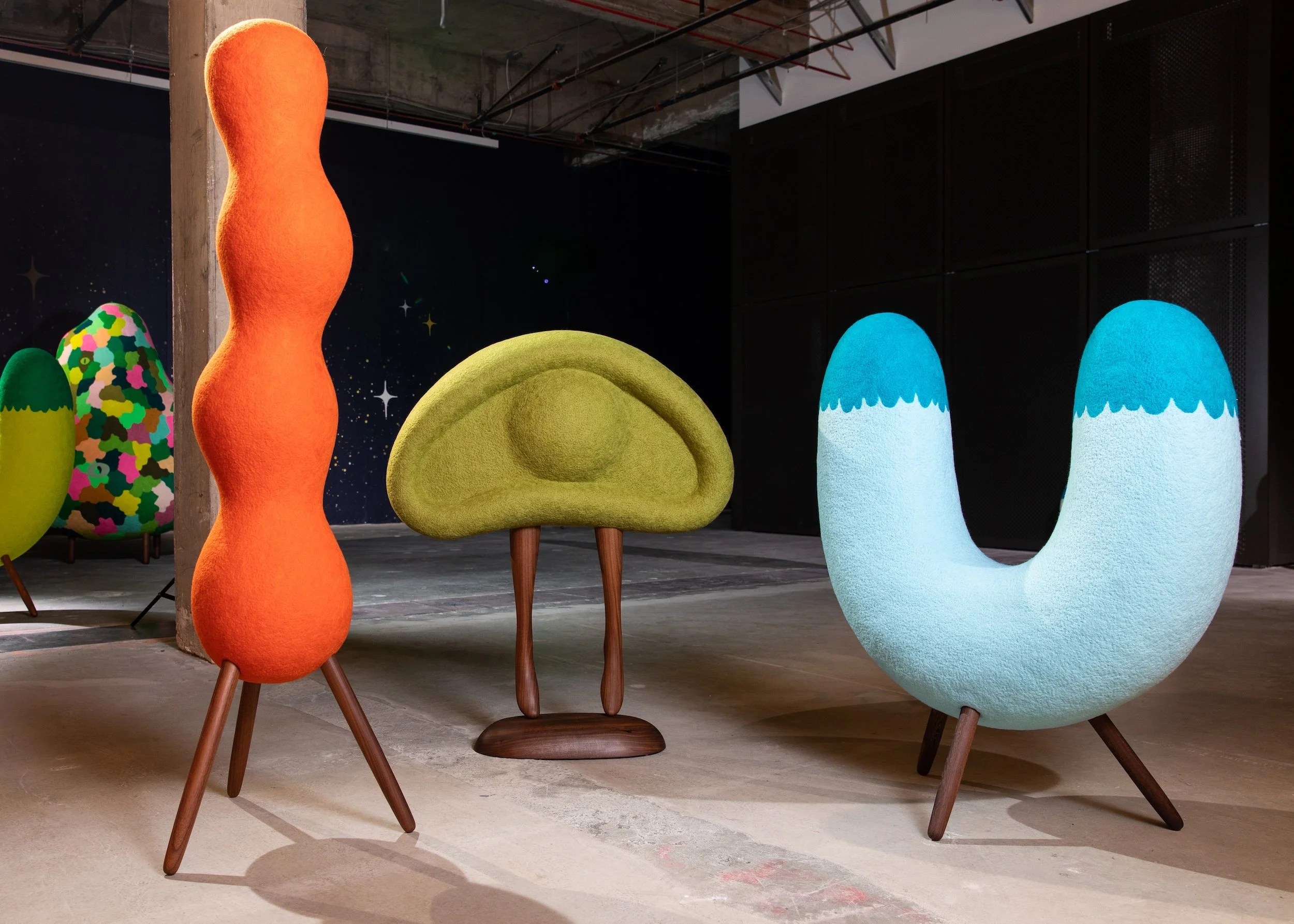
Masako Miki: Midnight March. Installation view including (from left to right) Rising Prayer Beads (Orange), 2024, Continuous Eye Awaiting, 2024, and Kujaku Ao Kyorinrin (Animated Ancient sutra in Peacock Blue) 2022:: Institute of Contemporary Art San Francisco. Courtesy of the artist and Jessica Silverman, San Francisco. Photo: Nicholas Lea Bruno.
Myths, legends, folktales, cultural narratives—these are different names for stories found in every society. Myths explain big questions about our origins and place in the universe. Legends tell of heroic figures or places, often with moral lessons. Folktales help individuals understand who they are and where they fit within family, community, and the world. But they are all stories and stories are Miki’s main artistic material.
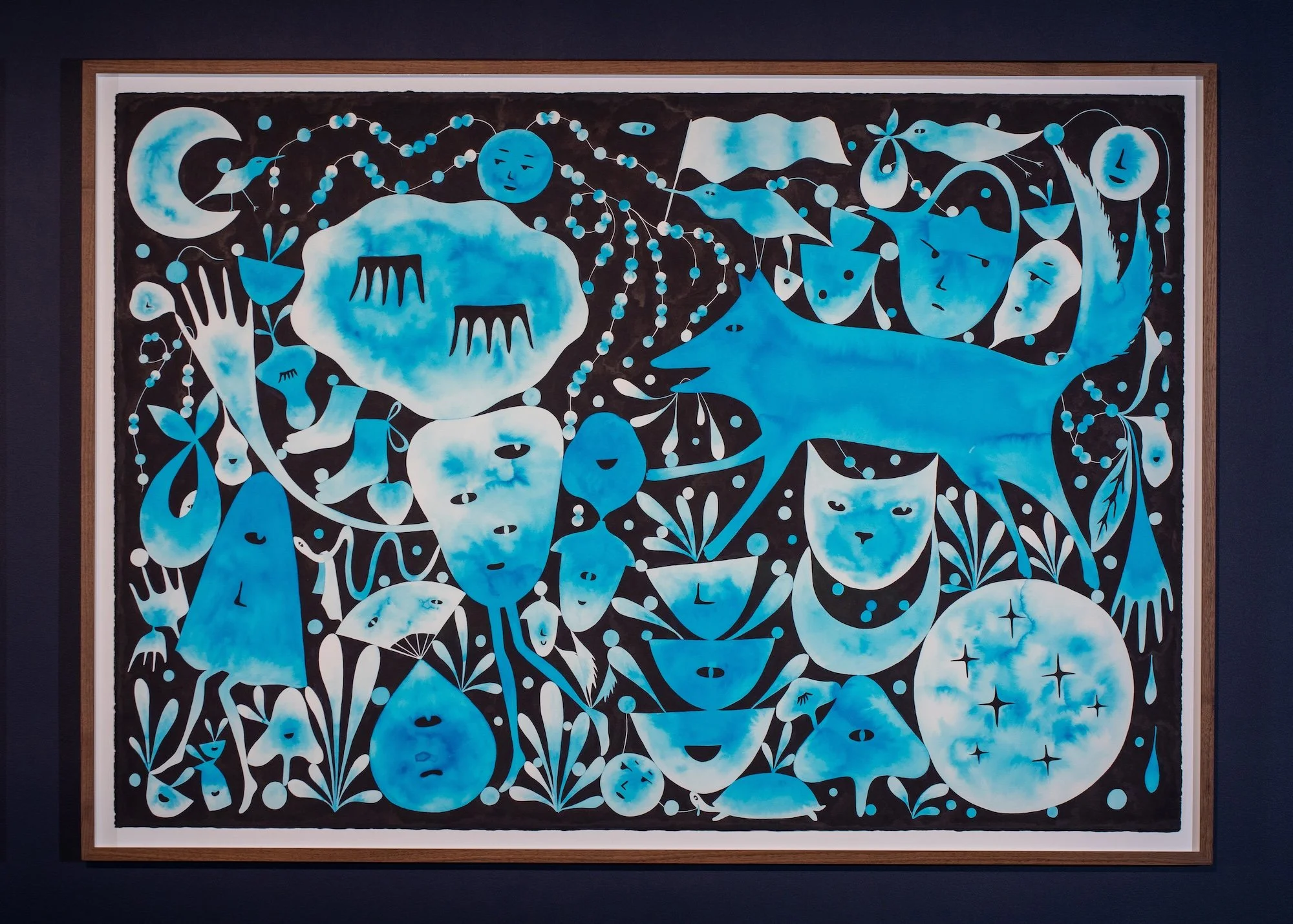
Masako Miki. Midnight March (blue and deep gray), 2025. Courtesy of the artist and Jessica Silverman, San Francisco. Photo: Nicholas Lea Bruno.
Midnight March presents a counter-narrative that presents an alternative way of being in the world today. As Miki explained, “It's very important that you feel important. If you are invited you feel visible, your voice matters. You are invited to be in this exhibition, to voice your opinions. This is a very important experience for our psyches. All of a sudden you are not forgotten anymore.”

Masako Miki, “I hope that my works generate the kind of curiosity and empathy that enables us to come together.”
Masako Miki: Midnight March will be on view at MassArt Art Museum (MAAM) through May 31, 2026.
Header image: Masako Miki: Midnight March. Installation view: Institute of Contemporary Art San Francisco. Courtesy of the artist and Jessica Silverman, San Francisco. Photo: Nicholas Lea Bruno.