Suzanne Jackson: What Is Love
What Is Love, Suzanne Jackson’s lush retrospective on view at the MFA Boston, makes you want to slow time so you can luxuriate in it, enjoying the gorgeous feelings the work evokes. The show beckons and surprises and puts you in a mood. It winds its way through the Linde Family Wing galleries, and through time, unfurling the story of Jackson’s life through six decades of paintings, hanging assemblages she calls “environmental abstractions,” and collages. It’s a show you can’t miss this season in Boston, and a show that reminds us — as women — to just keep working, because finally, at some point, the world will catch on.
What Is Love was organized by SFMOMA and the Walker Art Center in Minneapolis, and will be at the MFA Boston through January 18, 2027. Presented at the MFA by Claire Howard, the museum’s Hansjörg Wyss Curator of Modern Art, the show’s more than sixty works expose the subtle and major shifts that came about as Jackson processed her observations, education, experience, and activism. Composting influences from travel, family, school, dance, theater design, and community organizing, Jackson presents an oeuvre of escalating wonder.
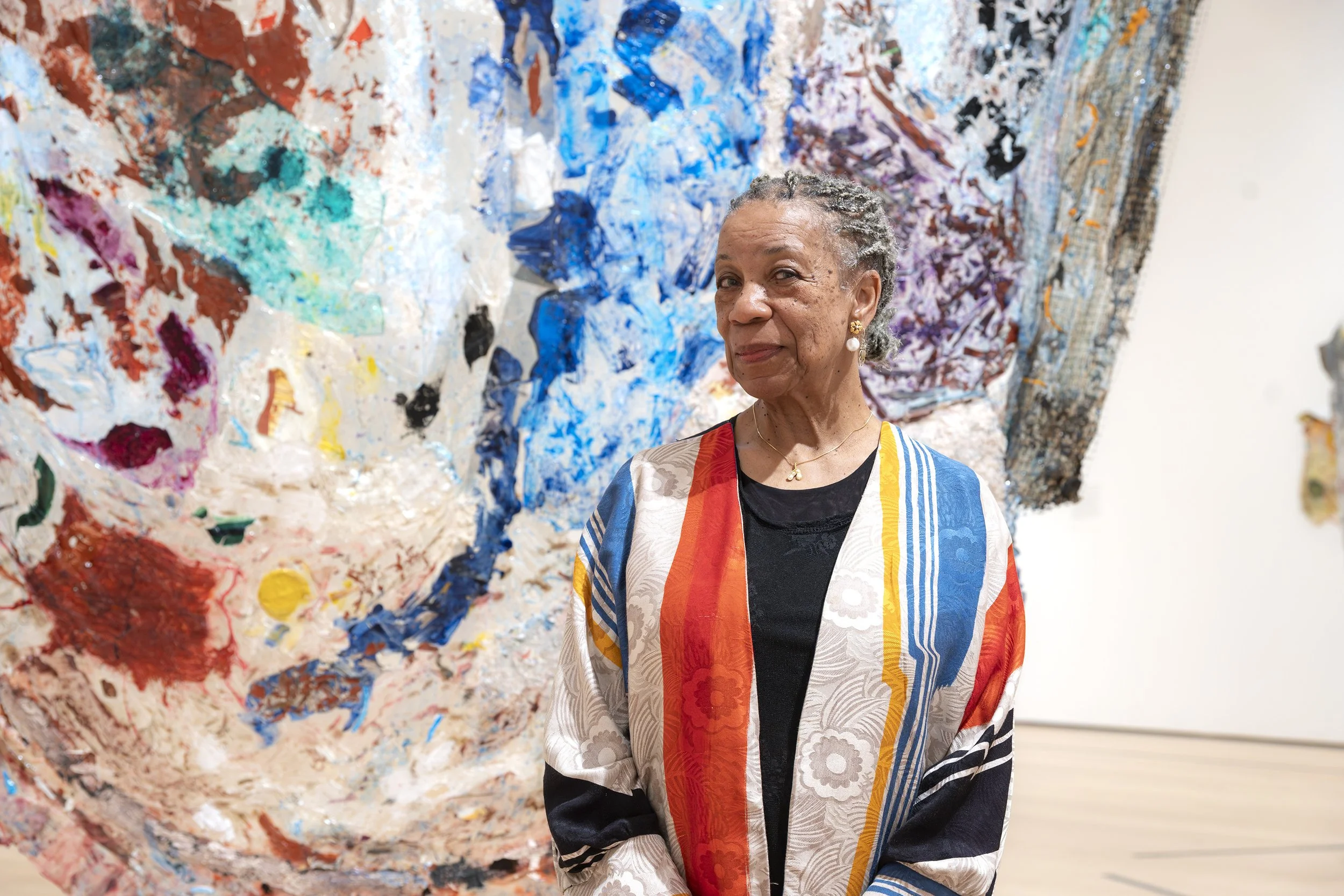
The artist Suzanne Jackson at her exhibition Suzanne Jackson: What Is Love at the Museum of Fine Arts, Boston. September 29, 2026. * Linde Family Wing for Contemporary Art.* Photograph © Museum of Fine Arts, Boston.
With What Is Love, Jackson joins a list of women artists who triumphed later in life after a career of art-market indifference. Carmen Herrera did not sell her first painting until she was 89, and had her Whitney retrospective at 101. Louise Bourgeois had her first retrospective at MoMA in 1982, when she was 70. Alma Thomas became the first Black woman to have a solo exhibition at the Whitney Museum at the age of 80. Consider Kimiyo Mishima, Rosalyn Drexler, Susan Weil, Greta Schödl — the list of women celebrated too late is far too long.
But Suzanne Jackson has the energy of someone just getting started. At 82 she is at the height of her powers, patiently sitting for interviews and giving talks even as she counts the days until she will be back in her studio, focusing on a new body of work: “I’m working on big drawings now,” she told me, “in both of my studios.” She recalls the years in which she painted without anyone paying attention as the years she could do whatever she wanted. They were the years she grew, the years she defied genre, category, and material limitation.
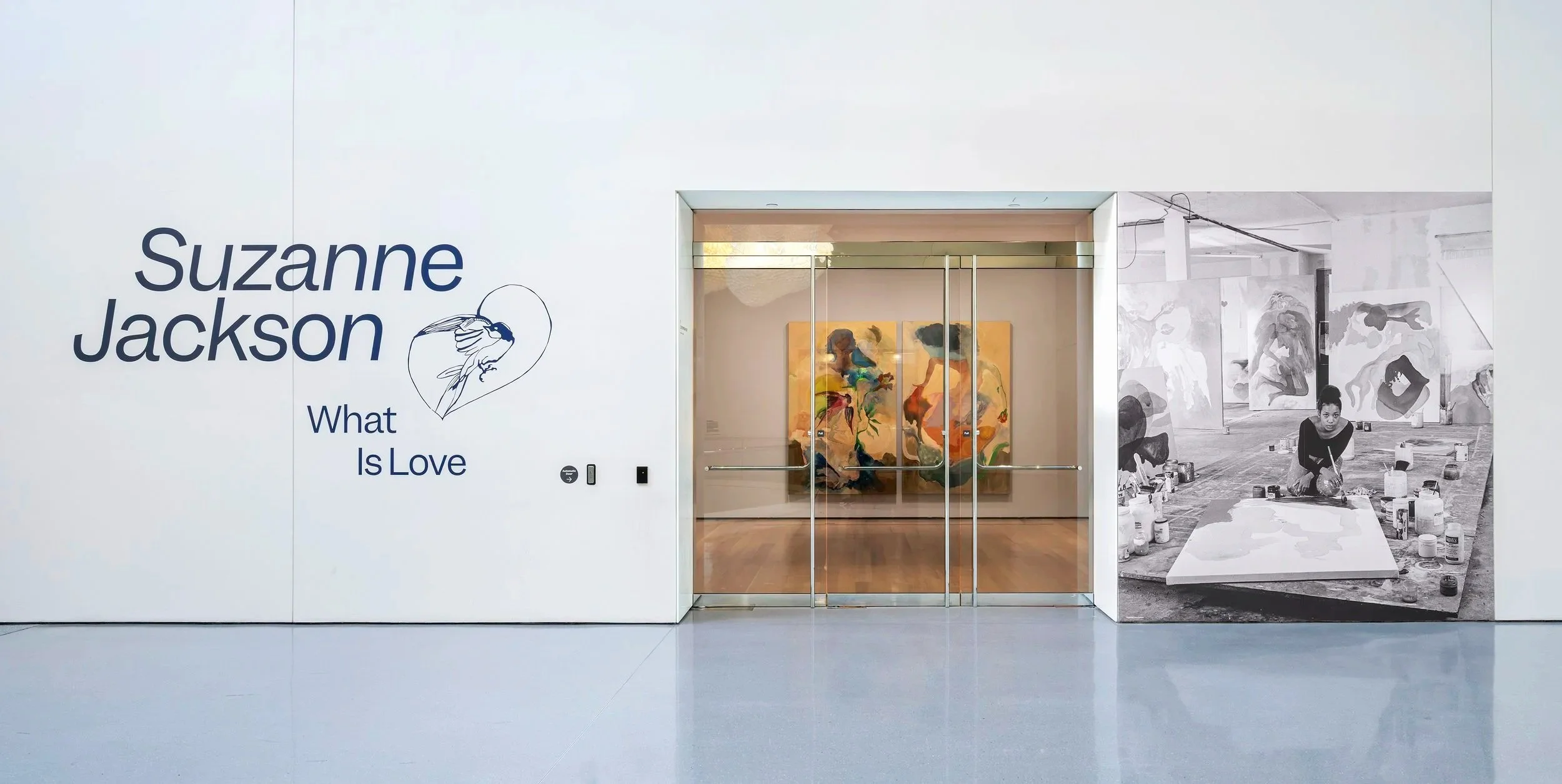
Suzanne Jackson: What Is Love exhibition at the Museum of Fine Arts, Boston. September 26, 2026 to January 18, 2027 * Linde Family Wing for Contemporary Art* Photograph © Museum of Fine Arts, Boston.
Jackson has lived in many places, including San Francisco, Alaska, Los Angeles, New York, and Savannah. She currently splits her time between studios in Savannah, Georgia, and St. Remy, New York. She is well known for her activism and community support, including the founding of Gallery 32 in Los Angeles, which became a vital hub for Black artists from 1968 to 1970. But at the core, Jackson is a painter, using her craft as a means of survival and resistance through beauty.
I met the artist on a rainy morning before the museum opened. She was gracious, eloquent, and funny, recalling in colorful detail many of her defining moments. This conversation has been modified for length.
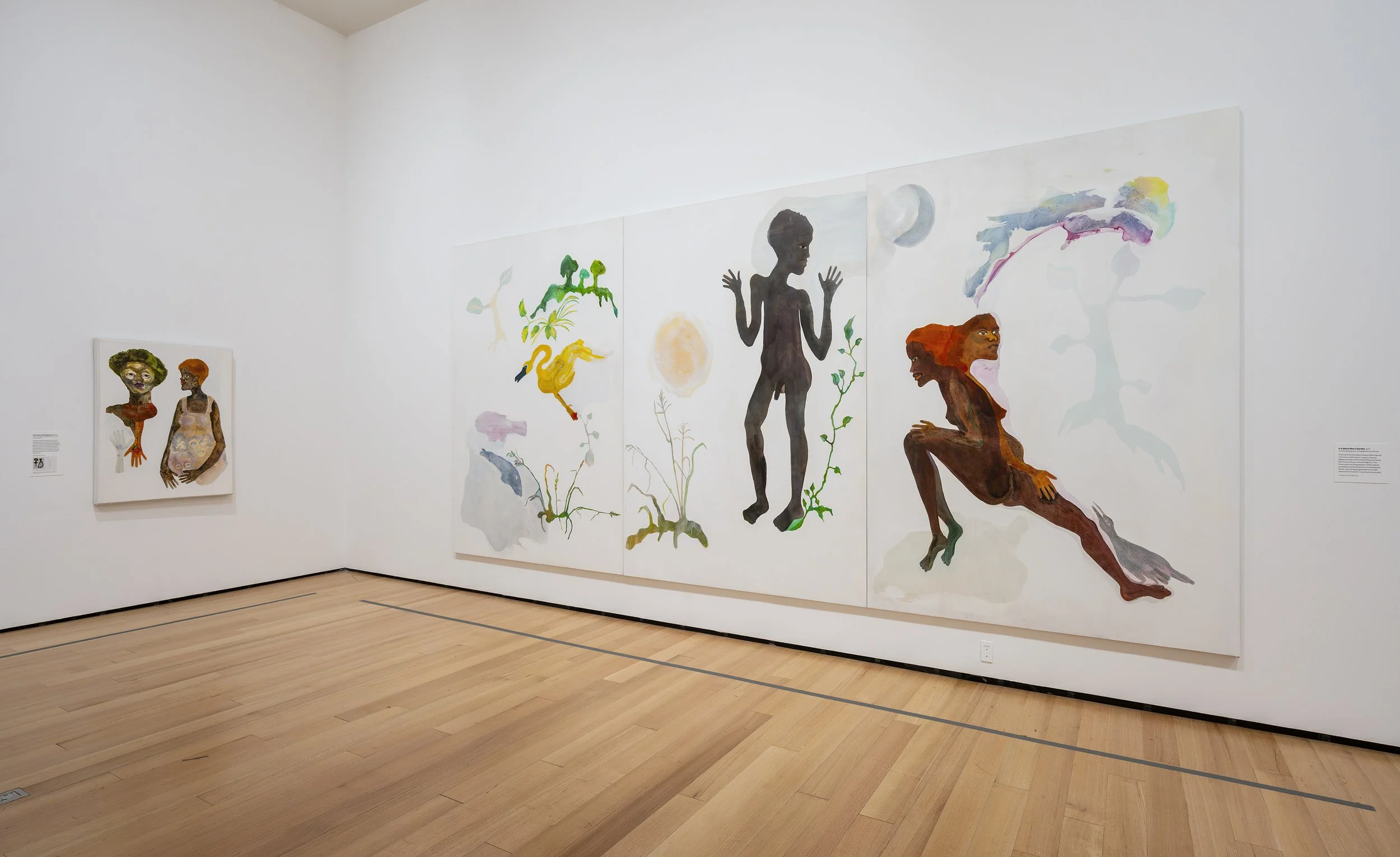
Suzanne Jackson: What Is Love exhibition at the Museum of Fine Arts, Boston. September 26, 2026 to January 18, 2027 * Linde Family Wing for Contemporary Art* Photograph © Museum of Fine Arts, Boston.
Robin Hauck: We’re standing with some of your early works, in a show organized chronologically. One thing I notice is a deep sense of connection with nature: human figures and natural elements, with white space allowing for contemplation about their separateness and connection. How do you see your relationship with nature?
Suzanne Jackson: I think it began when we drove across the country, when I was nine months old. We were moving to San Francisco. As a little child, in a big old 1940s automobile, looking out the window, I saw all the color and nature. When this exhibition opened in San Francisco, I was too busy working to go outside the museum, but these things came back to me. I’ve gone in and out of San Francisco throughout my lifetime. The city has the most incredible park, and the ocean is there. Every day my mother would take me to the park. Walking home in the grasses — the grasses and plants would be taller than me. When you are face to face with plants, you have a conversation. That is the beginning — what children see in that first connection.
I grew up in Alaska — that’s the other aspect of nature — it’s all around. We had a woman who came to give us art classes. She would have us copy out of National Geographic, but my interest was to look out the window at the incredible landscape, and all kinds of birds.
“The power of nature is what I believe in very strongly. For me, if I live some place there has to be not only a good bathtub, but trees, that’s my prerequisite. Trees are extremely spiritual.
”
My mother would have me write letters and draw pictures to send to my grandparents. I couldn't go outside to play because I was too small and we lived on the second floor, so I learned how to observe and draw and paint from nature. I believe in observation.
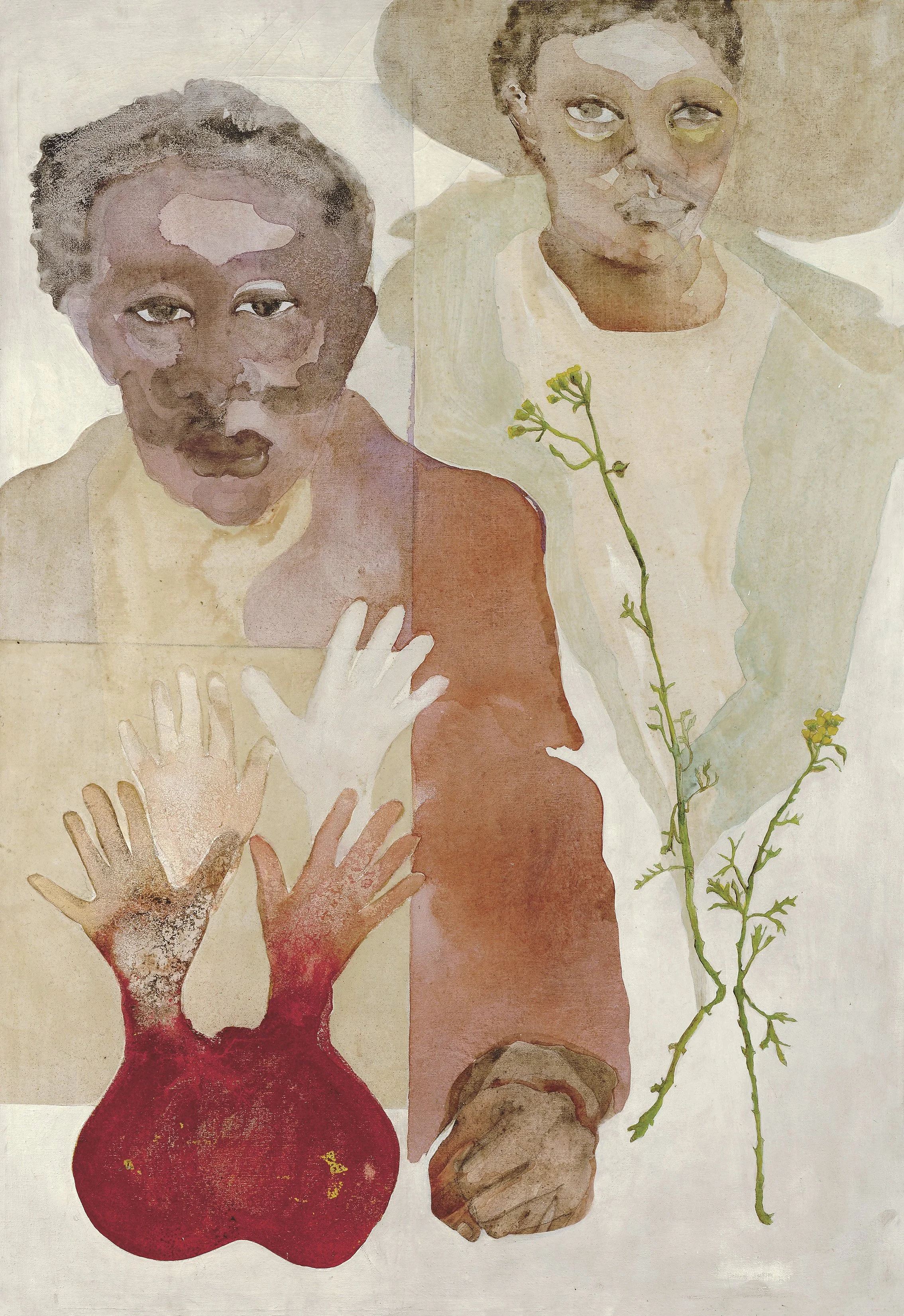
Suzanne Jackson, Grandparents, 1970. Acrylic wash, gesson, and graphite on canvas.* Collection of Tina and Larry Jones, New York* © Suzanne Jackson, courtesy Ortuzar, New York; photo: David Kaminsky* Courtesy Museum of Fine Arts, Boston.
RH: You have a distinct and arresting sense of color. Where does your color begin?
SJ: My first birthday was Chinese New Year. I was sitting on my father's shoulders in Chinatown. It was a big celebration that made me feel very special. All I remember is seeing the bright color. It's now called Lunar New Year, my favorite holiday. All the color — dragons and lions, and the parade with all the flowers and incense and colors.
My father drove cable cars. I would ride with my him, seeing the whole city. I saw the early works from the WPA (Works Progress Administration); the sculpture on the friezes at Fisherman's Wharf, (by Sargent Johnson). On the route to Coit Tower, you look across the Bay. It was an adventure.
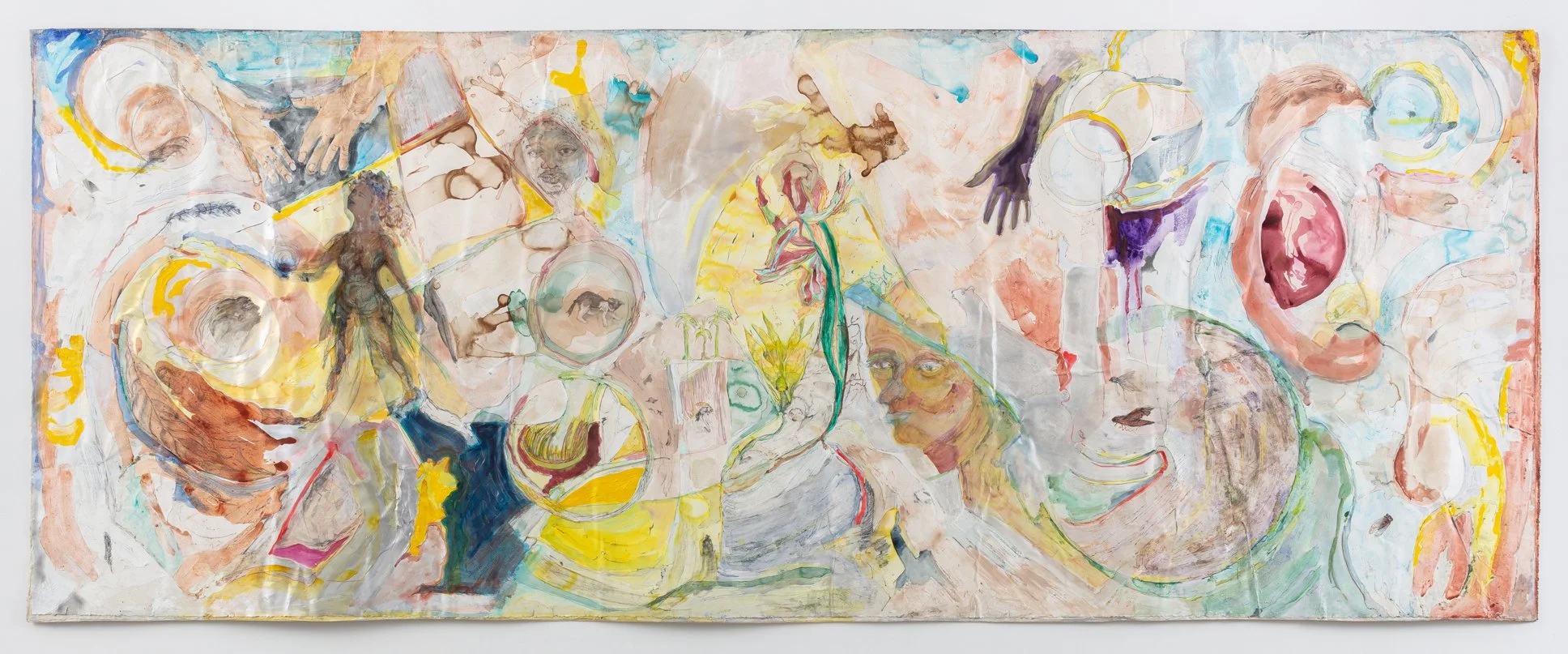
Suzanne Jackson, a history drawing - cracked wall, 2016-19. Graphite, acrylic wash, coffee with acrylic medium, and colored pencil on cotton-backed Stonehenge paper. Collection of George and Keren Davis.
RH: Your work is quite gestural. Your marks are characterized by graceful movement and fluidity. Does that tie back to your experience as a dancer?
SJ: Well, I was always painting. People think I was a dancer and then I became a painter, but I was a painter first. I didn't start dancing until Alaska. In seventh grade I took ballroom dancing, because we wanted to go to the YMCA dances. Then I transitioned and spent my allowance on dance classes. But I was always painting. I think [the gestural marks] are a subconscious thing that happens.
I have to move all the time, I can't sit still. I don't think about dance necessarily, but I think about the wind, and how the trees have conversations with each other.
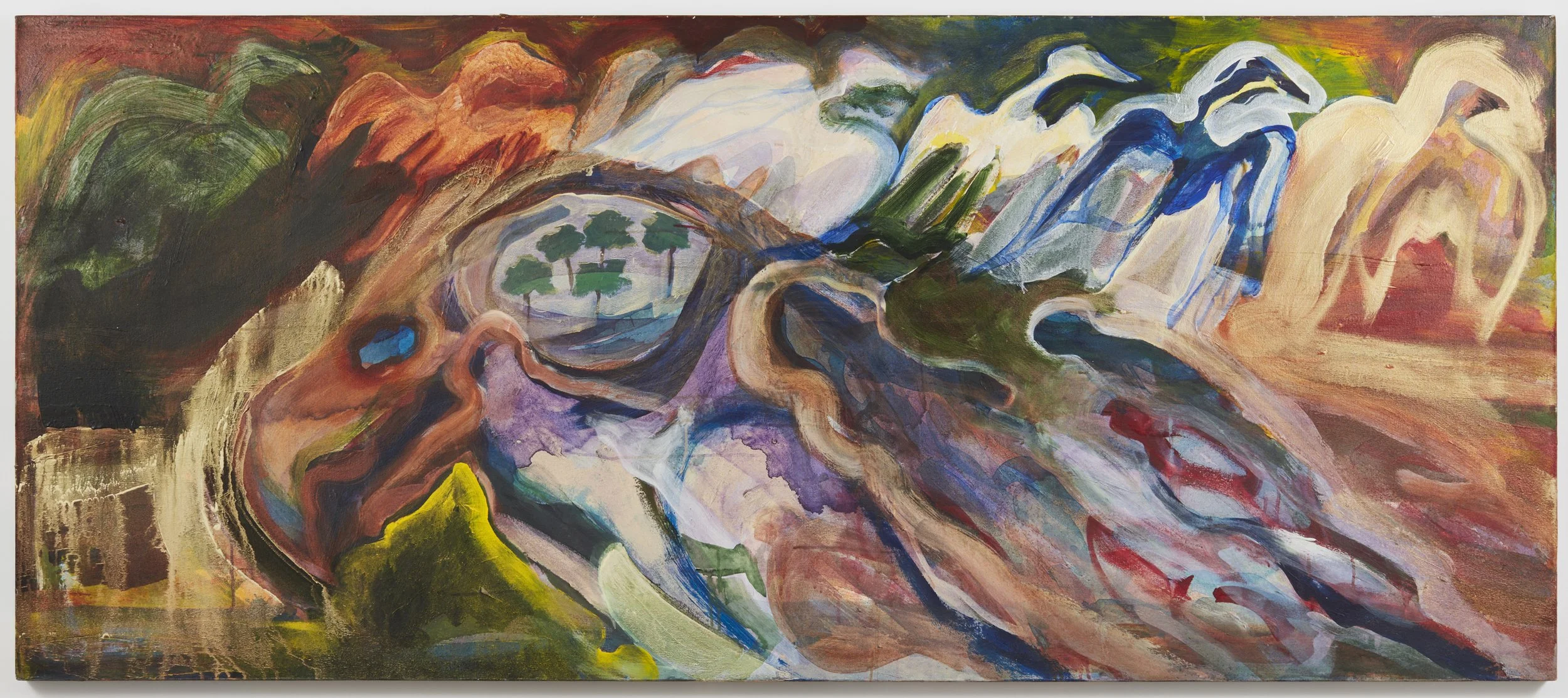
Suzanne Jackson (American, born in 1944) 1998. Acrylic wash on gessoed canvas* The Shah Garg Collection* © Suzanne Jackson, courtesy Ortuzar, New York; photo: Timothy Doyon* Courtesy Museum of Fine Arts, Boston.
RH: You got your MFA in Theater Design from Yale in 1990 at 46. Tell me about your interest in the theater, and how that impacts your work.
SJ: I learned a great deal going to grad school for theater. For three years you are studying costume, society, history, culture, art. You use the paintings. I looked at paintings in the museum and I thought, OK, that’s a good costume reference, because that’s what we used. It wasn’t until I was 44 that I really studied art. I mean, I had a BA, but that was sculpture, painting — no design. It’s called theater design, and that’s a dirty word. I went to learn; I didn’t even think about getting a degree. But once I had a degree, people asked me to teach. Now you have to have a degree to do anything.
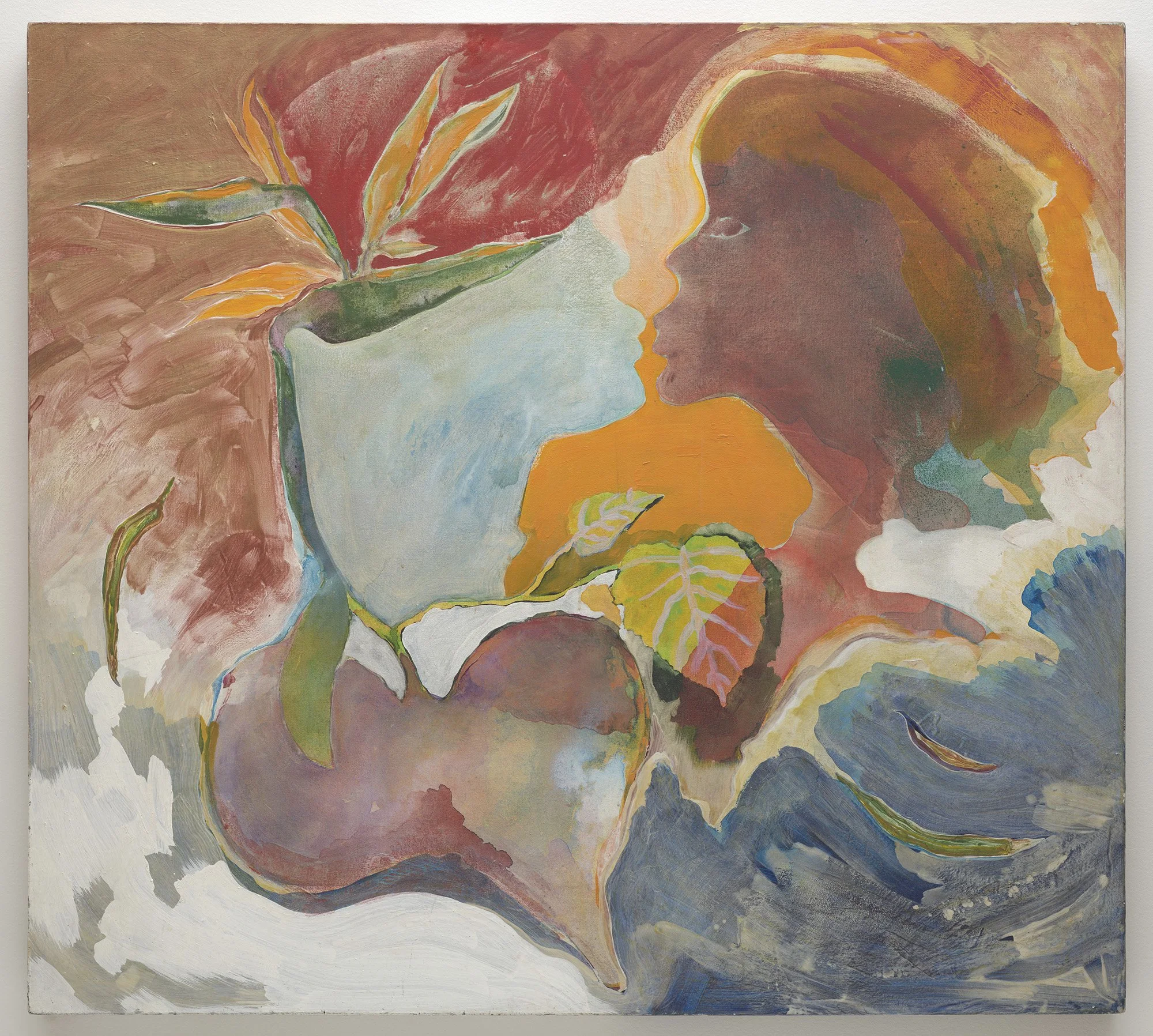
Suzanne Jackson, El Paradiso, 1981–84. Acrylic wash and gesso on canvas. * San Francisco Museum of Modern Art, Accessions Committee Fund purchase, by exchange, through a gift of Michael D. Abrams* © Suzanne Jackson, courtesy Ortuzar, New York; photo: Katherine Du Tiel. * Courtesy Museum of Fine Arts, Boston.
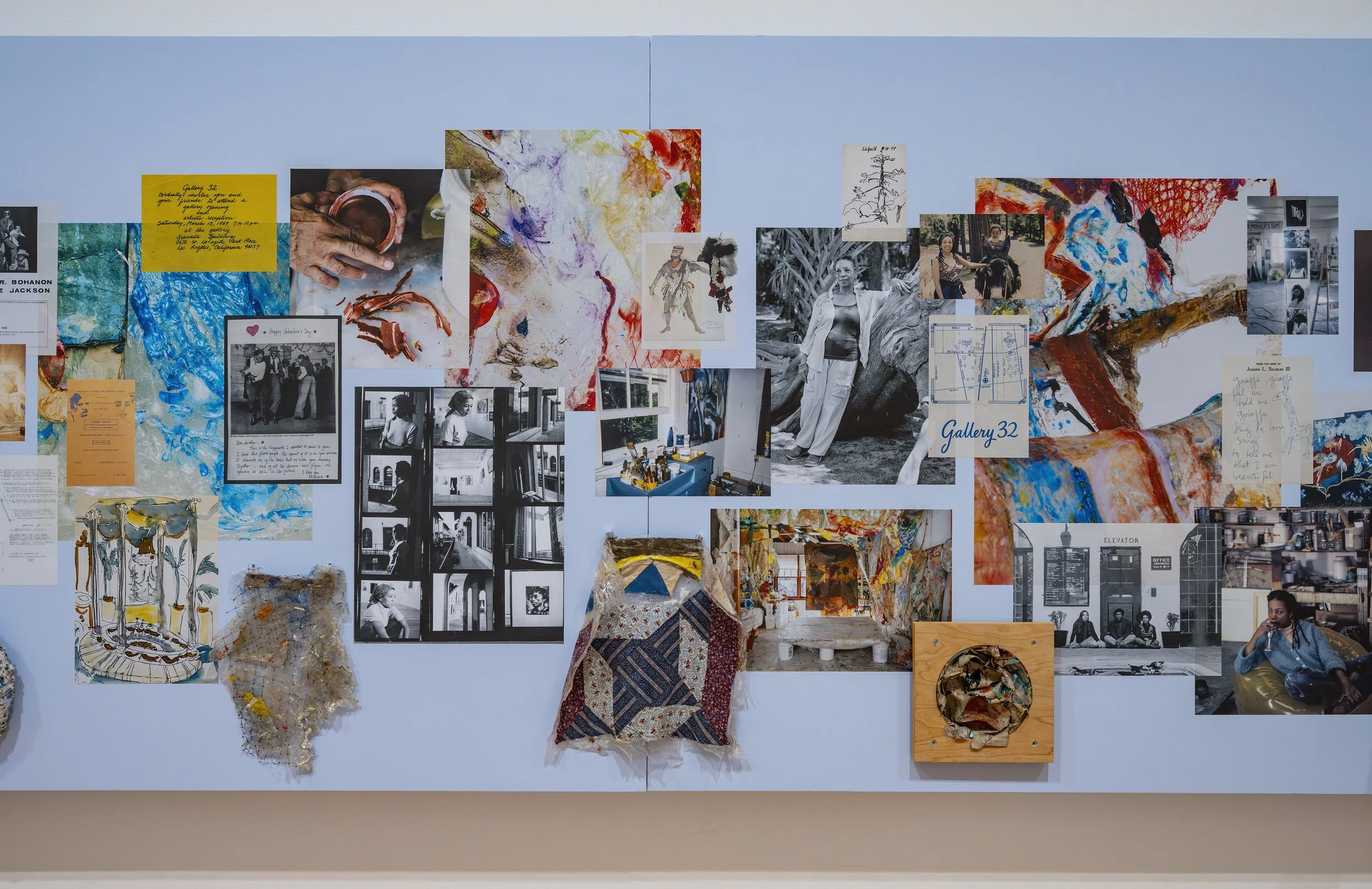
Suzanne Jackson: What Is Love exhibition at the Museum of Fine Arts, Boston. September 26, 2026 to January 18, 2027 * Linde Family Wing for Contemporary Art* Photograph © Museum of Fine Arts, Boston.
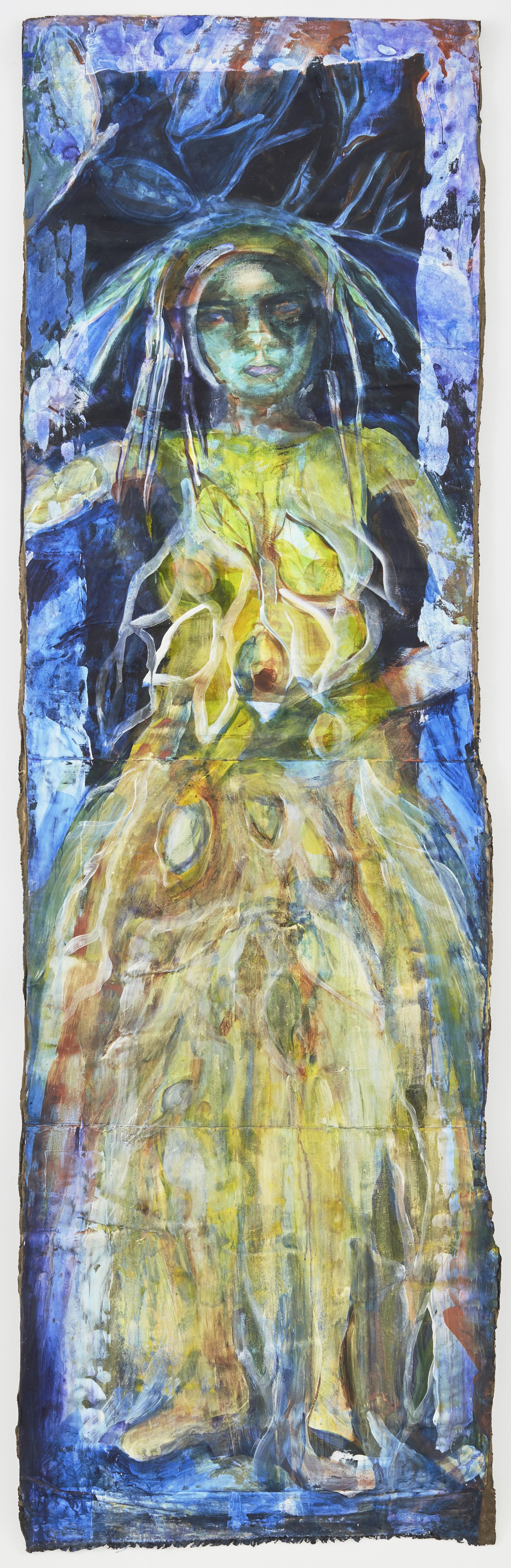
Suzanne Jackson, Ma-Yaa, 1994-98. Acrylic wash on linen-backed Stonehenge paper. *© Suzanne Jackson, courtesy Ortuzar, New York; photo: Timothy Doyon* Courtesy Museum of Fine Arts, Boston.
RH: Your drawings seem to ground a lot of your work.
SJ: I love to draw. People think that when you work in abstraction you don't have to draw, but you do. You have to be able to draw. I am working on big drawings now in both of my studios.
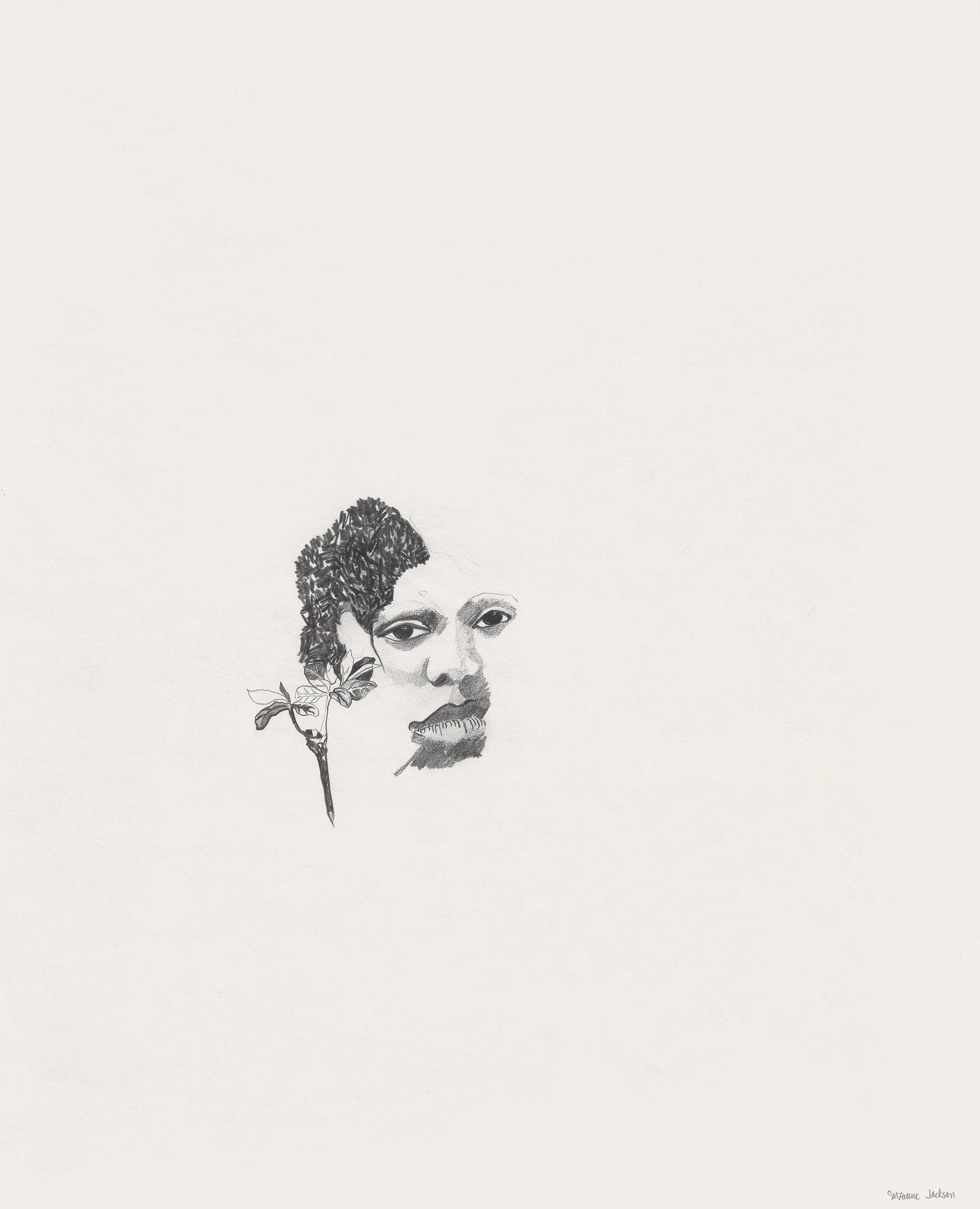
Suzanne Jackson (American, born in 1944), Self Portrait, 1972. Graphite on paper* Collection of Rosalind K. Goddard, Los Angeles* © Suzanne Jackson, courtesy Ortuzar, New York; photo: David Kaminsky* Courtesy Museum of Fine Arts, Boston.
“ People see things in the work. Once they leave the studio and they are out, they don’t belong to me. They belong to everyone else. So that is very beautiful for me. Everyday I’m learning something. ”
RH: Who are your artistic heroes?
SJ: Well, Barbara Chase-Riboud. Mary Lovelace O'Neal (check out their conversation in BOMB Magazine). El Anatsui. I like this young artist Leonardo Drew.
When I was teaching myself to paint in Alaska, when I was 14, 15 years old, my mother bought books for me. I would look at the brushstrokes of the Impressionist painters. That was really how I taught myself to paint. Being here [at the MFA Boston], seeing the paintings live, makes a difference – the kind of texture you get with oil paint. I am still teaching myself to paint.
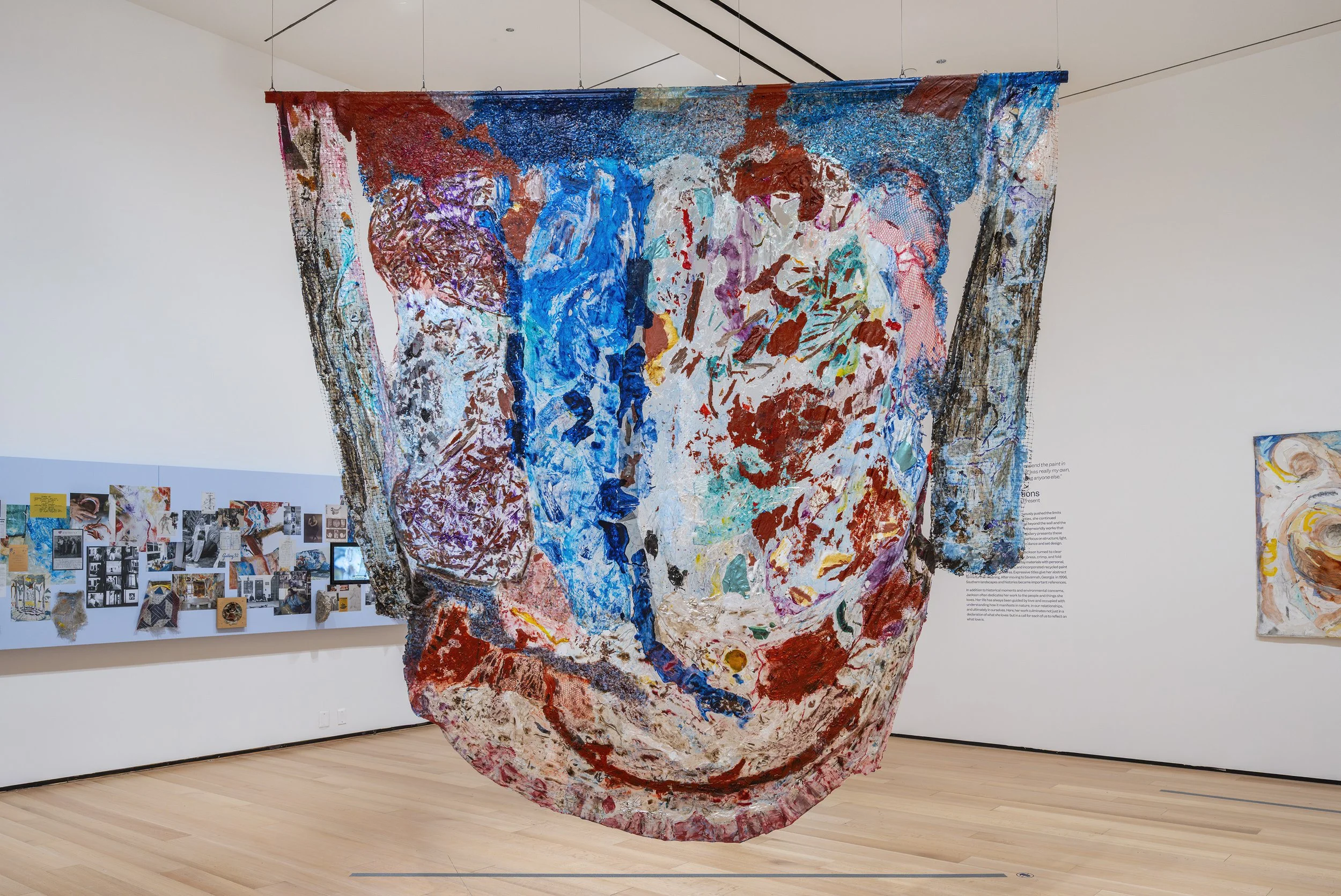
Suzanne Jackson: What Is Love exhibition at the Museum of Fine Arts, Boston. September 26, 2026 to January 18, 2027 * Linde Family Wing for Contemporary Art* Photograph © Museum of Fine Arts, Boston.
RH: (indicating the large hanging work Crossing Ebenezer ). These are the first works I saw of yours. They made a big impression on me at the Whitney Biennial.
SJ: These are environmental abstractions. This is the work that everyone knows me for now: the gel mediums. These areas that are clear like glass are still drying. A few of those paintings were in the Whitney Biennial. The paint is the surface and the support. It’s held together by the strength of paint. I don't throw things away—these are vegetable produce bags. I look at something and I think structurally. This one has torn pieces of paper that were thrown into the trash. Even the canvas strips were left over.
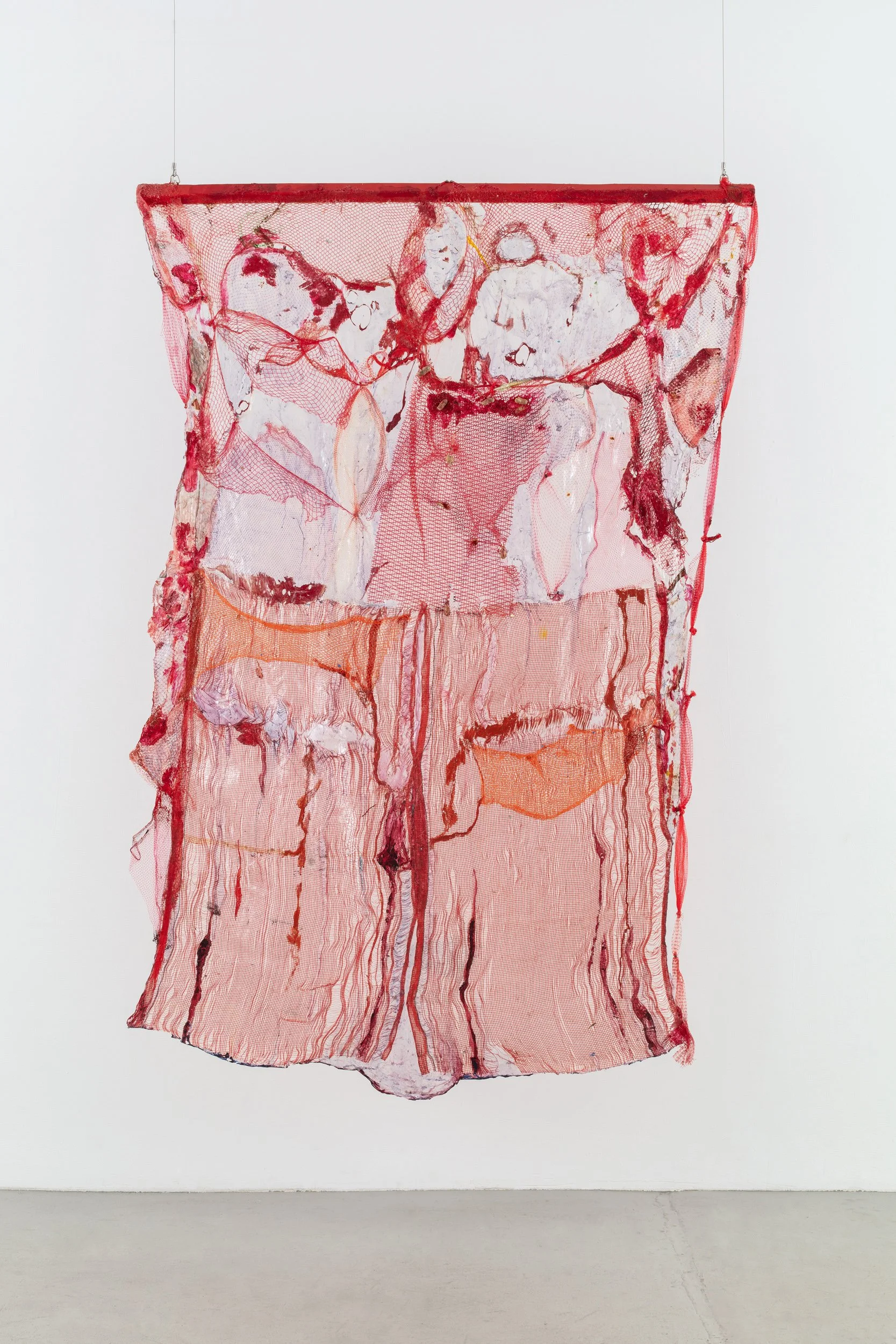
Suzanne Jackson, Crossing Ebenezer, 2017. Acrylic wash, acrylic gel medium, acrylic detritus, firewood bag netting, peanut shells, wood, and D-rings. Collection of Beth Rudin DeWoody.
The layers of oil paint form a shell, a skin, and then it is still drying. When I’m working on these I have to work both sides. I work on the table, I work upright, and the air flowing through helps to dry the work. I used to roll them up. I went to Austria and I took paintings in a suitcase, but they won’t let that happen now.
I haven’t received a ton of awards, but I feel really proud that all the awards I have received are from painters: Joan Mitchell, Helen Frankenthaler, Murray Reich.
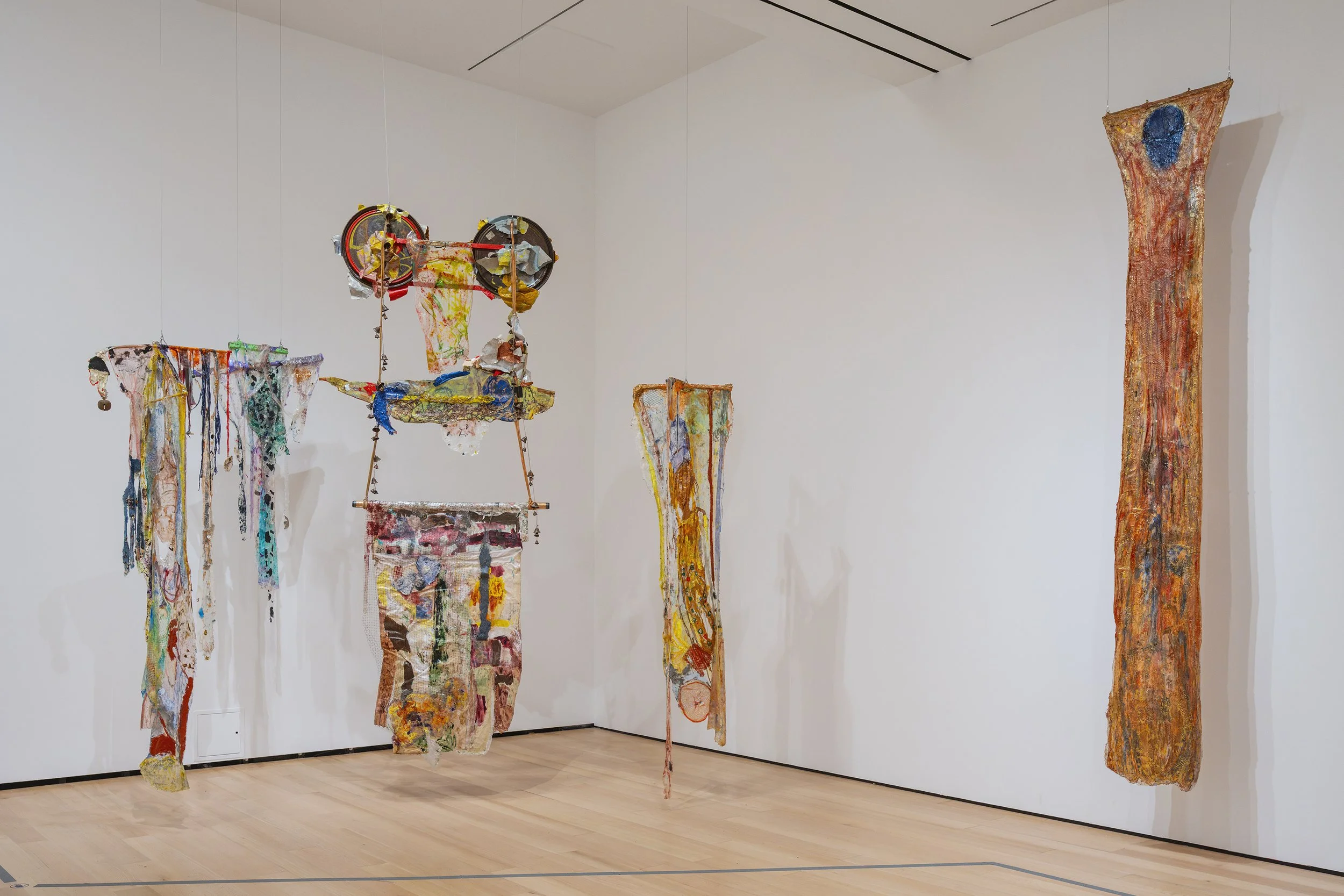
Suzanne Jackson: What Is Love exhibition at the Museum of Fine Arts, Boston. September 26, 2026 to January 18, 2027 * Linde Family Wing for Contemporary Art* Photograph © Museum of Fine Arts, Boston.
Suzanne Jackson What Is Love is on view at the Museum of Fine Arts Boston, September 27, 2026 through January 18, 2027. 465 Huntington Avenue, Boston, MA.
Related exhibition events:
Suzanne Jackson in Conversation with Imani Perry, Thursday, November 12, 2026. 7 - 8pm.
Virtual Member Lecture, Wednesday, January 13, 2027. 6:30 - 7:30pm..
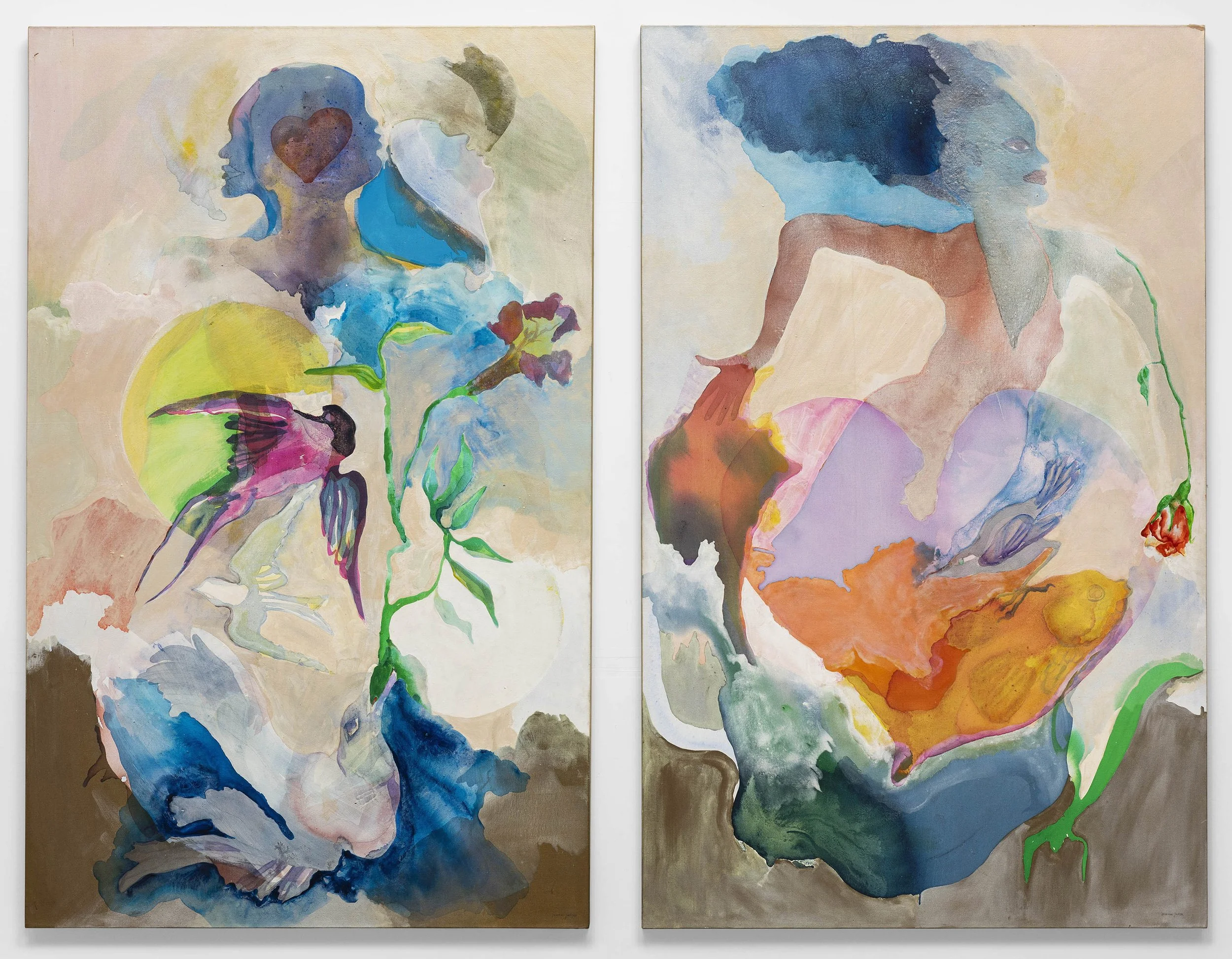
* Title image: Suzanne Jackson, Wind and Water, 1975. Acrylic wash, gesso, and graphite on gessoed canvas. The two panels of this work depict wind and water as allegorical figures with a mystical sensuality. The figures express Jackson’s deep respect for the natural world and belief that nature is a part of us. Intertwined figures, plants, and animals dissolve into one another, creating a dreamlike space where all living things are interconnected. The Museum of Modern Art, New York; Acquired through the generosity of The Modern Women’s Fund, Alice and Tom Tisch, Anne and Joel Ehrenkranz, Marie-Josée and Henry R. Kravis, Michael S. Ovitz, Ronnie F. Heyman, and Pamela J. Joyner and Alfred J. Giuffrida (Museum of Fine Arts, Boston).