Jean Shin's Green Reprieve
Celadon Landscape and Offering which comprise Jean Shin’s dual exhibition at Brooklyn’s Green-Wood Cemetery, offer a welcome recovery after the hectic pace of New York Art Week. An easy subway ride from Manhattan, Green-Wood sits on a hill in west Brooklyn, spreading over 478 acres. In the late 1800’s, the property was one of the country’s most popular tourist destinations thanks to scenic hills, glacial ponds, meandering paths, and skyline views. Leonard Bernstein, Jean-Michel Basquiat, Louis Comfort Tiffany, and baseball great Charles Ebbets are forever residents. In 2006 Green-Wood was designated a National Historic Landmark thanks to its significance as one of America’s early rural cemeteries. As Dorothy would say, “Toto, we’re not in Hudson Yards anymore.”
One block from the R train’s 25th Street stop is the Green-House at Green-Wood, the new $43M visitor center built around the restored 1895 Weir Greenhouse, which opened last month. Shin’s installation inaugurates Green-House’s Focus Gallery with all of the quiet power we have come to expect from one of the country’s most innovative and incisive accumulation artists.
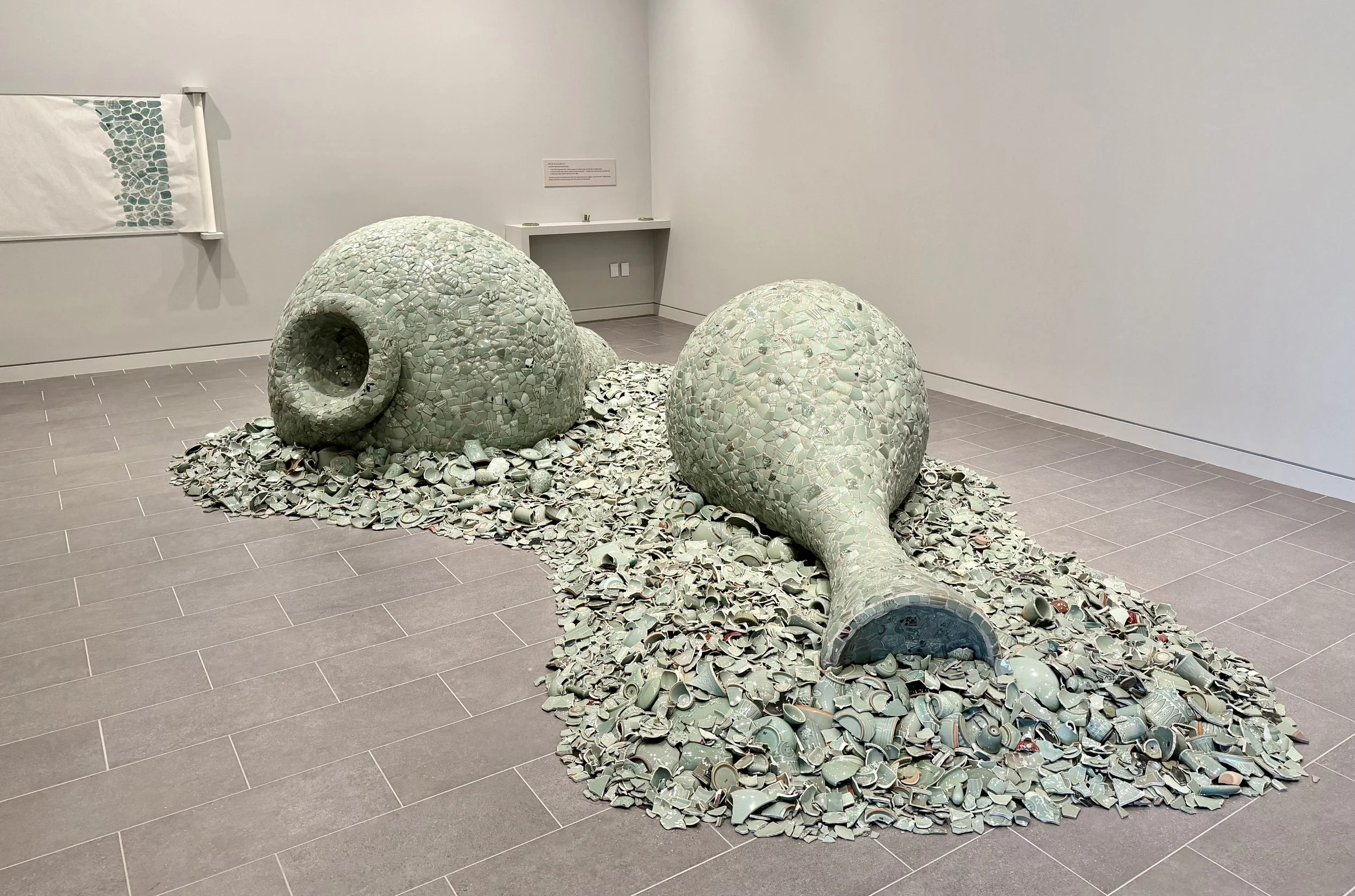
Jean Shin, Celadon Landscape, 2015- 2019. Ceramic shards, mortar, and ESP Foam. Photo: Robin Hauck.
The project which became Celadon Landscape began in 2015 when Shin was traveling to visit ceramic studios in Korea. Scrap heaps in the back of workshops caught her eye—remnants of ceramic vessels rejected because of variations or imperfections. Drawn to the fragments’ metaphorical power, Shin partnered with multiple studios and kilns to adopt the discarded pieces, ultimately shipping nearly two tons to the United States.
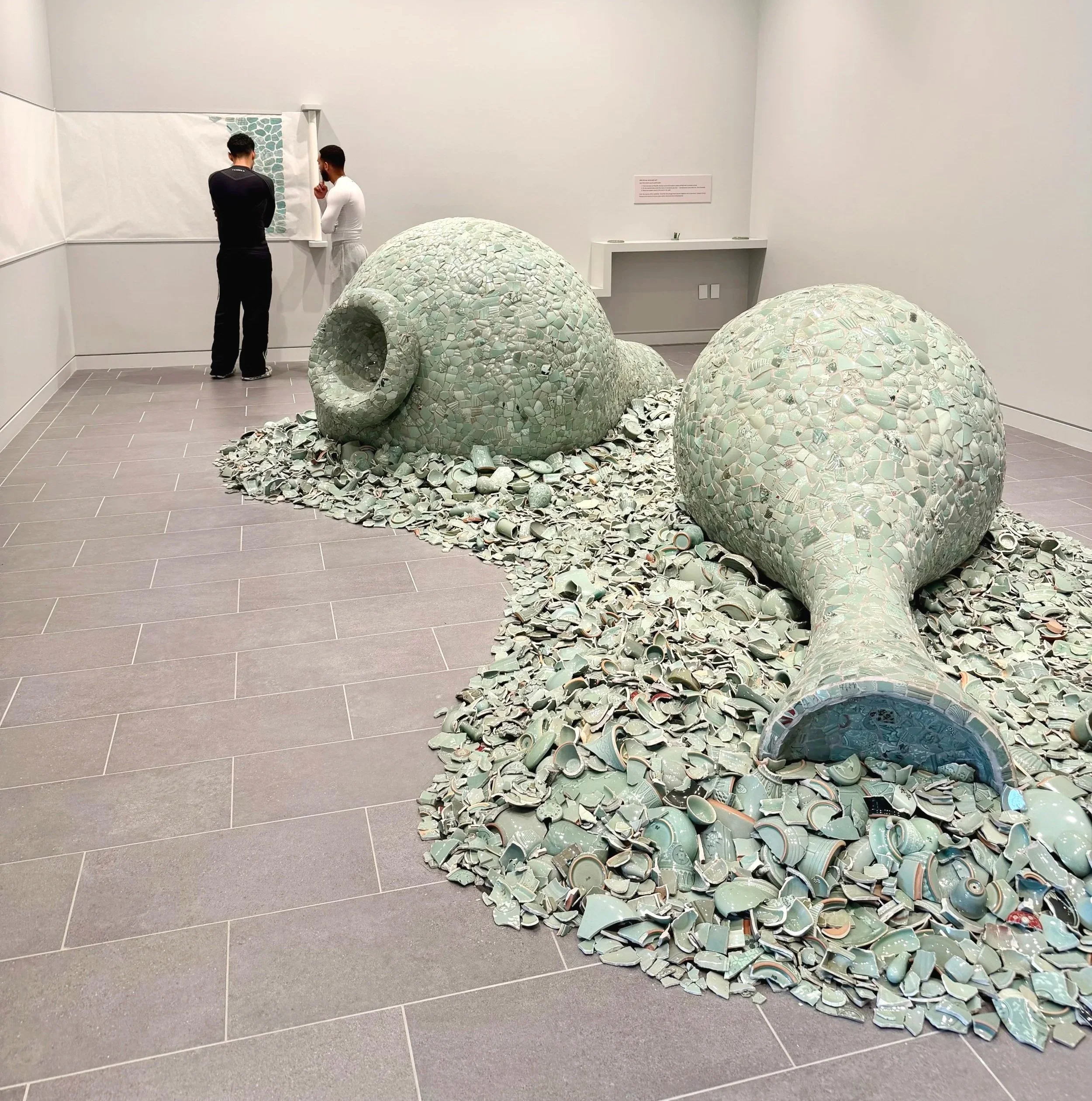
Celadon Landscape was first installed outdoors at the Sarasota Art Museum in 2019. The work includes two grand vases sculpted to resemble traditional Korean male and female vessels—the "female" Ju-byeong (주병) has a long slender shape with a thin neck and tapered body, and the "male" Mae-byeong (매병 / 梅瓶) is stockier and rounder, an iconic silhouette found in the Korean galleries at institutions like the Met, the V&A, and Asia Society. Composed of thousands of grey-green pieces, the recumbent vessels look like they are decomposing into their bed of fragments. Here are key themes Shin carries over across the street in Offering: beginnings and endings, form and formlessness, grief experienced through the lens of cyclical nature.
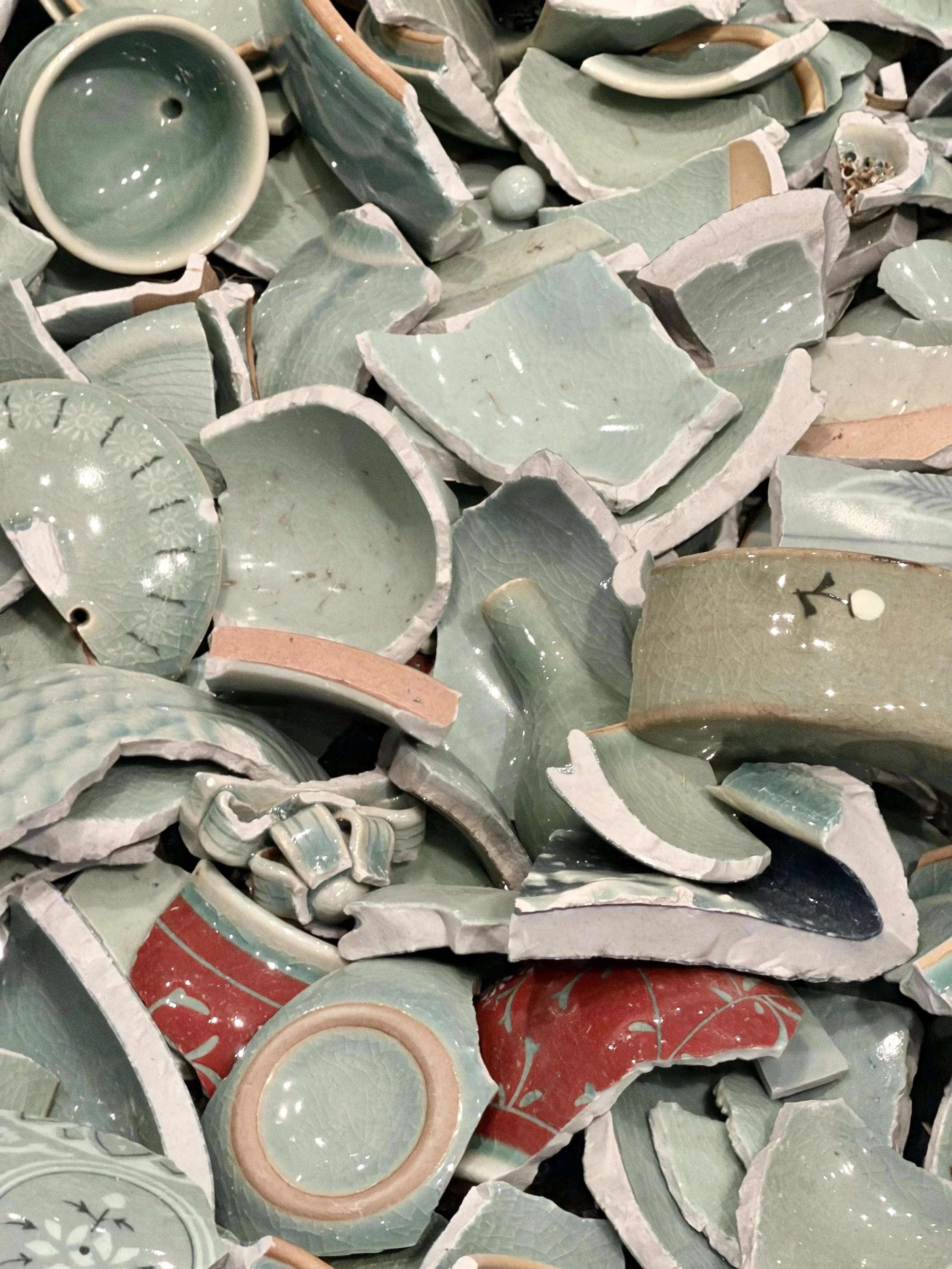
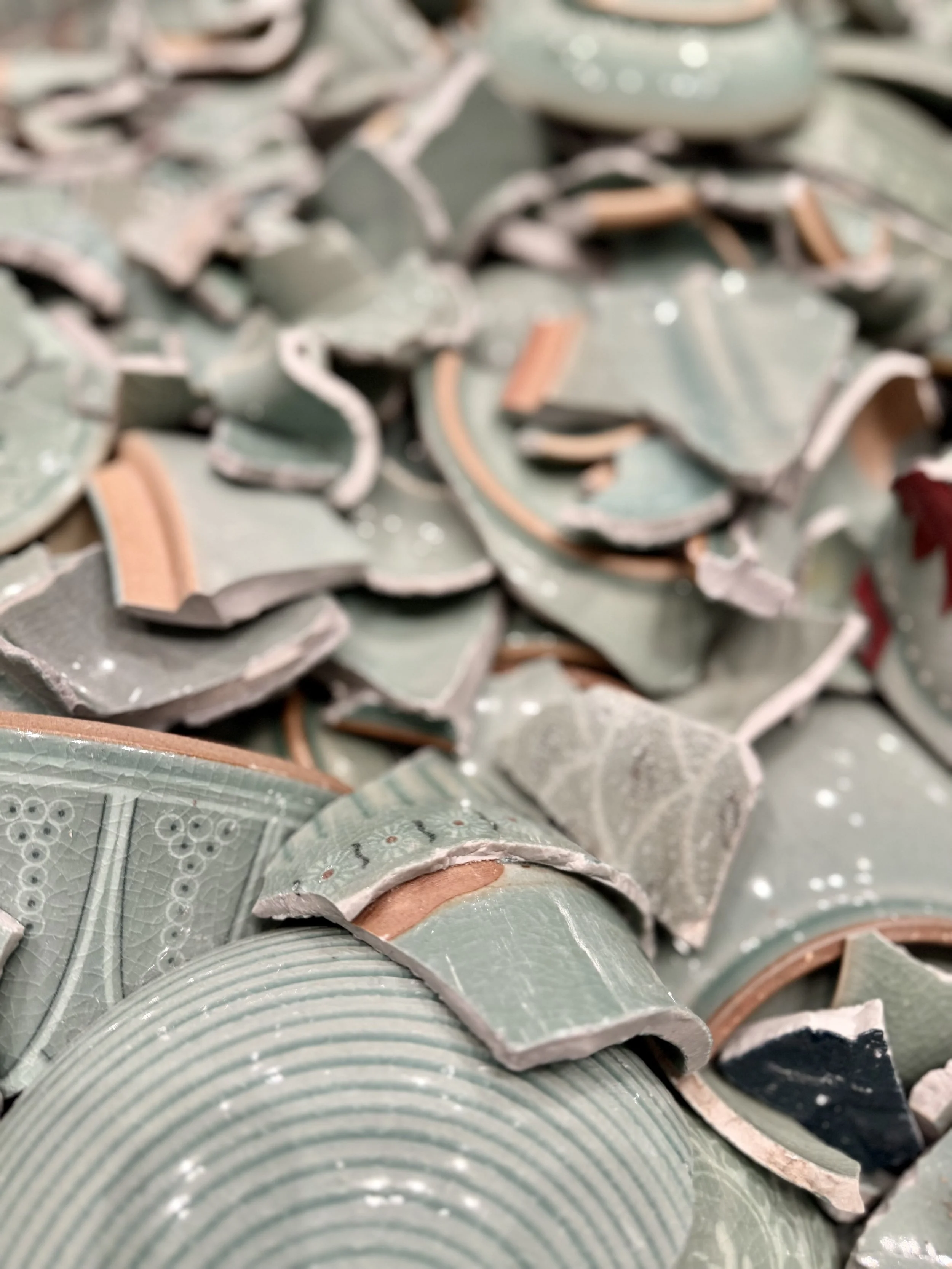
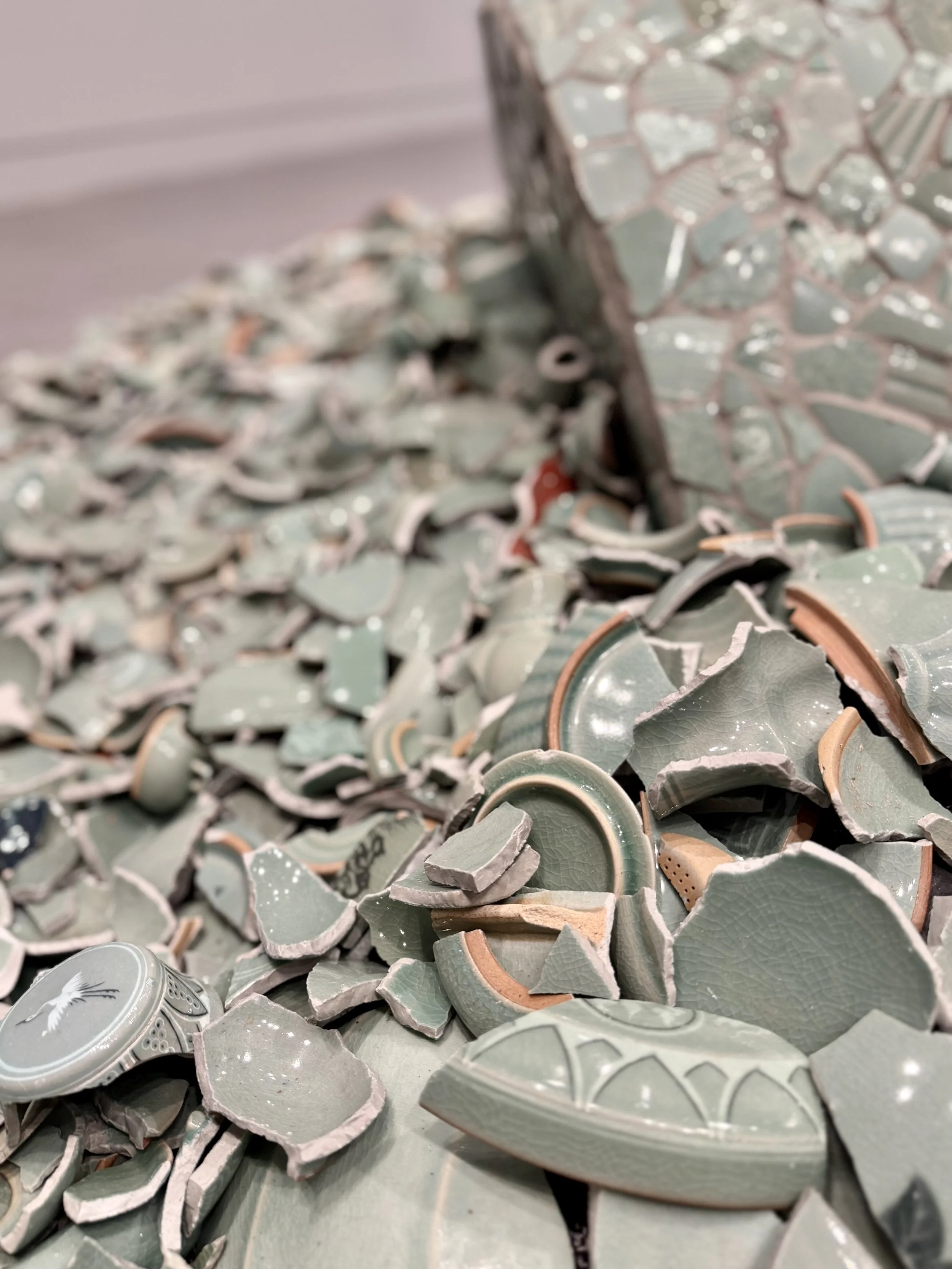
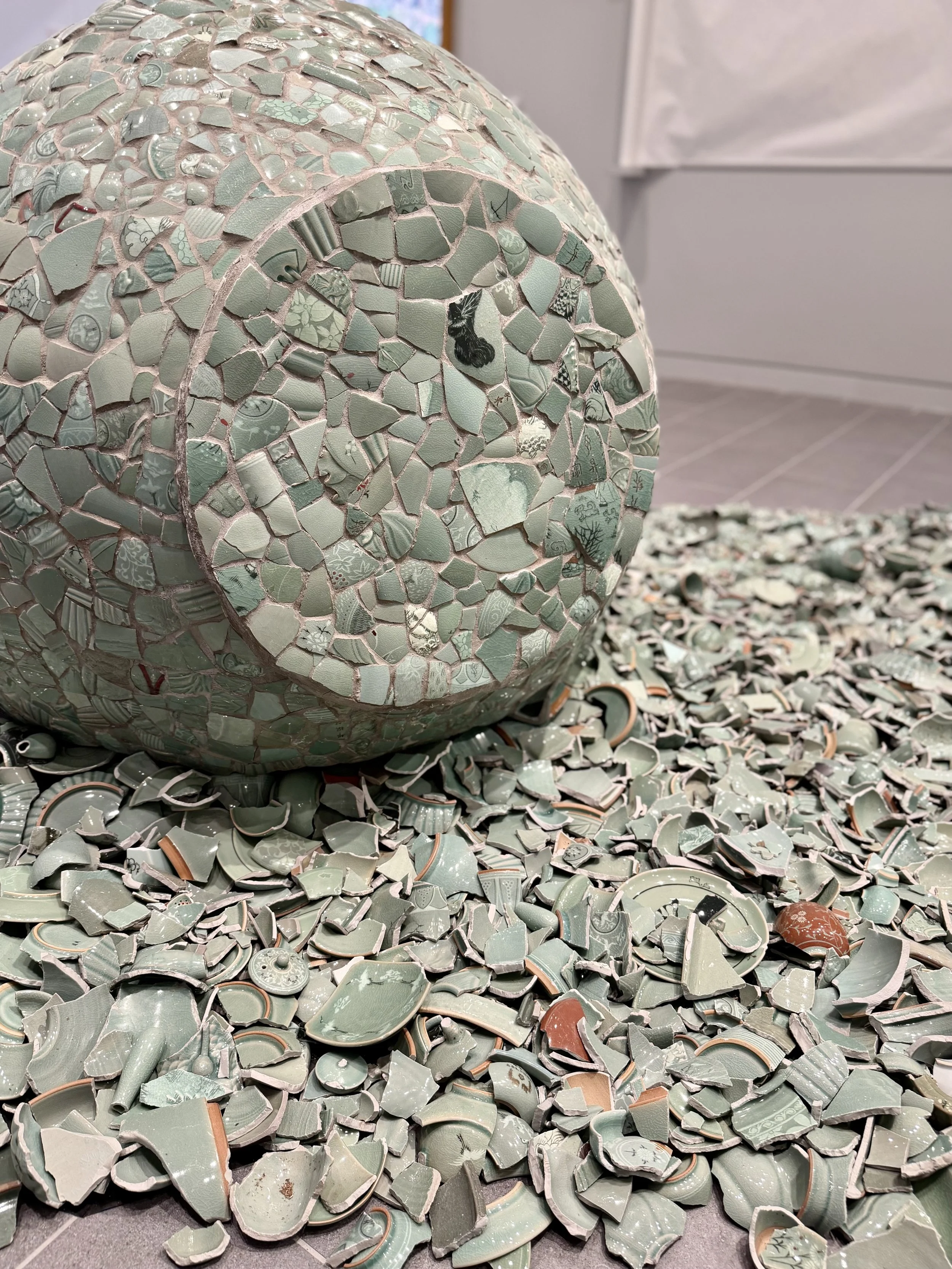
Celadon pottery was invented in China and later perfected by Korean artisans in the Goryeo Dynasty (918–1392) in which Buddhism was the state religion. Worshipped for its serene translucency, it was used in ceremonies and temple offerings, ultimately becoming one of Korea’s most important cultural artifacts. Today it is mass produced in factories like the ones Shin visited.
For the artist, who was born in Korea, the celadon shards speak to the immigrant experience. "The diaspora community, like myself, have somehow been broken away from our birthplace, and yet in all the displacement and the distance, we're still Korean, even though our context, language, and customs have shifted". (Hyperallergic). Disconnected pieces from across the globe come together to create something new and cohesive, a diasporic rebirth.
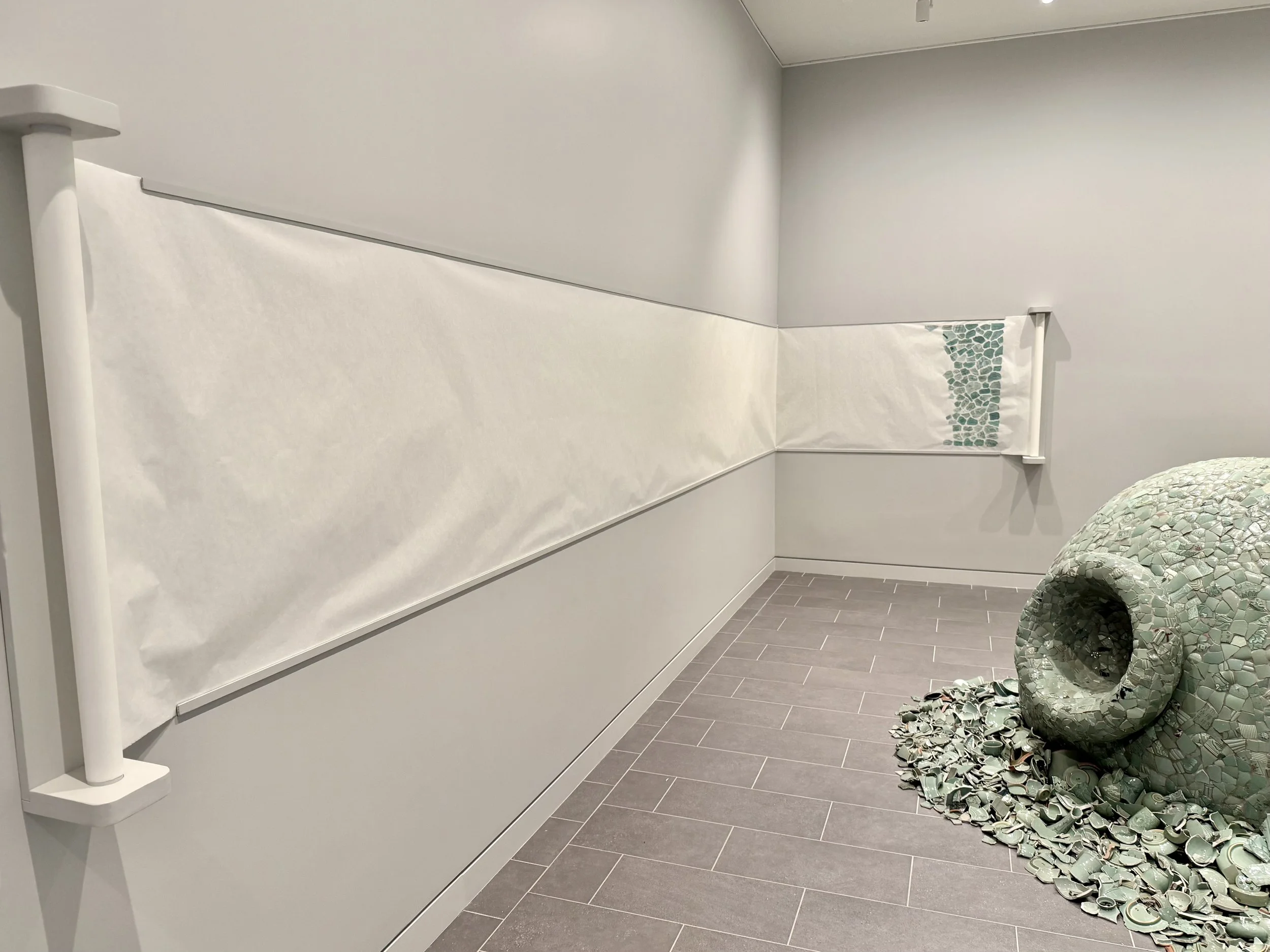
Installation view, Jean Shin, Celadon Landscape at Focus Gallery in the Green-House, Green-Wood Cemetery. Photo: Robin Hauck.
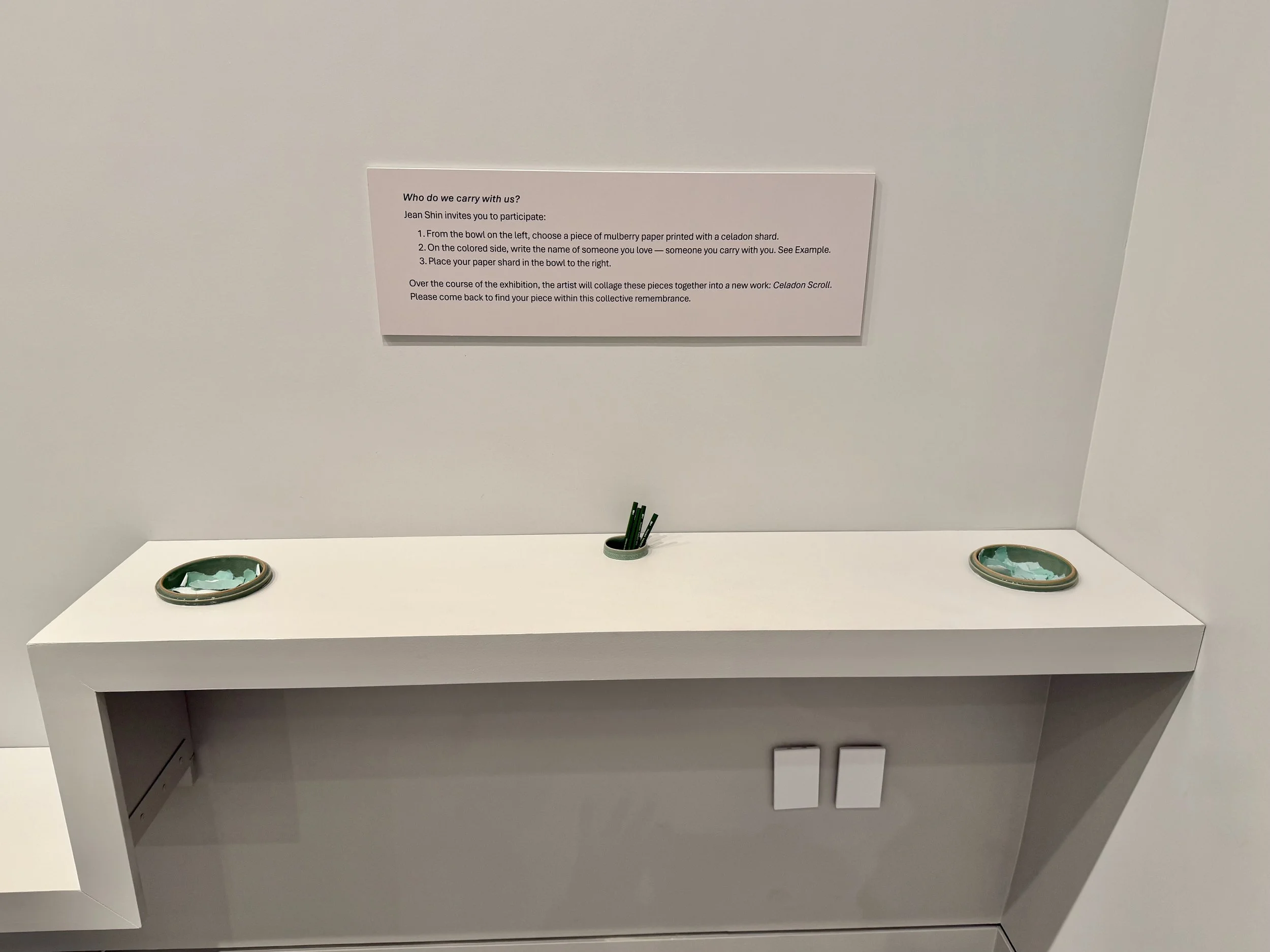
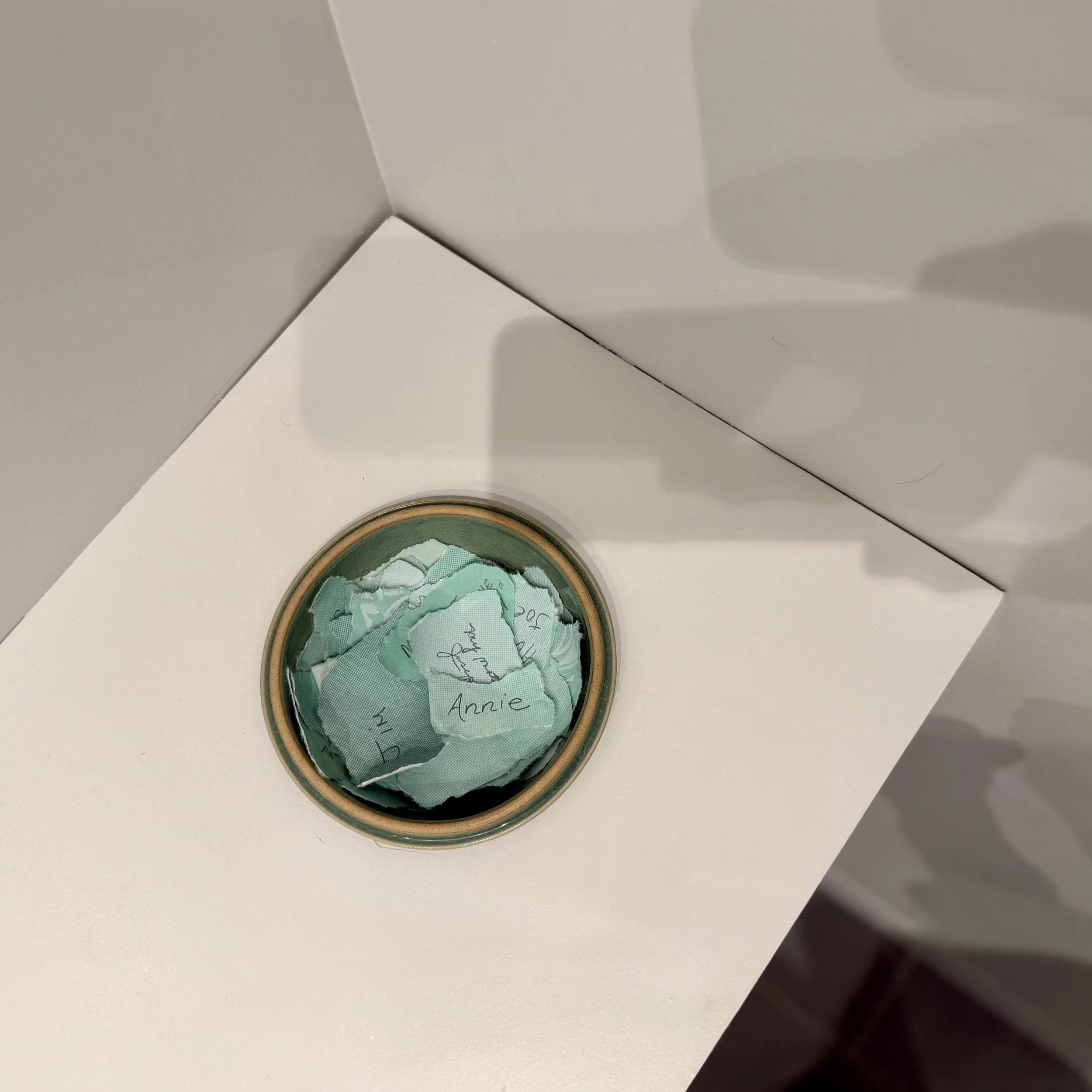
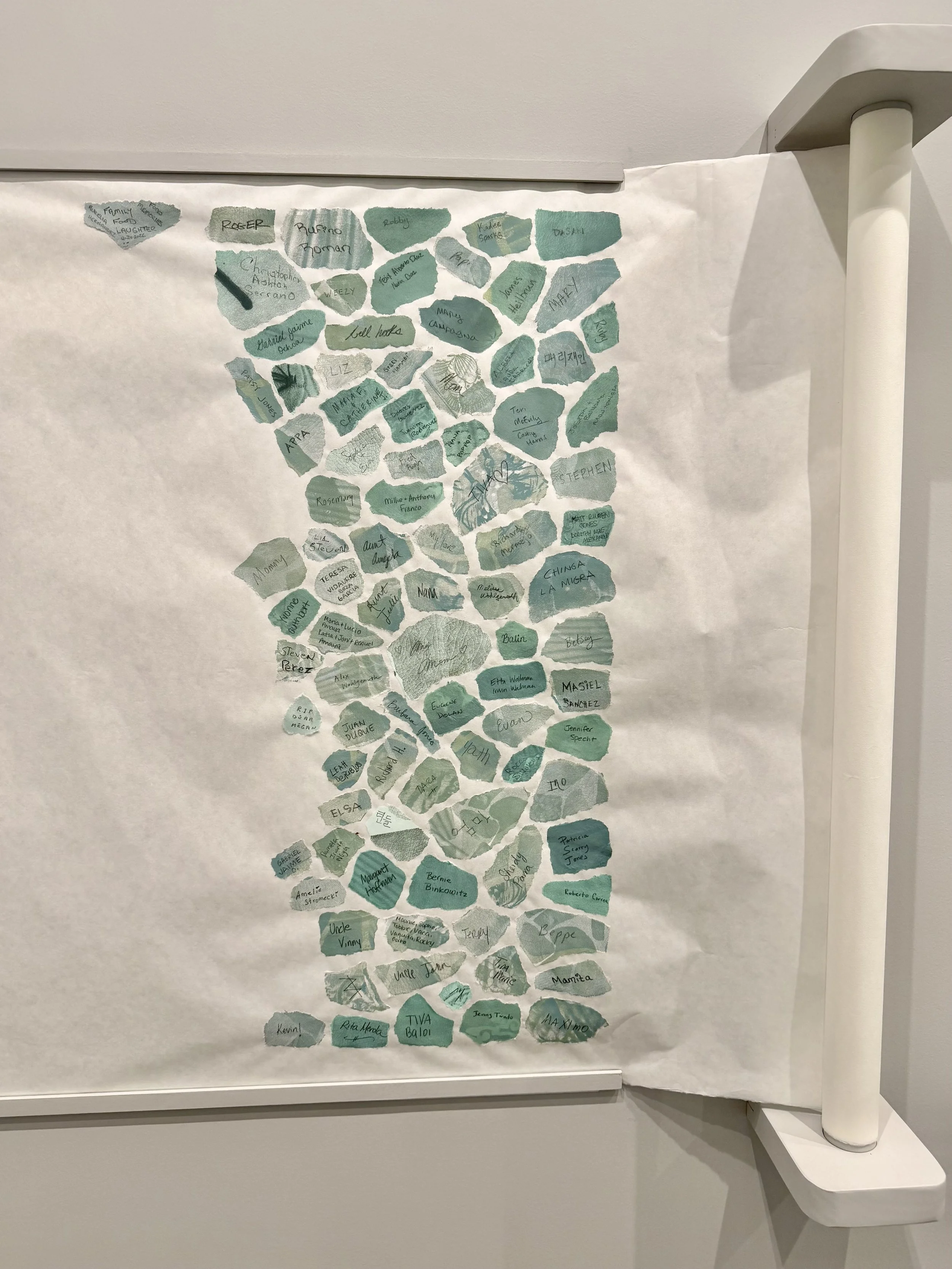
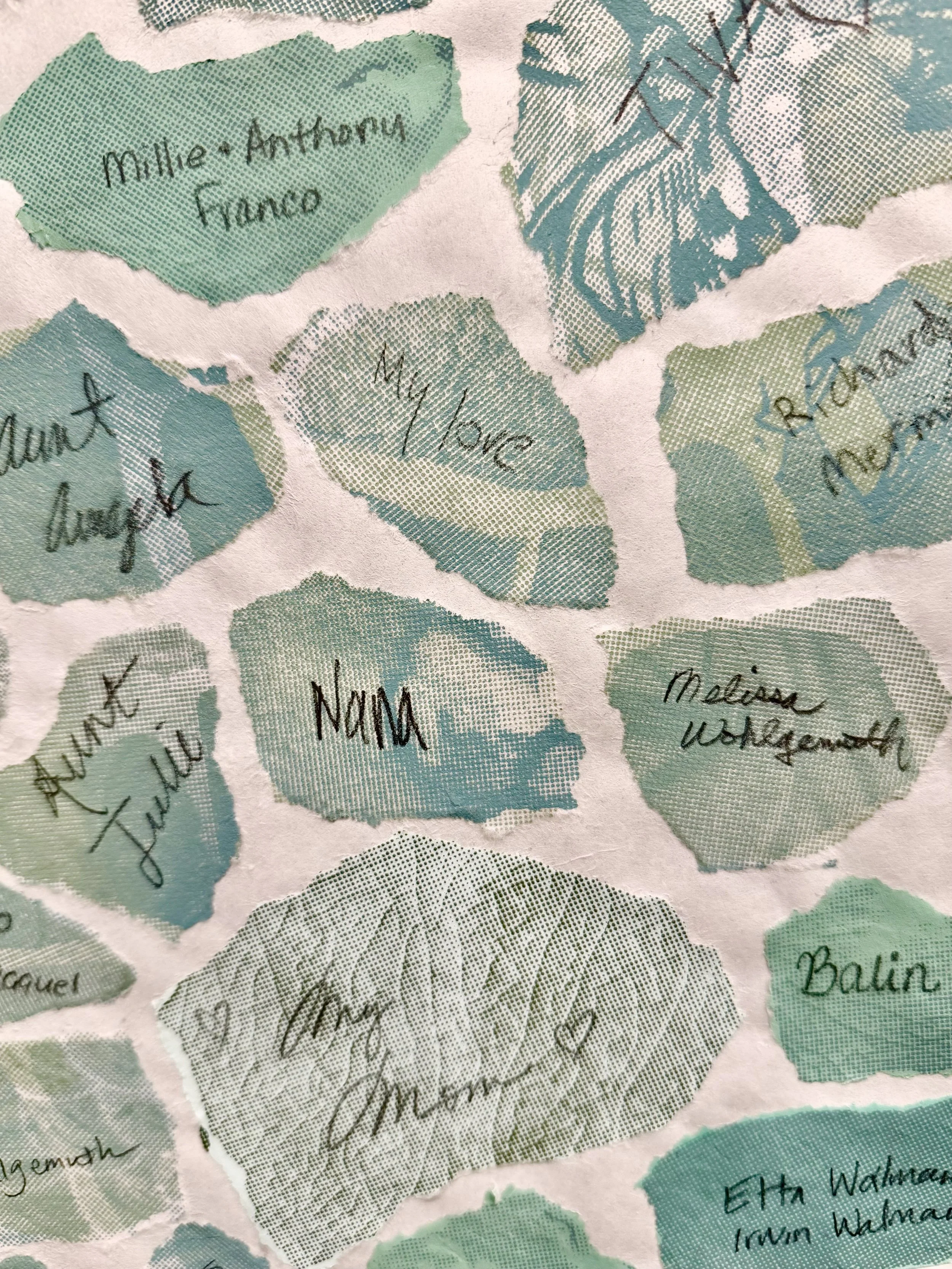
Inside for the first time at Focus Gallery, Shin’s vessels become receptacles for names of the dead. A wall-spanning paper scroll hangs as a living monument. Celadon-printed paper scraps and pencils await visitors. The artist asks visitors, “Who do you carry with you?” It’s a question that makes visiting at once deeply personal and universal. Whether there to mourn a loved one or take in the art, we all know death. We need the reminder that endings can seed beautiful beginnings. Shin will continue to affix visitors’ written names to the scroll throughout the length of the exhibition, ultimately creating a collage of grief, history, and remembrance.
Shin’s expansive notion of landscape continues in the cemetery’s front meadow with her site-specific earthwork Offering. An artist whose practice forefronts conservation and regeneration, Shin designed the mound to honor non-human kin from Green-Wood that might otherwise be forgotten. Harry Weil, Vice President of Education and Public Programs, commissioned the artist specifically for that reverential approach, notable in previous work such as Fallen, in which she memorialized a 140-year-old hemlock at Frederick Church’s Olana.
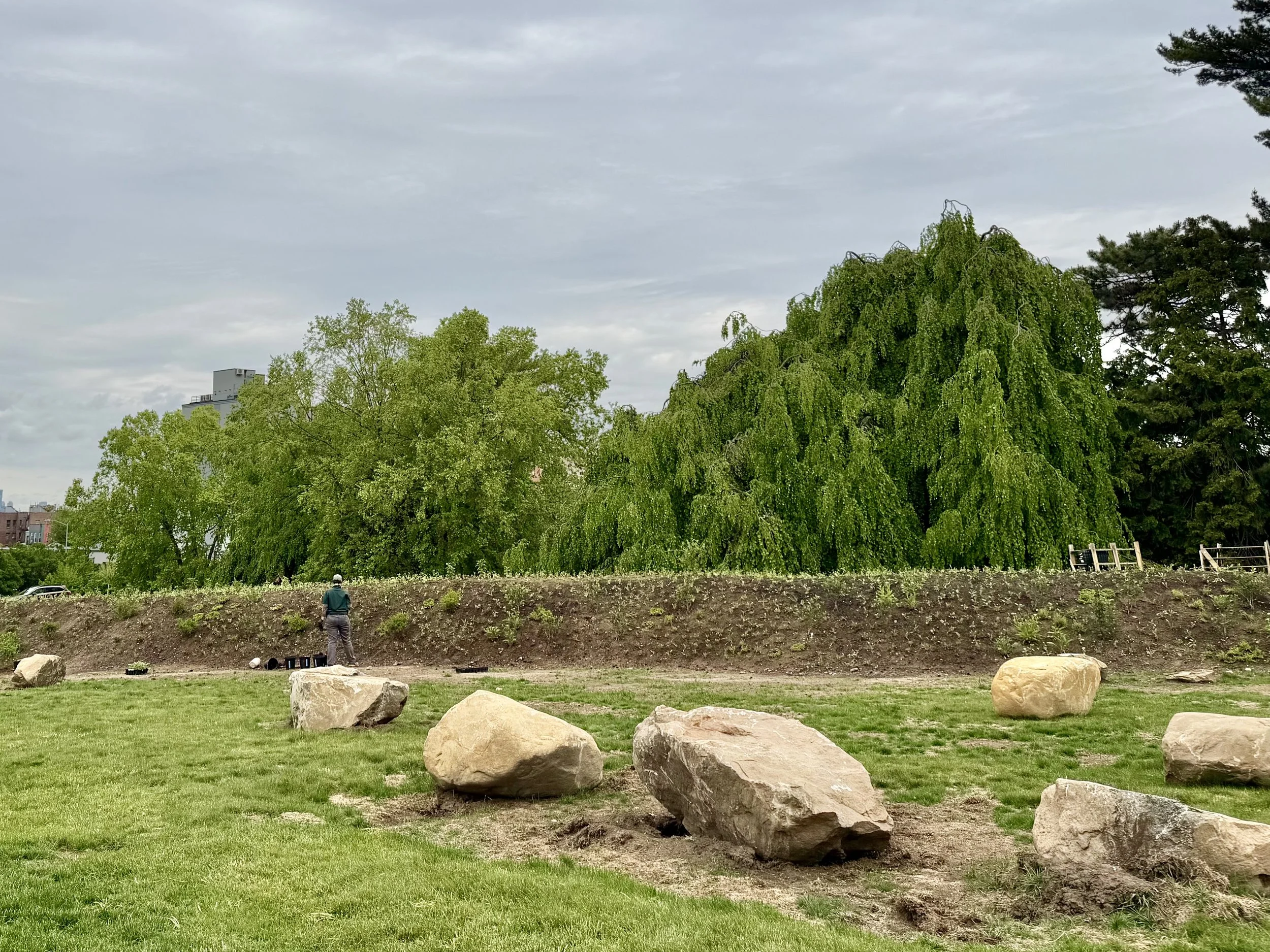
A Green-Wood grounds keeper considers where to place the next planting on the burial mound under the watchful eye of a thriving Camperdown Elm. Jean Shin’s Offering at Green-Wood Cemetery. Photo: Robin Hauck.
Inspired by Korean tumuli burial mounds, Offering is a living gravesite for two dying trees that would have been bound for the chipper. Shin worked with Green-Wood's Facilities, Cemetery and Landscape departments to dig two hundred-foot trenches, building soil resting spots for the oaks that had lived on the grounds over a hundred years. As the trees in the trench decompose over time they will give back to the new life planted there, creating a living memorial.
“It’s like trying to imagine that death is not the ending, but really just the beginning.”
Shin rescued the ancient red oak and pin oak trees and gave them new life just as she did with the celadon shards. On the day I visited, grounds keepers were planting native plants, crawling on the mound, caring for it like an old friend. What has passed will contribute to the living future. Her public artwork is also a lasting act of ecological healing.
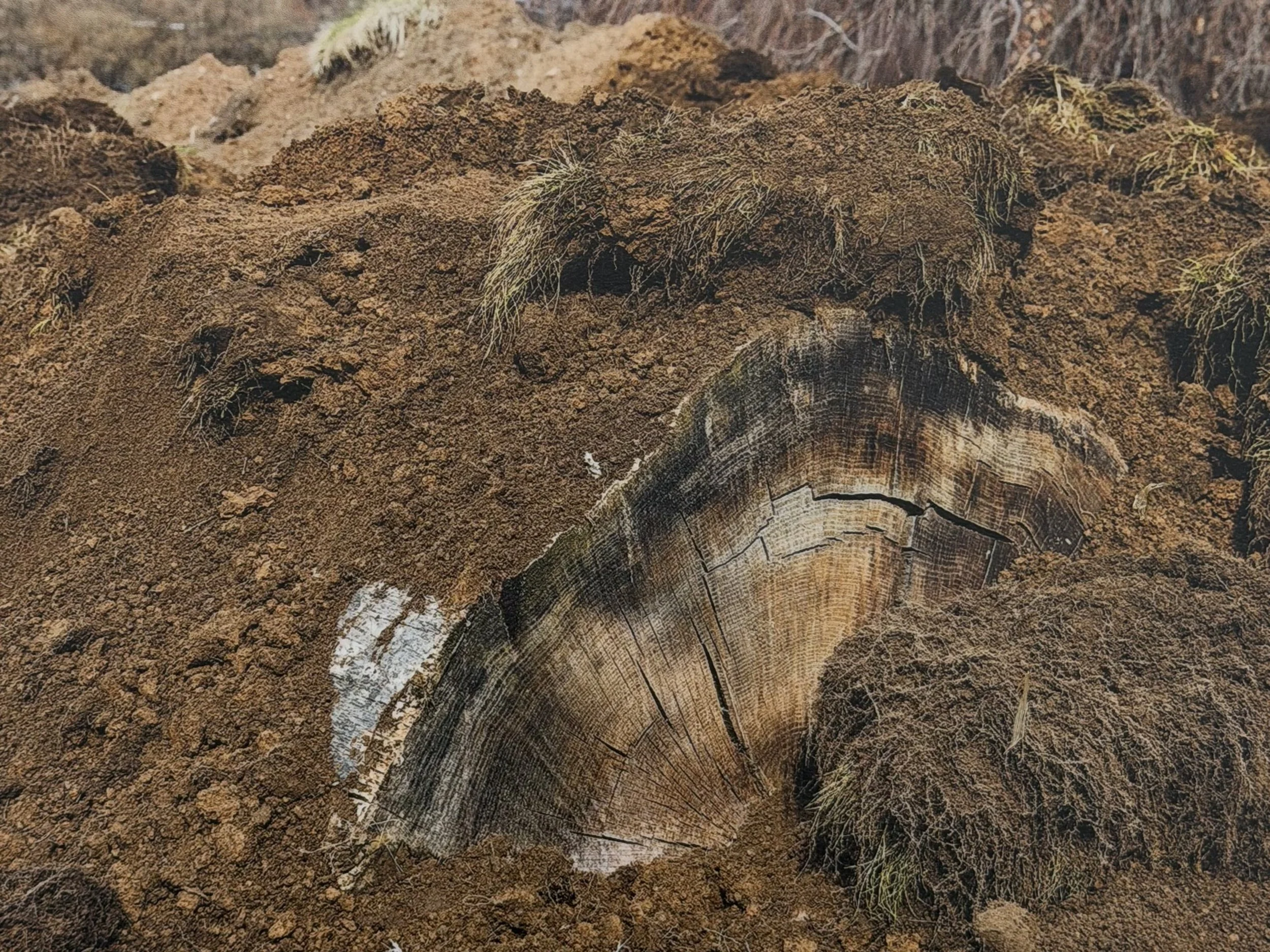
Image taken during construction of Offering. Green-Wood Cemetery, Brooklyn.
By drawing attention to fallen trees, Offering encouraged me to pay more attention to the living trees on the site, including the thriving hundred year old Camperdown Elm keeping watch over the new grave.
Each part of Shin’s dual exhibition invites reflection and rest. Green-Wood’s acres breathe oxygen into the city air. Stop, remember and write the name of someone you carry with you. Sit, breathe and consider the lives of the people and trees buried in the dark, quiet earth.
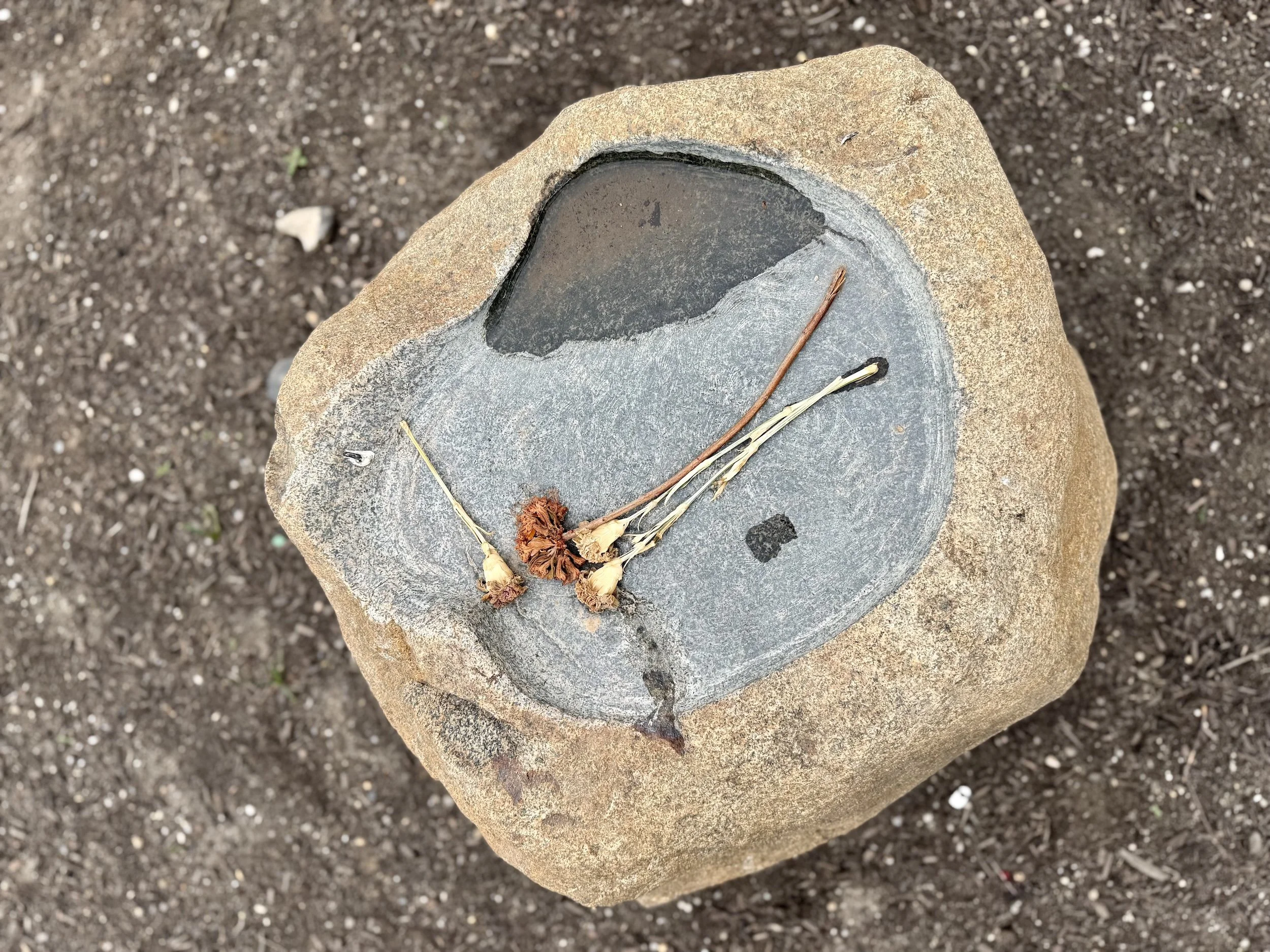
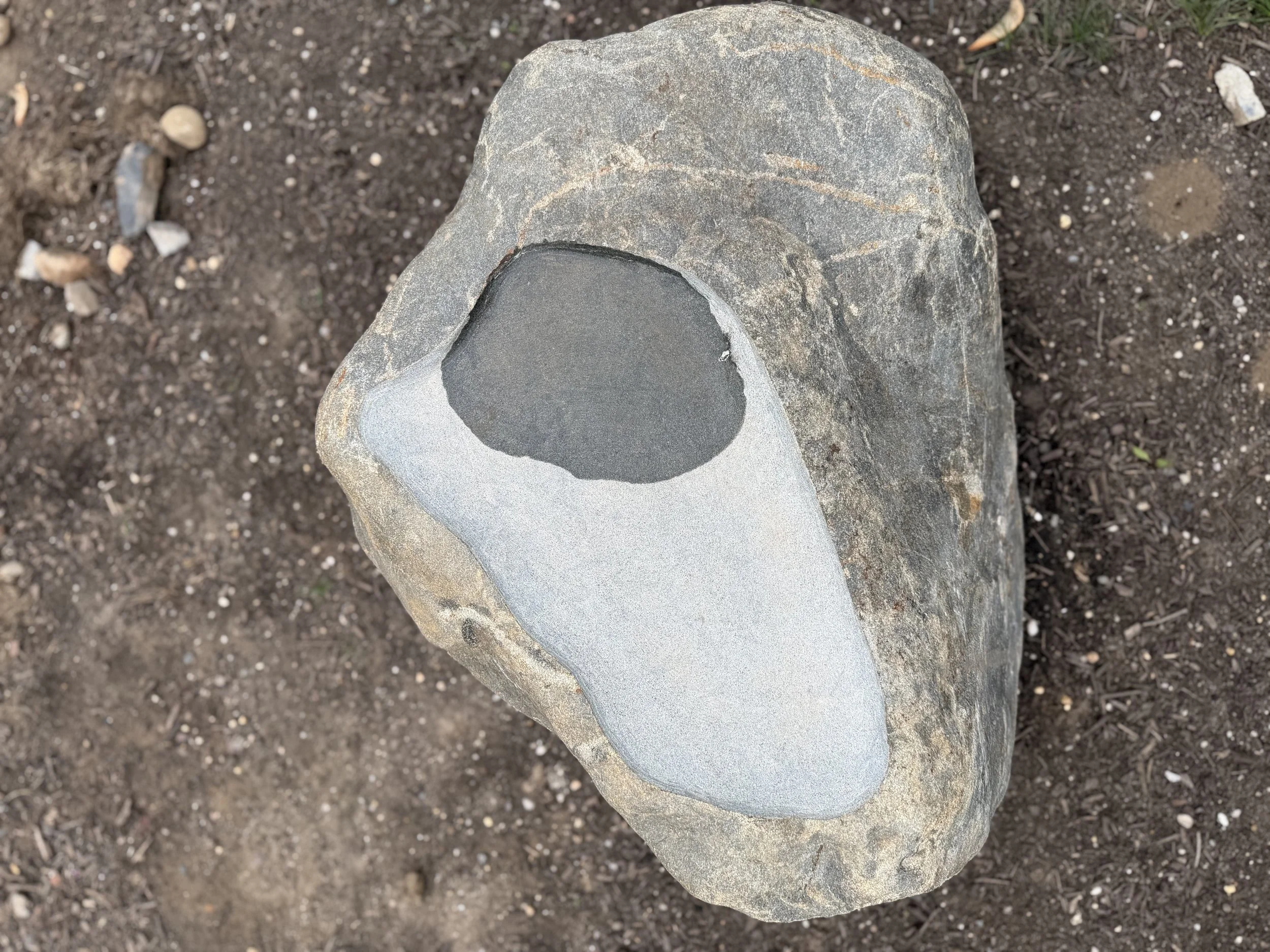
Teams from Green-Wood’s Department of Restoration and Preservation hand-carved unearthed glacial rocks to create birdbaths and seating. Installation view, Jean Shin Offering. Photo: Robin Hauck.
Celadon Landscape and Offering both opened in April, 2026 and are on long term view at Green-Wood.