Brittany Nelson's Ex Weighs 17 Million Pounds
Infinity is lonely and full of hope… a lot like the human condition.
Throughout time humans have wanted to believe we are not alone in the universe, that intelligent beings exist somewhere in the starry void, perhaps even searching for connection themselves. We’ve sacrificed animals, mowed crop circles, erected pyramids, and designed ambitious radio technology in attempts to communicate with gods and ghosts and extraterrestrial life. Alone in prairies and deserts, pointed toward the vastness of outer space, gargantuan telescopes broadcast and beckon, awaiting responses they might never receive. The ache of such interlaced isolation and hope is the subject matter and the emotional accelerant in List Projects 34: Brittany Nelson, now on view at MIT’s List Visual Arts Center.
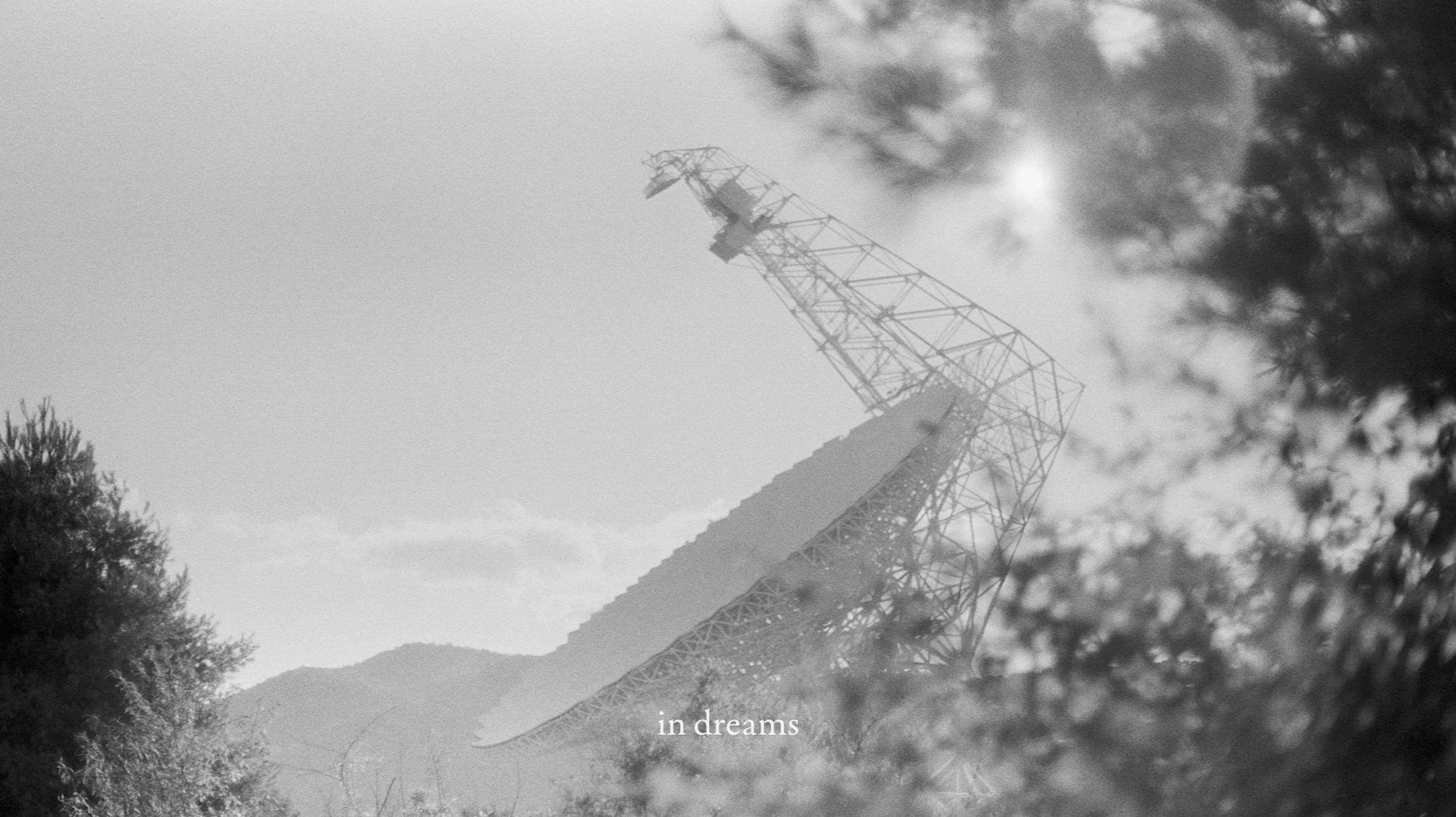
Brittany Nelson, Rebecca, 2026 (still). Video, sound, 5:20 min. Courtesy the artist and PATRON Gallery
List Projects 34: Brittany Nelson, curated by Natalie Bell, Chief Curator, and Marina Caron, Assistant Curator, is an intimate exhibition of three new gelatin silver print photographs and a moving image piece. The show’s narrative referent is Daphne du Maurier’s gothic novel Rebecca, published in 1938. That beloved and debated text embroiders Nelson’s love story, featuring an unlikely crush: the Green Bank Telescope in West Virginia. The artist said that in making the work she imagined the telescope like an ex girlfriend, and her video a “break up film”.
Using antiquated photography techniques such as mordançage and bromoil, which give her images an ethereal, painterly look, Brittany Nelson creates images and films that metaphorically relate space exploration to queer lived experience. Using deeply-coded references from literature, science fiction, and scientific archives, she considers themes of isolation, longing, hope, imagination and language through an incisive queer subjectivity. Raised in conservative Great Falls, Montana the artist was forced to keep her sexuality to herself until she struck out on her own. She now lives in New York and teaches photography at the University of Richmond, but her early experiences continue to influence her practice.
“I started thinking about having to reverse-engineer what it was like to be a gay person stuck in a very isolated environment. Then all of these parallels with space exploration and sci-fi became apparent.”
Inside the spacious List Center, Bakalar Gallery is a cozy viewing room, and it’s possible to approach the installed works in any order. I chose to start with the most intimate of the still images and work my way through them to the video.
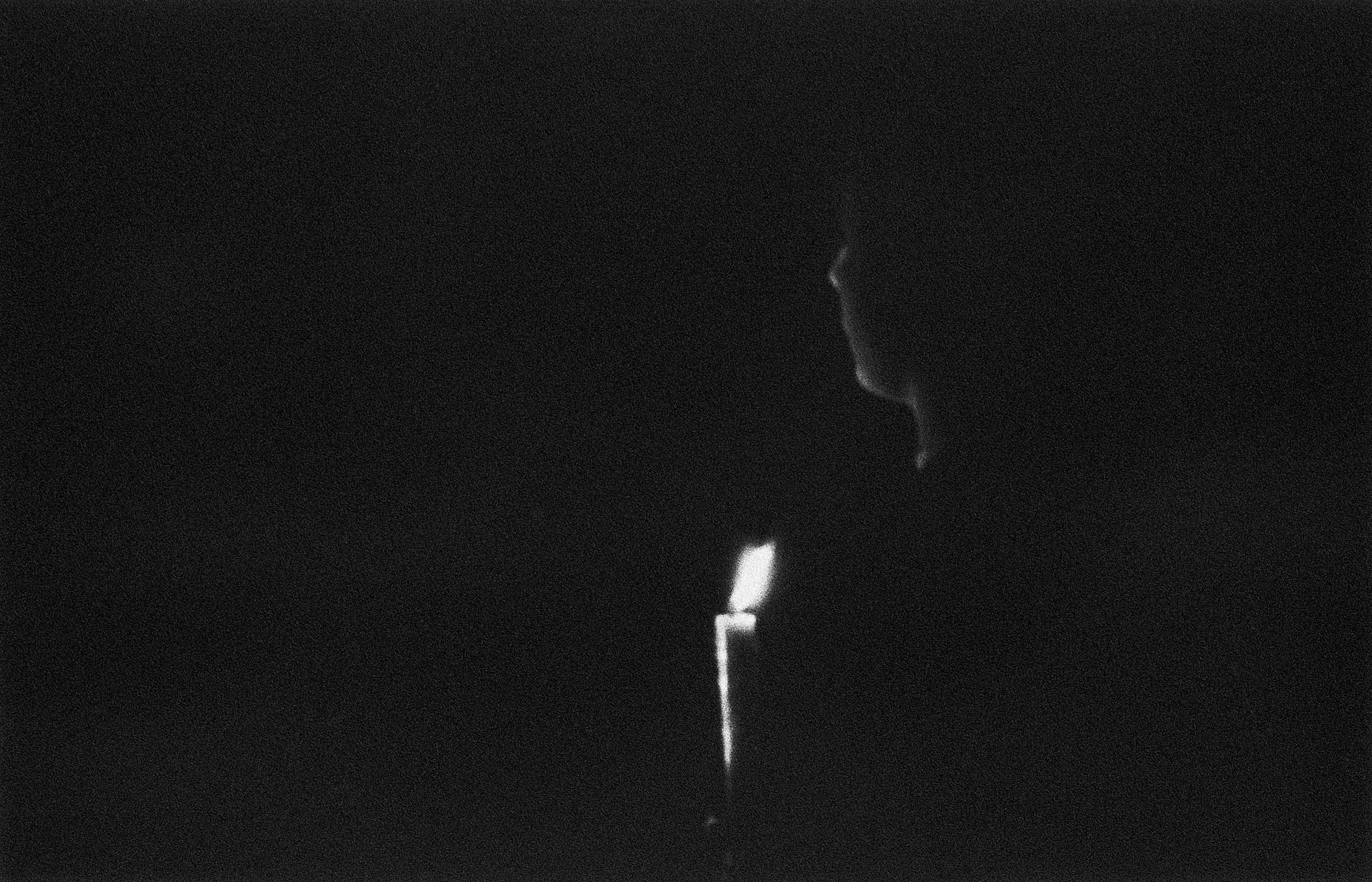
Candle (still frame from Rebecca), 2026. Gelatin silver print, 30 × 47 inches. Courtesy the artist and PATRON, Chicago
Candle (still frame from Rebecca) inserts us deep into the world of du Maurier’s novel, centering a still frame of Alfred Hitchcock’s film adaptation. The primarily black image features a gauzy lit candle and a barely discernable profile of Mrs. Danvers, one of the novel’s three main female characters. Mrs. Danvers runs the household of Manderley, the novel’s grand estate, and forms one third of the tense, fraught love triangle formed with the narrator and the deceased lady of the house, Rebecca. In Hitchcock’s film, Mrs. Danvers holds the candle wistfully before setting the house on fire. In Rebecca, absence is a powerful force. Nelson’s primarily black image evokes a void, an absence of true connection despite prolonged obsession; while the candle offers a flicker of (naïve yet familiar) hope.
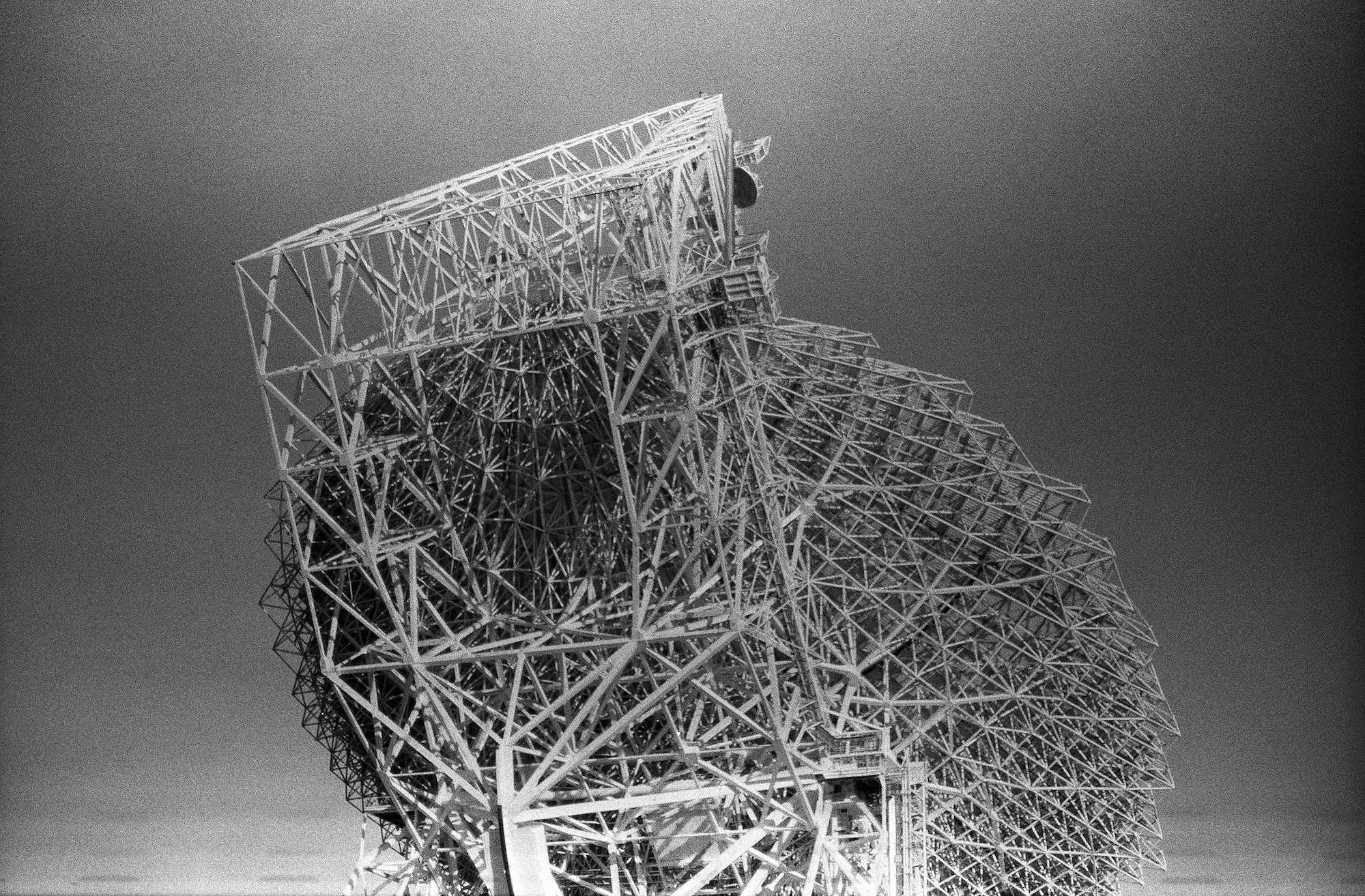
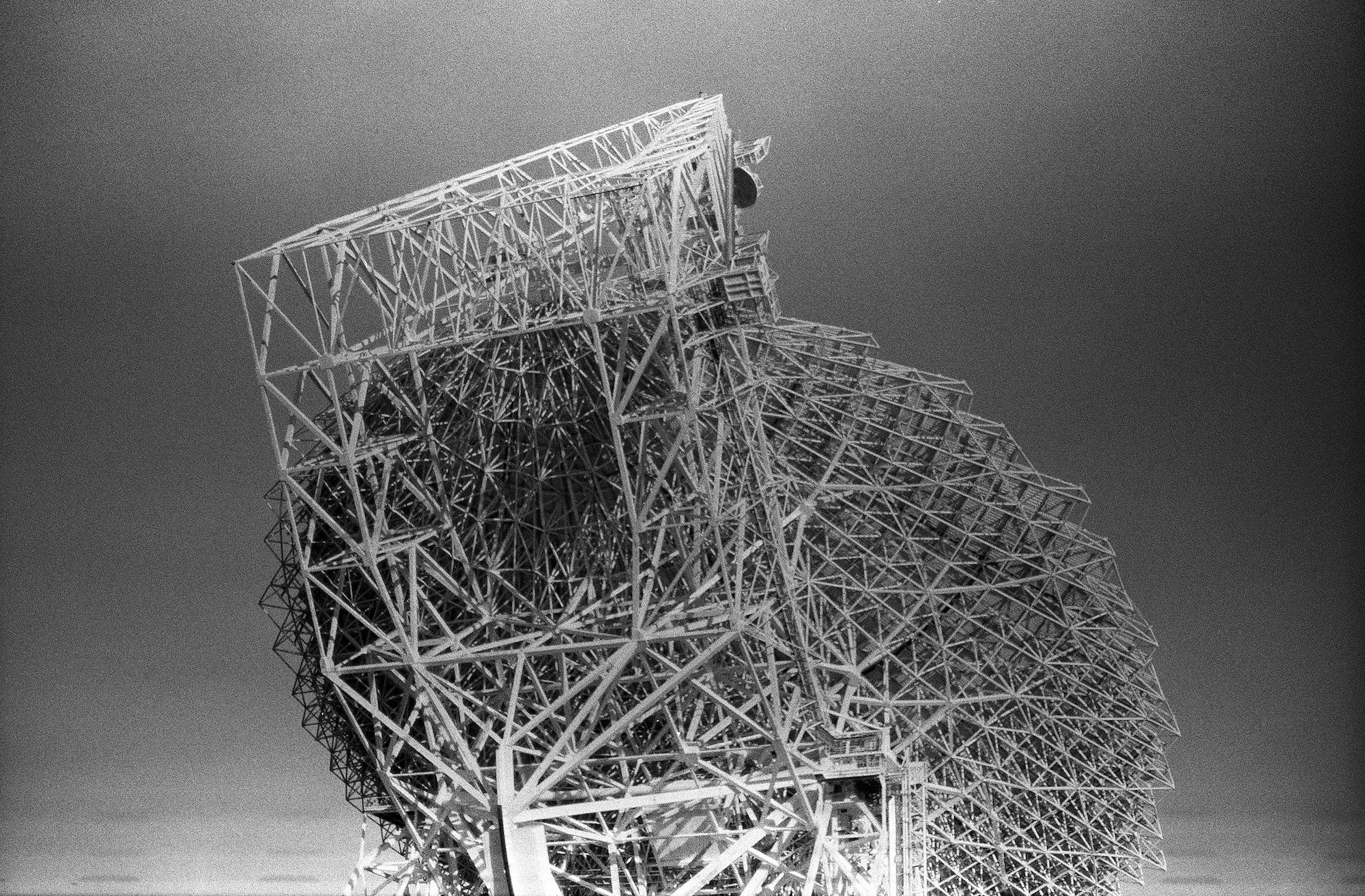
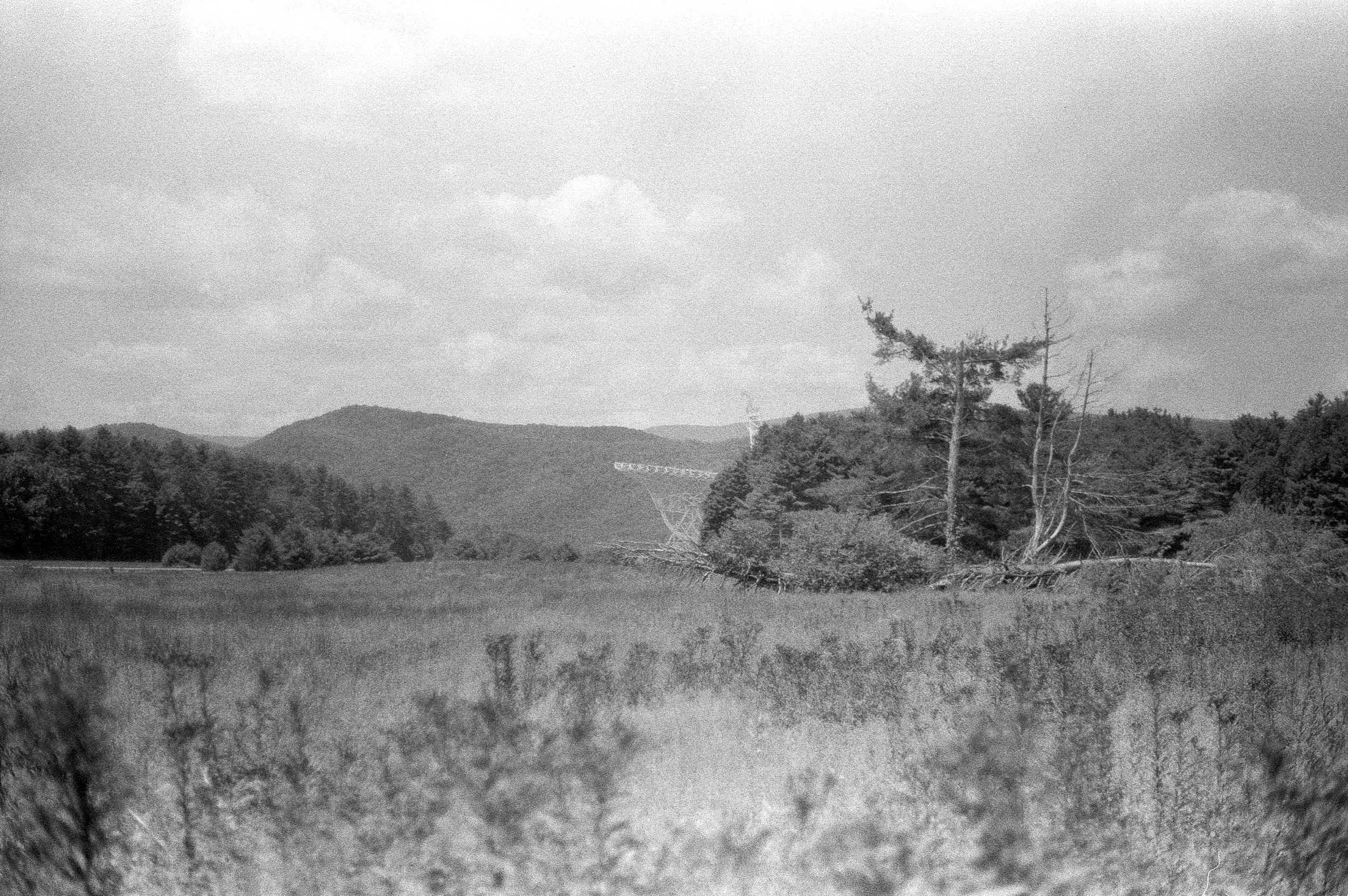
Green Bank Telescope, 2026. Gelatin silver print, 42 x 62 inches. Courtesy the artist and PATRON, Chicago
Situated on a 2,700 acre campus in West Virginia, the Green Bank Telescope (GBT) is the largest fully steerable telescope in the world. By large I mean LARGE—it has a reflecting surface area of about 2.3 acres, weighs almost 17 million pounds, and stands over 485 feet above ground level. It is also a central site for SETI (Search for Extraterrestrial Intelligence) research, the agency “leading the search for life beyond earth.” The artist captured the shot for Green Bank Telescope in 2024 during a residency at SETI. The GBT looms, but gently, its complex grid structure appearing to hold together a friendly beast. The angle and soft focus produce a loving gaze. This is subversive storytelling. Nelson rejects the cold, didactic, patriarchal tone of traditional scientific literature and prioritizes a queer, first person perspective.
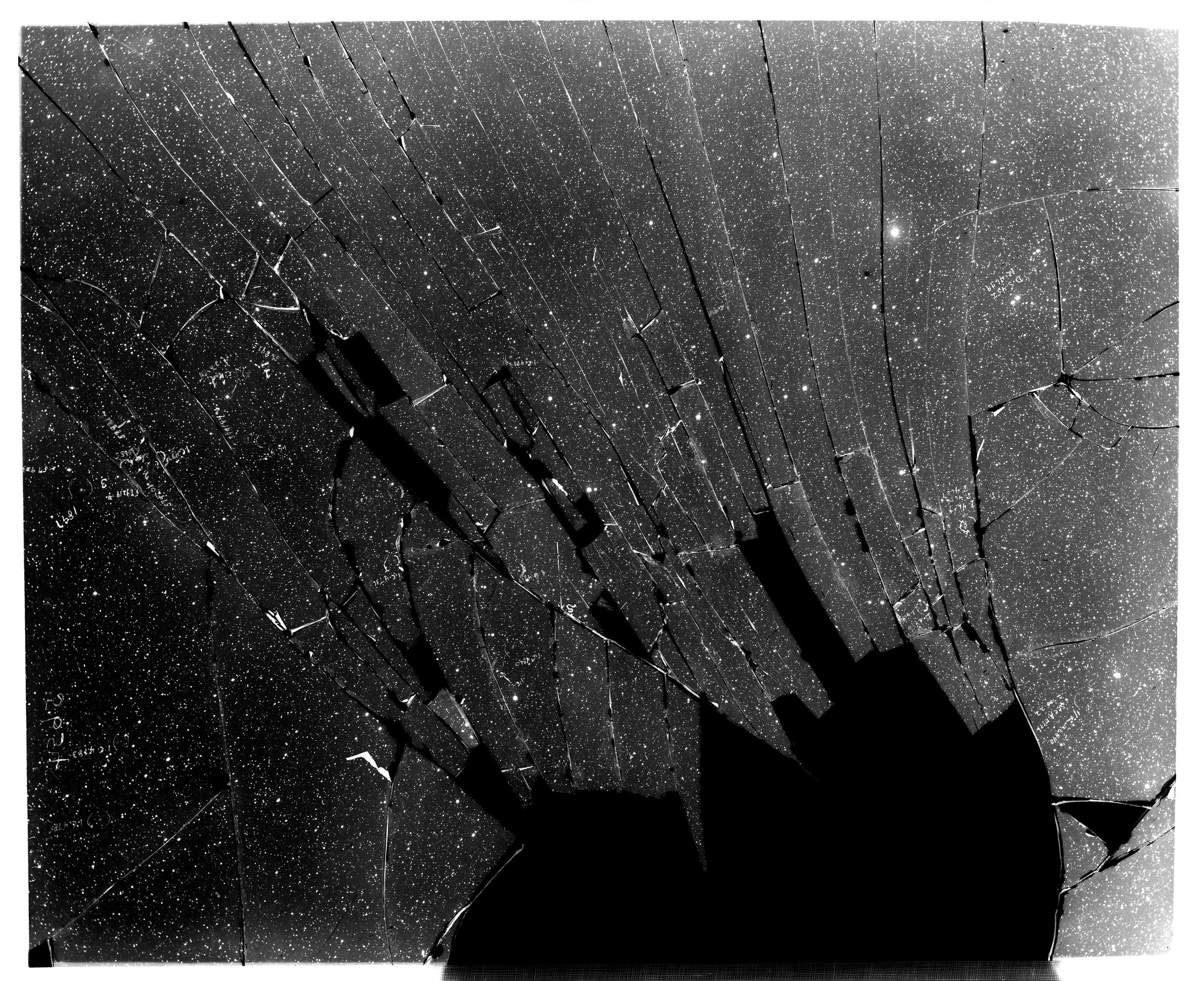
Broken Plate (from Harvard Astronomical Photographic Glass Plate Collection), 2026. Gelatin silver print, 52 × 62 inches. Courtesy the artist and PATRON, Chicago
Humankind’s urge to chart the heavens is as old as time, and Nelson’s exhibition romantically complicates our sense of past, present and future. The artist printed Broken Plate (from Harvard Astronomical Photographic Glass Plate Collection) from a glass plate negative shot in 1901 with a telescope in southern Peru. The glass negative is part of the Harvard College Observatory’s Astronomical Photographic Glass Plate Collection which includes more than 550,000 negatives. Luckily for Nelson, a staffer at the collection had learned about her “breakup” story and brought her this special negative, intuiting it would work for the project. The glass plate had shattered at some point, but was carefully kept intact by collection staff. From a distance, the image looks like a map of a massive city splintered by a sharp harbor, or a great ice sheet cracked by black water. But closer examination reveals countless stars and minute annotations. These are the measurements and mathmatical calculations made by two of the over 200 “Women Astronomical Computers” who analyzed the prolific output of Harvard astronomers between 1875-1950s. A formal and emotional opposite of Candle, Broken Plate positions the viewer lightyears away, alone in the vastness of space with the ache of our insignificance.
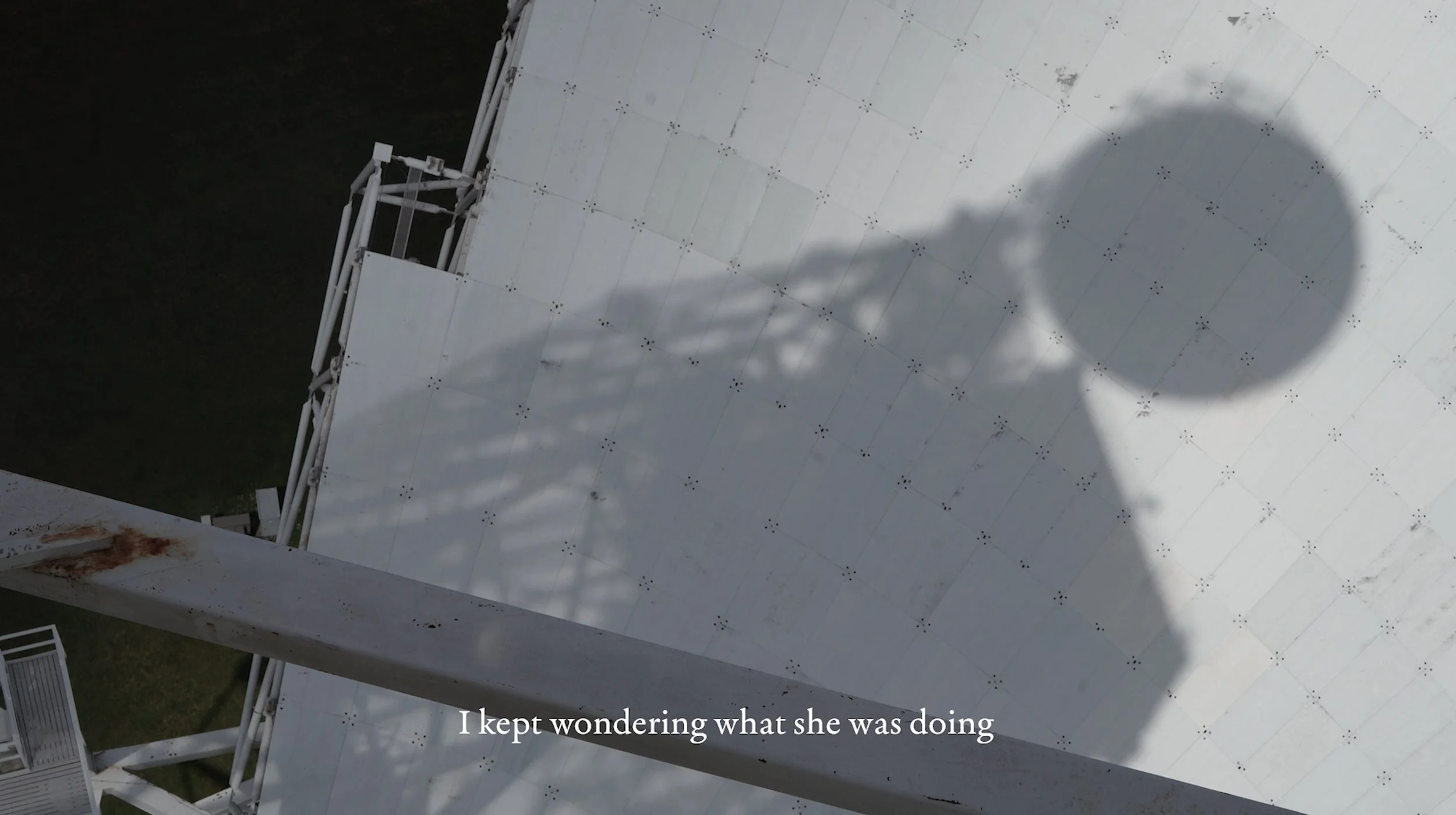
Brittany Nelson, Rebecca, 2026 (still). Video, sound, 5:20 min. Courtesy the artist and PATRON Gallery
The show’s anchor piece is a video montage titled simply Rebecca. It opens with a series of extreme-long-shot black and white stills of the GBT. Due to its size, Nelson had to travel an incredible distance in order to photograph the telescope in its entirety. The result is a sense of romantic longing. The soft, hazy images give the effect of a lover observing a beloved from a distance. Clipped, out-of-context passages from the novel accompany the images. Taken from throughout the book they resist linear narrative, poetically infusing the work with an abstract storyline that blends past and present, hope and despair. Mid-way, Rebecca switches to color video, some shot on Go-Pro cameras strapped to the artist’s body. No longer at a distance, we now move inside the telescope’s interior, experiencing its white structure like a temporary embrace, or cage.
“Aphoristic subtitles, drawn directly from du Maurier’s unnamed narrator - such as “always Rebecca / I should never be rid of Rebecca” – further infuse the shifting images with the intrusive emotional force of a lover’s absence.”
The List Center’s engagement with Nelson feels especially timely. As divisive politics and addictive technologies erode personal connections, the exhibition resonates with its pervasive sense of longing. In a moment when the social contract is fraying and communication is often colored by mistrust, her work suggests that in contemporary life, and queer experience, connection may be less likely than the hope that it might arrive from elsewhere—through technology, exploration, or imagined ideals.
List Projects 34: Brittany Nelson runs from January 15 - March 29, 2026
Related Events:
Wednesday February 11 - Film Screening of Alfred Hitchcock’s Rebecca (1940) with Brittany Nelson
6-9:30pm. Bartos Theater
Thursday February 12 - Graduate Student Talk with Swati Ravi
5:30pm. Bakalar Gallery
Connecting Nelson’s artistic practice with scientific methods used to study black holes, this lecture will highlight the shared roles of imagination, inference, and uncertainty in making the unseen legible.