Ritual Practice | Sacred Space
Artist Talk featuring Venetia Dale, Sam Fields, Daniela Rivera and Rachel Perry
April 16, 2026
The Beehive, 541 Tremont Street, Boston.
11:30 - 1pm
Free, limited spaces available.
Get Tickets HERE.
Ritual Practice | Sacred Space brings together ten Boston-area artists whose work is built through ritual—methods of repetition, devotion, and creative grounding that shape both process and meaning. Working across disciplines including drawing, painting, photography, sculpture, textile, video and metal, these artists demonstrate the power of intention, attention and repetition—ritual’s defining features as described by Casper Ter Kuile of Harvard Divinity School. The participating artists (in alphabetical order) are: Venetia Dale, Sam Fields, L’Merchie Frazier, Crystalle Lacouture, Rachel Perry, Daniela Rivera, the Safarani Sisters, Sneha Shrestha (aka Imagine), Brooke Stewart, and Zainab Sumu.
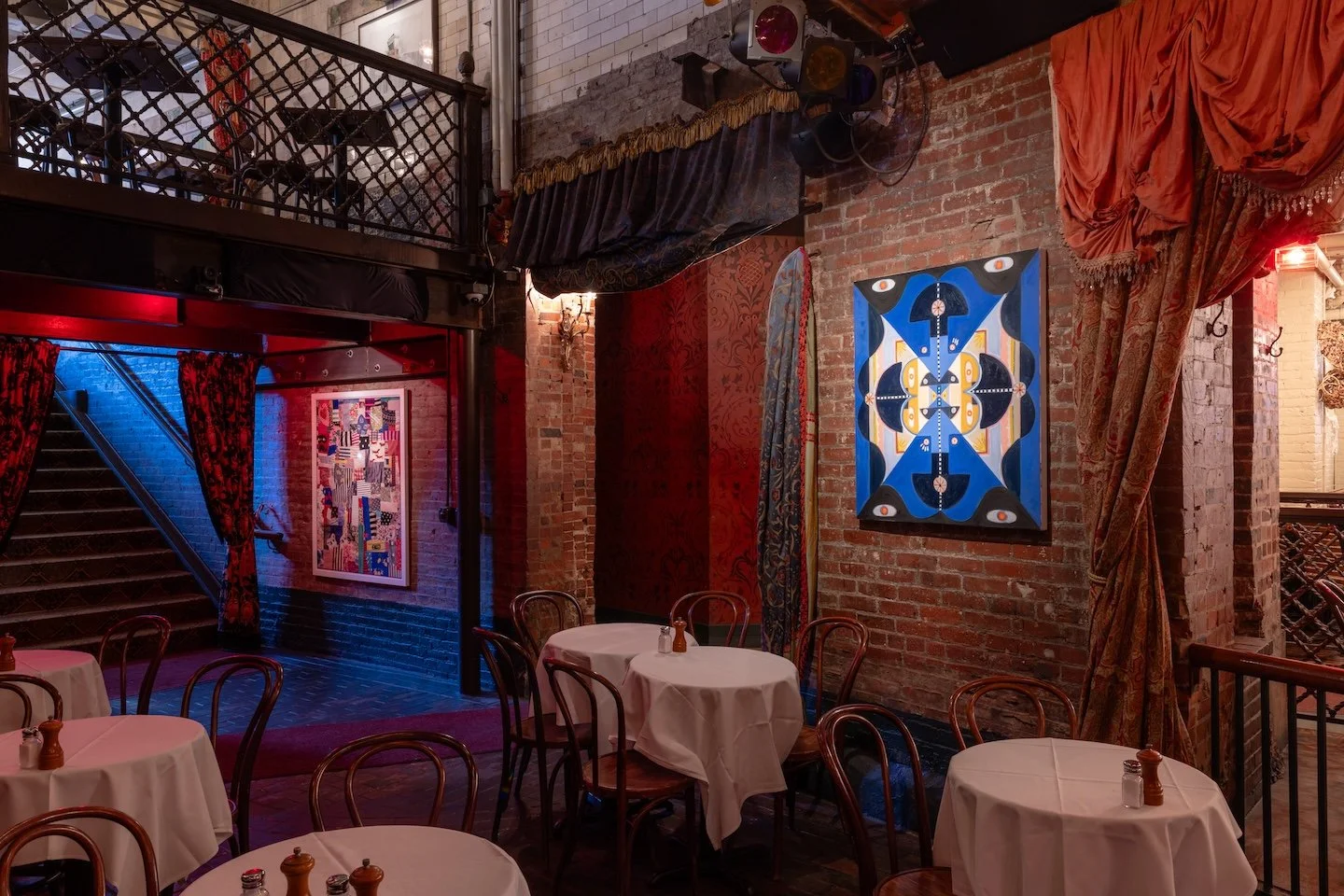
Her (Louise 2009-2019) and Blue Mask by Crystalle Lacouture. Photo: Olivia Moon Photography.
“I try to keep the life stuff out of the studio and the phone and app use to a minimum... I’ve learned over time that all the fracturing of attention is harmful to the work.”
Situated at the Beehive, one of Boston’s most beloved gathering places for live music and community, the show reveals ritual as resistance, protection, and sustenance. Artists share the quiet, repetitive, often invisible practices that make their creative work possible, and the importance of those practices in their lives. My hope is that the exhibition is an antidote to the resolution and hustle culture that dominates the start of a new year.
Anchored by bell hooks’ assertion that “communities of care are sustained by rituals of regard,” and Joseph Campbell’s reflection on sacred space as a site of continual return, Ritual Practice | Sacred Space explores how artists shape spaces—physical, psychic, domestic, digital—in order to work. In an era increasingly defined by acceleration, exposure, and toxic productivity, the exhibition insists on slowness, repetition, and intention as radical acts.
As Daniela Rivera puts it, “In contemporary life, being able to create time and space for a creative practice is almost impossible. The constant interruption and invasive nature of technology, and the relentless demands for efficacy, efficiency, productivity, and speed, compromise the space for a critical creative practice.”
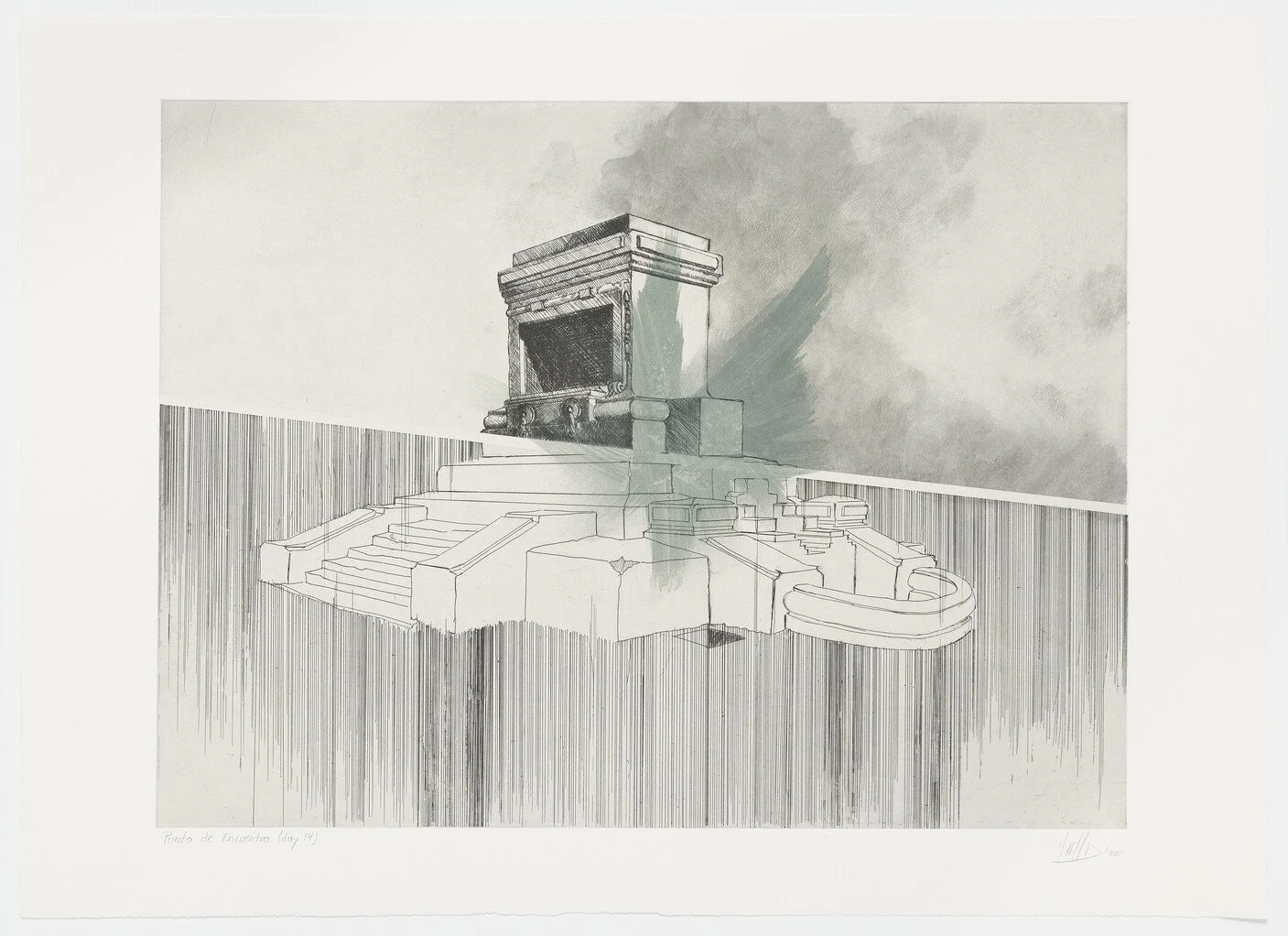
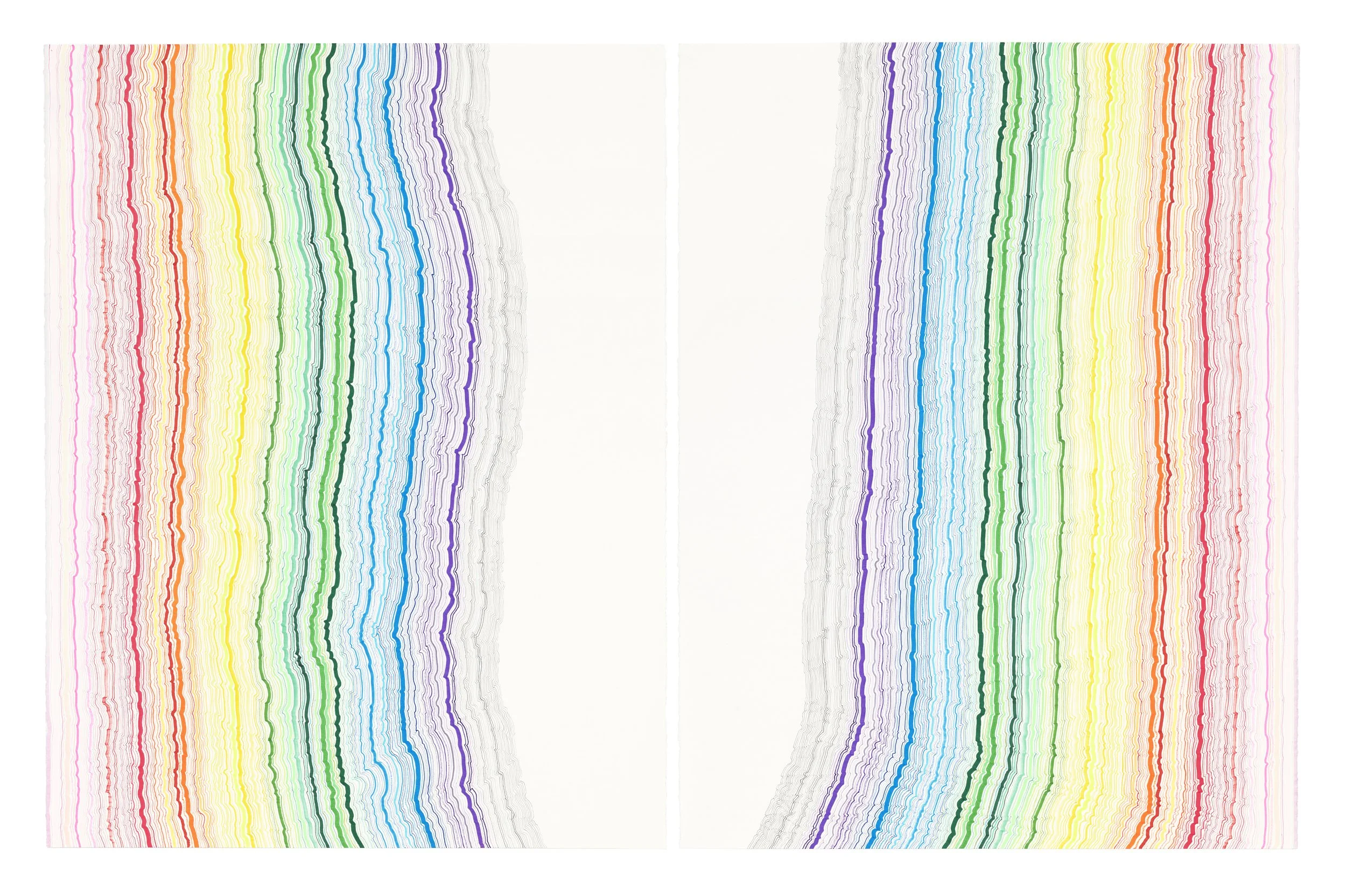
Daniela Rivera, Punto de Encuentro (day 18), 2025. Etching and debossing with lime and pigment powder. Monotype. Signed in pencil and dated, titled. Variable edition of 20 on Magnani Pescia Soft White paper. Wagner Arts Fellowship Limited Edition Program X Caira Art Editions.
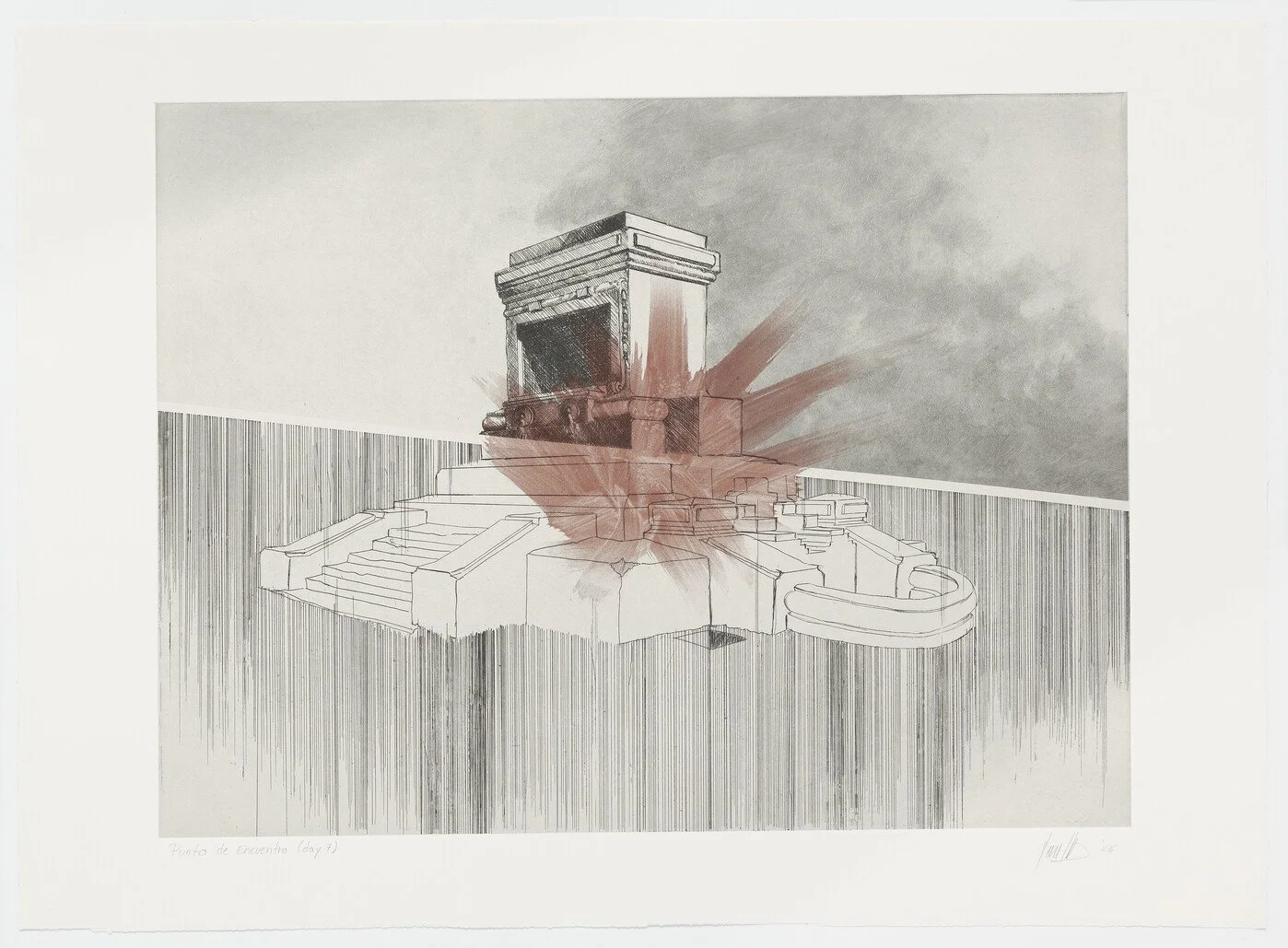
Daniela Rivera, Punto de Encuentro (day 18), 2025. Etching and debossing with lime and pigment powder. Monotype. Signed in pencil and dated, titled. Variable edition of 20 on Magnani Pescia Soft White paper. Wagner Arts Fellowship Limited Edition Program X Caira Art Editions.
“Making is my ritual. Ritual does not inform my practice but it is my practice. Making is when time stops, physical needs disappear and connection takes over.”
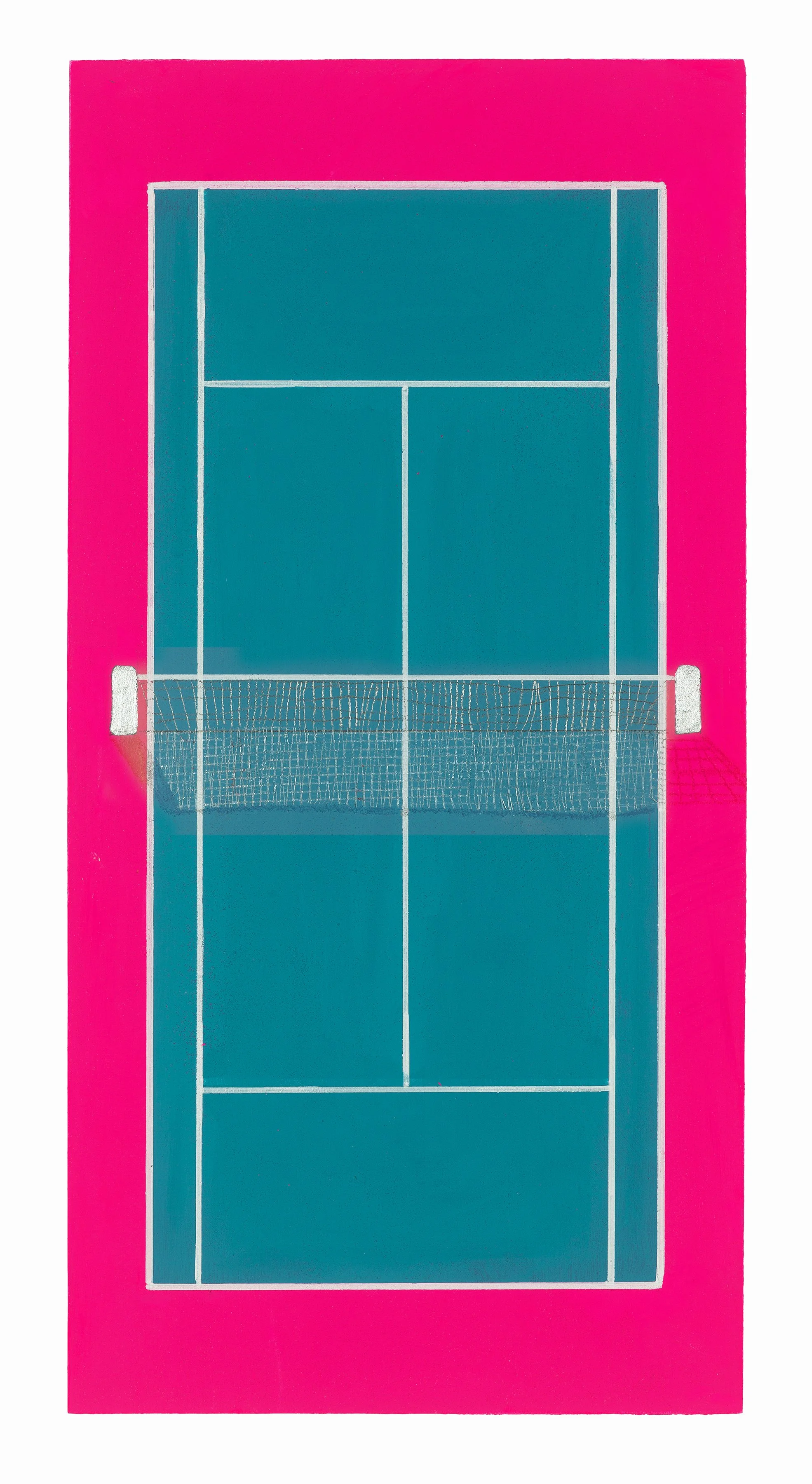
Brooke Stewart, whose paintings of tennis courts and sports fields center place and history, sees the lines of fields and courts as delineating sacred space, providing players and teams necessary protection from the distractions of contemporary life. Like a studio open only to the artist, a court is a designated safe space where players can work for sustained periods of time. Courts and fields also evoke the traditions and histories of past play, making meaning by filling the lines in with collective memory.
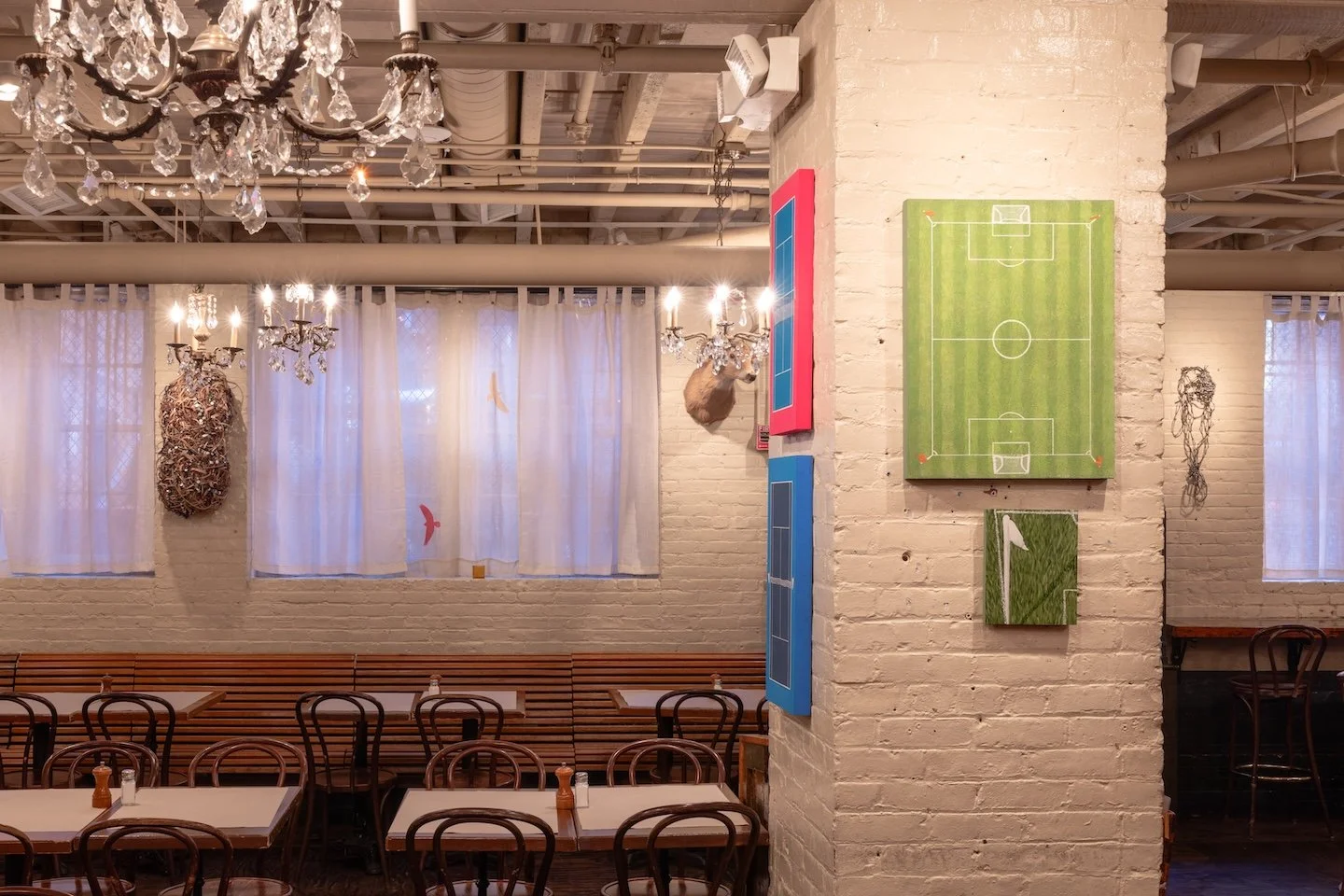
Installation view of works by Zainab Sumu, Brooke Stewart and Venetia Dale. Photo: Olivia Moon Photography.
The artists in this exhibition examine how ritual functions as a grounding force—particularly in moments of depletion, grief, uncertainty, or resistance—and how sacred space can be reclaimed in contemporary life. Sam Fields prioritizes slowing down. She says, “my process is intentionally slow; it pushes back against speed and multitasking.”
“Handwork keeps me steady in hard seasons: it’s grounding, regulating, and honest. The repetition of making—the threading, knotting, mending—creates a rhythm that steadies my body and focuses my attention. Over time, these repeated gestures become a kind of ritual, marking the passage of hours and helping me find order inside uncertainty.”
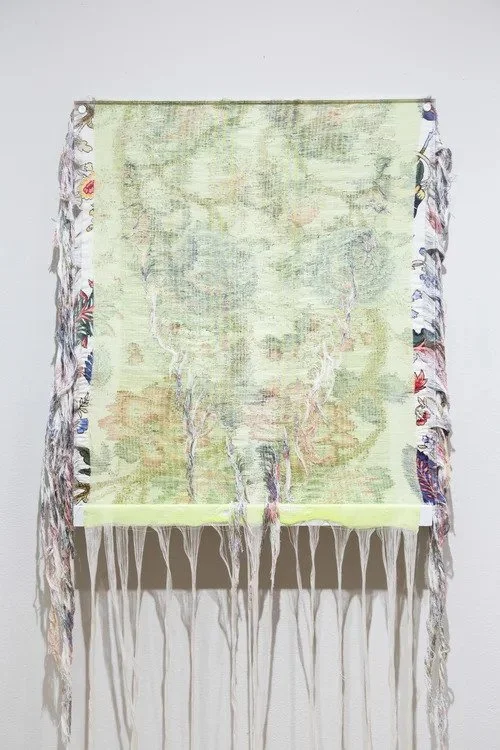
Sam Fields, unwoven-rewoven in green, 2016. Image courtesy of the artist.
Many of the artists in the show methodically collect objects from their lives as a way to anchor their relationship with time. Prime examples are the writing implements collected for Rachel Perry’s Chiral Drawing 34, houseplant fragments in Venetia Dale’s Thresholds of Care: Wreath 2, and a daughter’s clothing for Crystalle Lacouture’s Her (Louise).
“Ritual, in my work, is not a repetition meant to soothe but a discipline that brings the body into honest conversation with time. The acts I set for myself—measured, often arduous, sometimes absurd—become thresholds where endurance turns into attention, and attention into meaning.”
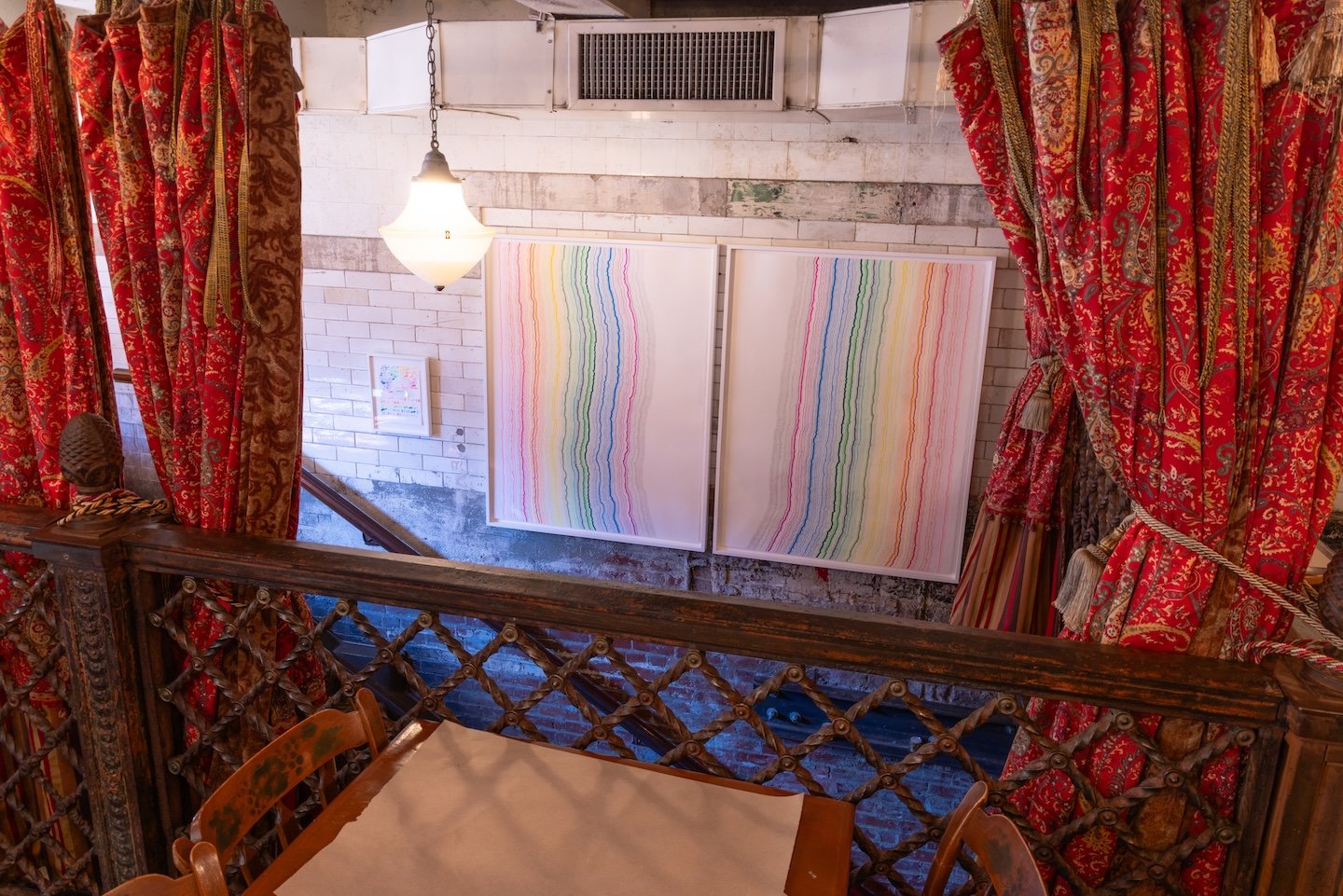
Rachel Perry Chiral Lines 34 installed at the Beehive. Photo: Olivia Moon Photography.
Venetia Dale sees her work as a way to process longing, embrace incompleteness, and mark passing moments such as those with her young children. The artist createdThresholds of Care: Wreath 2 for the exhibition by molding and casting in pewter the leaves, branches, flowers and stalks of houseplants collected in her sister’s and her home during the pandemic.
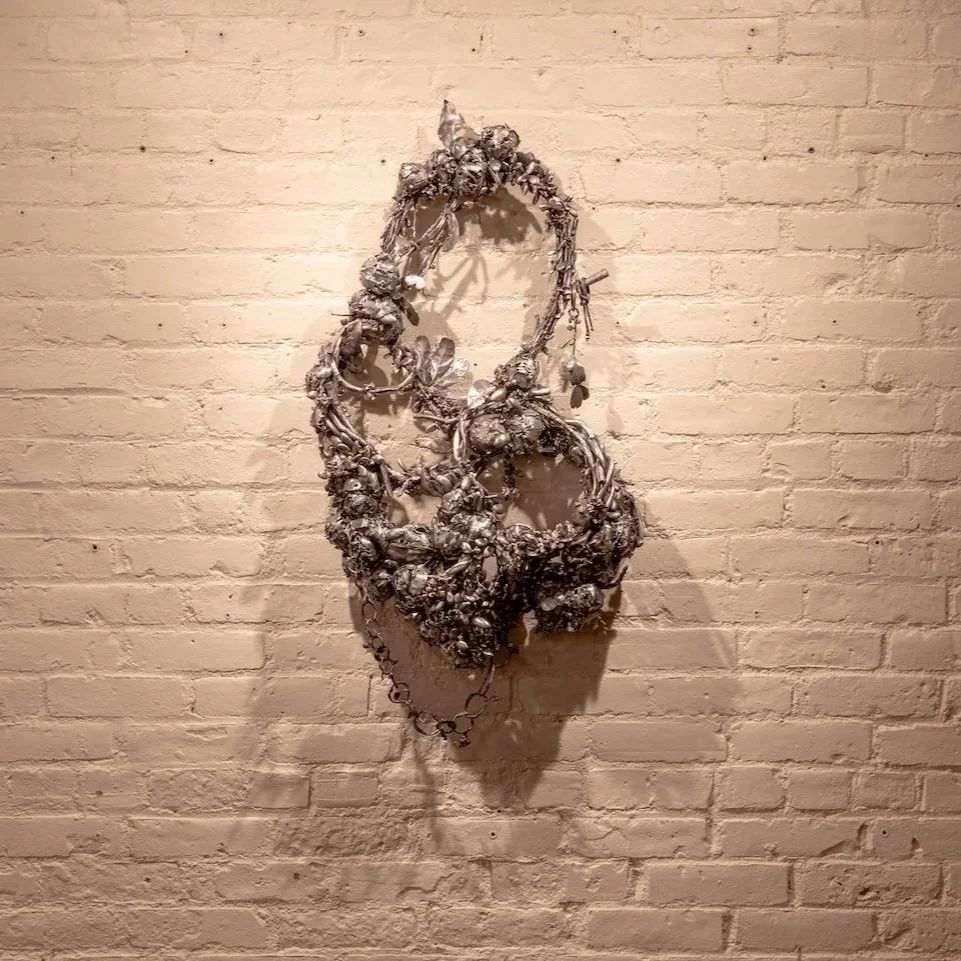
Venetia Dale’s Thresholds of Care: Wreath 2, 2025. Photo Olivia Moon Photography.
For many artists, connection to ancestors and traditions of the past is central. Daniela Rivera observes, “All the processes I engaged with in my practice are historic and have specific geographical and cultural histories. Every time I make adobe, or work with fresco, I am in dialogue with ancestral practitioners and sharing timeless knowledge and experience.”
Sneha Shrestha uses meditation techniques she learned from her grandfather in Nepal to steady her mind and hand. Her painted abstractions of traditional Nepali script connect her to the traditions and rituals from her home country that she must miss while living in the U.S.
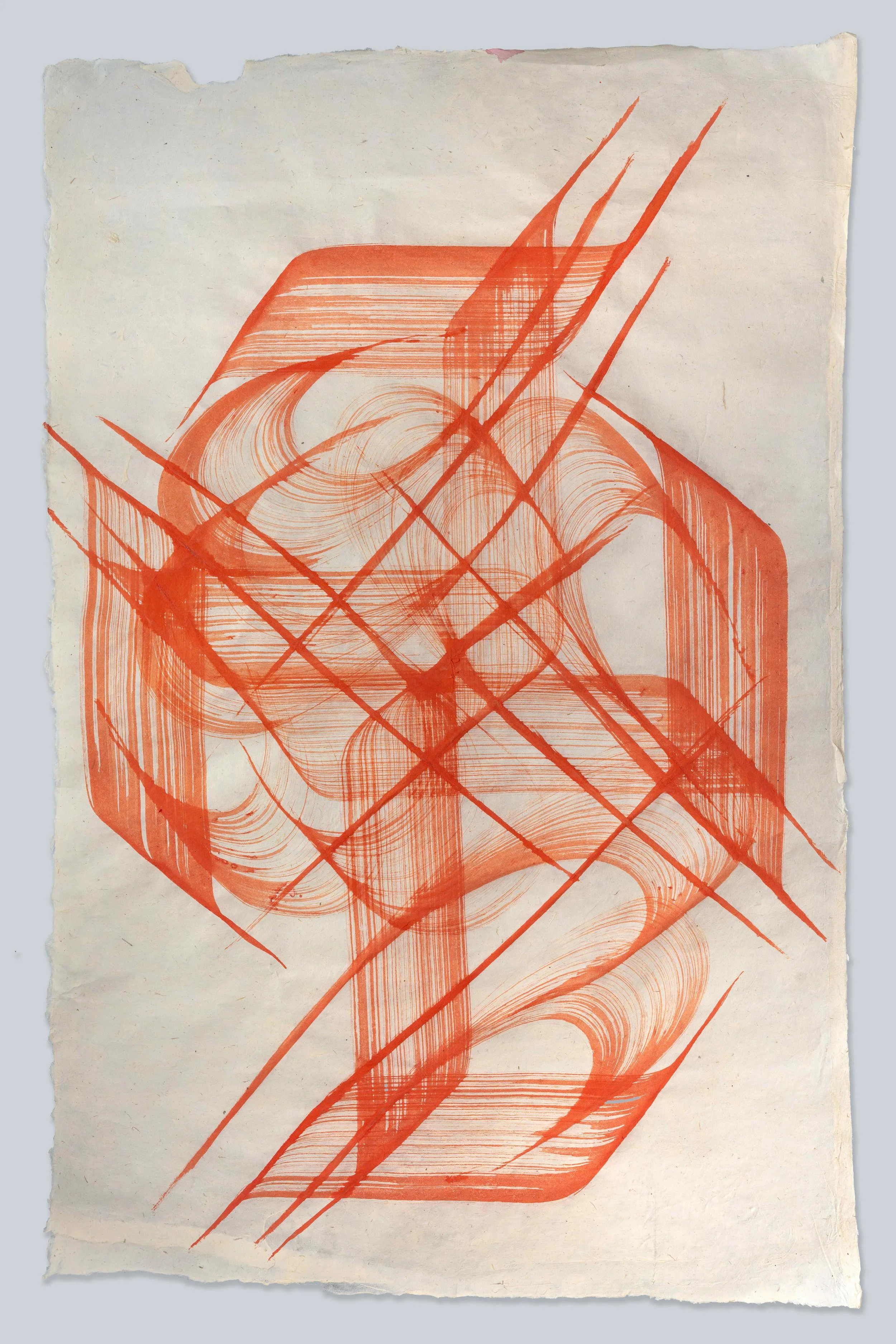
Sneha Shrestha aka IMAGINE, Untitled Deed 14, 2020. Acryilc ink on handmade Nepali paper. 30h x 20w in. Courtesy of the artist.
Presence, process and relationship to material arise often as key themes. For Zainab Sumu, “ritual begins with presence. Showing up even when it's hard. It's about being grounded enough to sit with silence. To listen–to the materials, to the quiet voice within. For me, ritual is learning to pay attention, to the rhythm, to the movement, to the dance between my hands and the materials.”
L’Merchie Frazier is a visual activist, public historian, educator, artist, innovator, and poet. Her screenprint We Just Keep On Coming: 1706, 1965, 1968, 2020, 2025, produced in collaboration with The Wagner Foundation and Caira Art Editions, draws on a deep relationship with the history of the civil rights movement and her signature materials which evoke movement and layering.
And for the Safarani Sisters, “Our creative process unfolds like a ritual: preparing the set, painting the backdrop, adjusting the light, and finally animating the puppet each step performed with intention and reverence. The resulting works transform the gallery space into a contemplative environment, inviting viewers to pause, to breathe, and to witness the subtle dialogue between the seen and the unseen.”
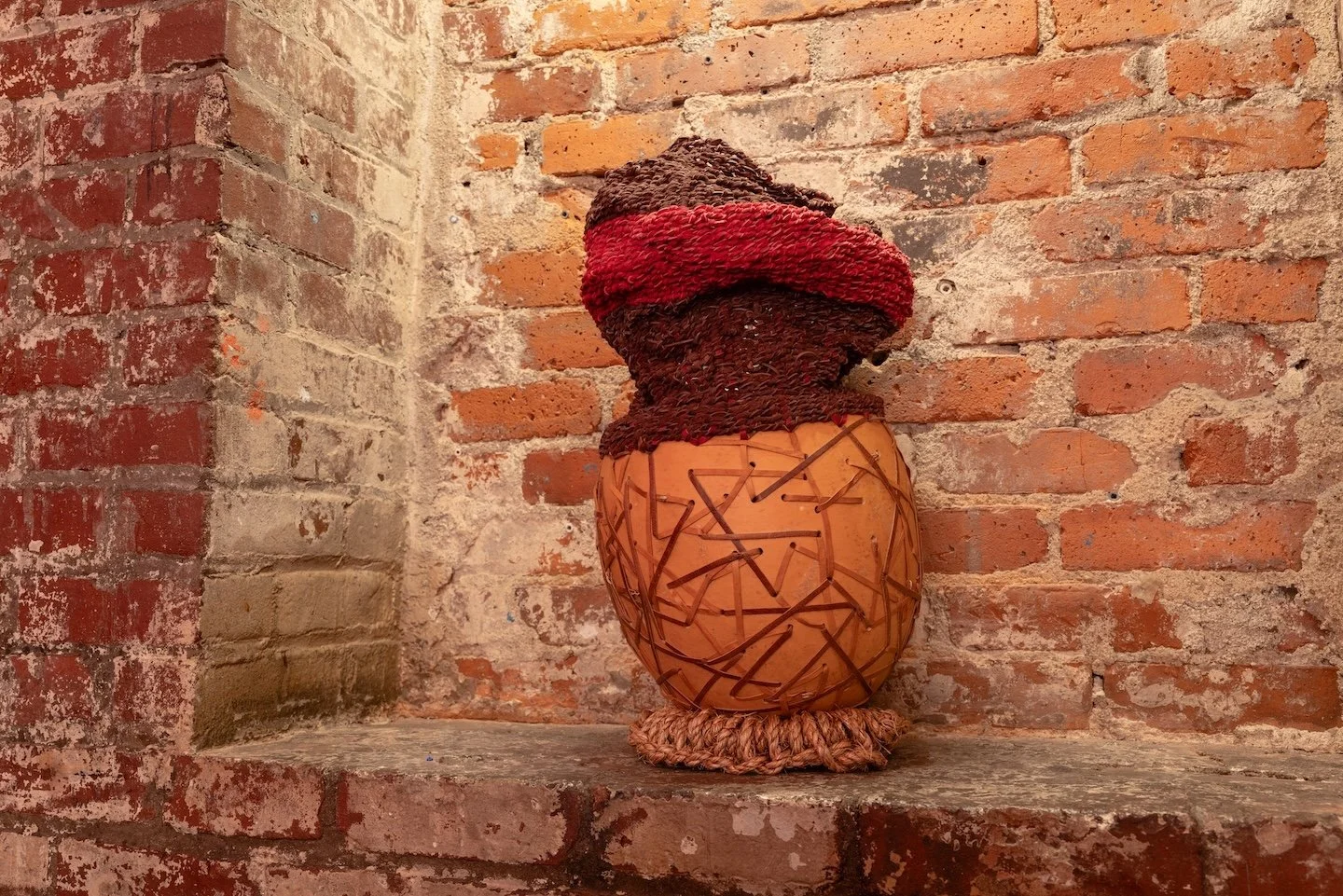
Zainab Sumu, Fulbe Pita, 2019. Photo Olivia Moon Photography
“Ritual helps me return to myself even when things feel chaotic.”
In a culture that demands constant visibility, availability, performance, and productivity from women, ritual and sacred space function as technologies of refusal, and as conditions for survival, creativity and self-possession.
Interested in a piece of work from the show? Fill out the form below and the artist or gallery will be in touch. Thank you for visiting Ritual Practice | Sacred Space!
Ritual Practice | Sacred Space curated by Robin Hauck of Misstropolis.
At The Beehive Boston, 541 Tremont Street, Boston. January 15 - March 15, 2026.